AIToday

OpenAI launches Micro keypad for ChatGPT coders at $230

TechCrunch AI1h ago
OpenAI launches Micro keypad for ChatGPT coders at $230

Key takeaway

OpenAI has launched Micro, a $230 specialty keypad that pairs with ChatGPT to let users quickly switch between different projects and send voice commands. The device is aimed at coders and ChatGPT power users, but early reviews from Reddit and tech outlets have been largely negative, with critics arguing cheaper alternatives exist and questioning whether the learning curve justifies the price. The release comes as OpenAI faces a trade-theft lawsuit from Apple and develops additional smart home hardware.

Summaries like this, in your inbox every morning.

Sign up free →

3 Key Points

  • What happened

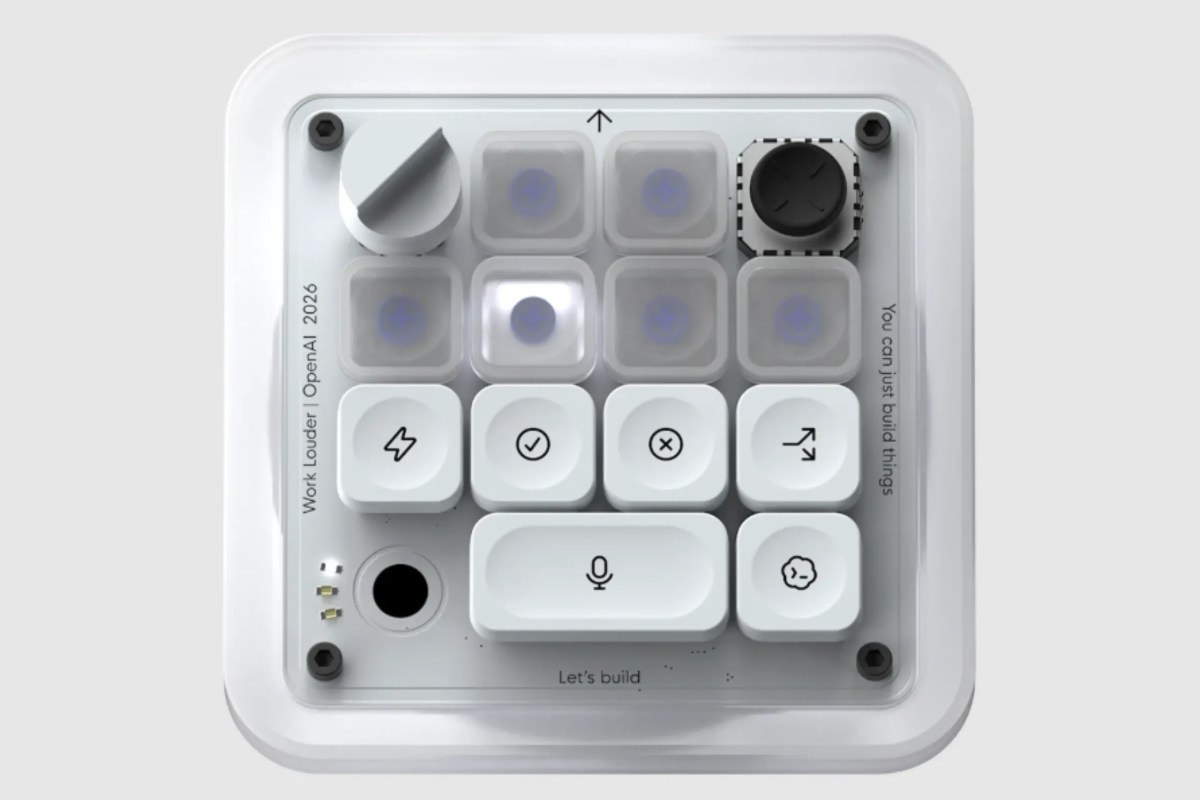
    OpenAI released Micro, a specialty keypad designed to work with ChatGPT and its coding tool Codex. The device, made in collaboration with keyboard designer Work Louder, features six customizable agent keys and six command keys, plus voice dictation; it connects via Bluetooth or USB and costs $230.

  • Why it matters

    The keypad marks OpenAI's first hardware release, though it arrives amid an Apple lawsuit alleging trade theft and reports of another smart home device in development. For heavy ChatGPT users, Micro offers streamlined access to multiple projects and voice commands, though reviewers and Reddit users have largely criticized it as difficult to justify against cheaper alternatives.

  • What to watch

    The device's real appeal depends on ChatGPT adoption depth—power users who work with multiple sessions daily may find the color-coded button system (white for idle, blue for thinking, green for complete, red for error) worth the learning curve, but casual users face a steep adoption barrier. OpenAI's broader hardware ambitions remain unclear pending the legal dispute with Apple.

In Depth

OpenAI launched Micro last week, its first hardware product, developed in collaboration with specialty keyboard designer Work Louder. The keypad is designed to pair with ChatGPT and its agentic coding tool Codex, targeting power users and coders who want faster access to multiple projects and voice-driven workflows.

Micro's design centers on two rows of six buttons each. The top row contains "agent" keys, which can be customized to trigger specific tasks within ChatGPT or Codex. Below them are six command keys for controlling those programs. The device connects to a computer via Bluetooth or USB cable. One of its most convenient features is a button for voice dictation—users hold it down to speak a request, then tap a send button to submit the command. Customization happens within ChatGPT itself, where a dedicated Micro tab lets users adjust key brightness and assign specific commands or projects to each button. The buttons are color-coded for status: white indicates an agent is idle, blue means it is thinking, green signals task completion, and red flags an error. The $230 price point puts it in the specialty hardware category.

However, early reception has been harsh. Reddit users have dismissed it as "a prank and not a real product," while the independent tech outlet Aftermath called the price "hard to justify next to cheaper DIY and off-the-shelf alternatives," titling their review "OpenAI's expensive macropad feels engineered to piss me off specifically." Hard-core coders, the device's intended audience, have largely declined to embrace it. The core tension reviewers identify is whether the keypad offers real functional advantage: if you already know how to use your computer's mouse and keyboard, why spend a week learning to program and operate Micro?

Testing the device revealed both promise and friction. Once programmed to a user's liking, Micro allows quick toggling between multiple ChatGPT sessions, and the voice dictation button makes the experience more efficient. However, there is a steep learning curve—users must memorize which projects are coded to which keys, as well as what each color indicates. The experience's appeal appears to depend entirely on usage intensity. For someone who does not use ChatGPT heavily day to day, Micro may feel like an unnecessary addition. But for a power user with multiple active projects and the $230 budget, the clicky, vintage-looking hardware combined with streamlined project switching might genuinely improve workflow.

Micro's launch is also overshadowed by legal and strategic uncertainty. Several weeks ago, Apple sued OpenAI, accusing it of trade theft—a dispute likely to stretch for months. Meanwhile, news emerged that OpenAI is developing another smart home product designed to pair with ChatGPT, reportedly built by former Apple engineers. This broader hardware ambition remains in development, leaving Micro as the only tangible product OpenAI has released to date.

Context & Analysis

OpenAI's entry into hardware signals broader ambitions beyond software, though the Micro keypad release is shadowed by legal and product uncertainty. The device itself represents a niche play: it targets power users who live in ChatGPT and value quick access to multiple agentic workflows, yet early adopter feedback suggests the $230 price and learning curve have not resonated with even the intended audience. The real friction appears to be functional—critics question whether a dedicated keypad offers genuine advantage over a standard mouse and keyboard workflow.

The timing is complicated by external headwinds. Apple's recent lawsuit alleging trade theft, combined with news that OpenAI is developing a smart home device staffed by former Apple engineers, has raised questions about the company's hardware strategy and legal standing. Until that dispute resolves, Micro stands as OpenAI's only hardware offering, and it remains unclear whether the company intends to pursue a broader product line or whether legal outcomes will constrain those plans.

For ChatGPT power users—those juggling multiple projects and sessions daily—Micro may eventually prove useful once the memorization curve flattens. But the gulf between the target audience and the broader market is wide, and the reviewer consensus suggests that for most people, the device solves a problem they do not have.

FAQ

How much does Micro cost and what does it do?
Micro costs $230. It is a keypad with six customizable agent keys at the top and six command keys below that can trigger specific tasks in ChatGPT or Codex. It includes a voice dictation button—you hold it down to speak a request and tap send to submit it.
How do you customize Micro and what do the button colors mean?
You customize Micro through a dedicated Micro tab within ChatGPT, where you can adjust key brightness and assign specific commands or projects to each key. The buttons are color-coded: white means an agent is idle, blue means it is thinking, green means a task is complete, and red indicates an error.
What have reviewers said about Micro?
Reviews have been largely negative. Reddit users called it "a prank and not a real product," and the independent outlet Aftermath criticized the $230 price tag as hard to justify next to cheaper DIY and off-the-shelf alternatives.

Get the latest Large Language Models news every morning

AI-summarized, only the topics you pick — one digest a day via Email, Slack, or Discord.

Free · takes 30 seconds · unsubscribe anytime

Discussion

No comments yet. Be the first to share your thoughts!

Log in to join the discussion

Related Articles

Stay ahead with AI news

Get curated AI news from 200+ sources delivered daily to your inbox. Free to use.

Get Started Free

Free · takes 30 seconds · unsubscribe anytime