
What happened
Amgen's machine learning model ATOMIC, built largely in-house with open-source Python tools, predicts which clinical trial sites will enroll patients fastest. In a 2025 internal analysis of 13 Amgen-sponsored studies, top-ranked sites enrolled "up to three times faster, on average" than lower-ranked sites.
Why it matters
Amgen estimates that almost half the time needed to bring a medicine through clinical trials is spent on enrollment, so better site rankings can affect the whole development timeline rather than a single task.
WHO IT HITSClinical operations teams and data scientists at drugmakers can use ranked site predictions to prioritize where trials recruit, while R&D leaders get a concrete example of targeting the stage that consumes the most trial time.
Summaries like this, every morning.
Amgen's AI work sits inside a company that reported total revenues of $36.75 billion for full-year 2025 and employed approximately 31,500 people across more than 50 countries as of December 31, 2025. The company outlined an Artificial Intelligence Vision in May 2024 and in April 2026 reorganized around "convergent innovation," naming James Bradner executive vice president of Research and Development, Artificial Intelligence and Data. It also installed an NVIDIA DGX SuperPOD supercomputer named Freyja at its deCODE genetics subsidiary in Reykjavik, Iceland, in 2024.
The ATOMIC project reflects a choice to target the stage that consumes the most trial time: Amgen states that about 80% of clinical trials fail to enroll enough participants to move forward and estimates that almost half the time needed to bring a medicine through clinical trials is spent on enrollment. Amgen describes site selection as historically a largely manual process with no centralized data source, and Matt Austin, executive director of Data Sciences at Amgen, said enrollment was often limited by the human ability to integrate everything needed to choose the best sites. ATOMIC produces ranked lists, predicted enrollment rates, and supporting country and investigator information; clinical study teams still choose the sites, but start from the model's rankings and see representation data alongside predicted enrollment.
Amgen's own account of the limits of the evidence is notable. The 2025 internal analysis compared sites by rank and did not report a before-and-after comparison or quantify how much time ATOMIC saved across an entire trial. A January 2024 Drug Discovery & Development report had described early results indicating enrollment at ATOMIC sites was more than twice as fast. The second use case, Catalyst Copilot, was built in about six weeks using Microsoft Copilot Studio, and Microsoft's case study gives no figures for search time saved, adoption, or answer accuracy, which suggests the published evidence for both tools is directional rather than a measured before-and-after impact.
Pick your industry and the AI tools you use, and get news related to your work every day.
Free · 30 seconds with Google · unsubscribe anytimeWhat is AIToday? →
Ask AI anything about this article. The AI reads this article, earlier AIToday articles, and Wikipedia, and cites its sources. Q&As are published on this page for other readers too.
EMC Healthcare's OwlCare, which combines monitoring sensors with nurse-call systems, received the AI Social Co…

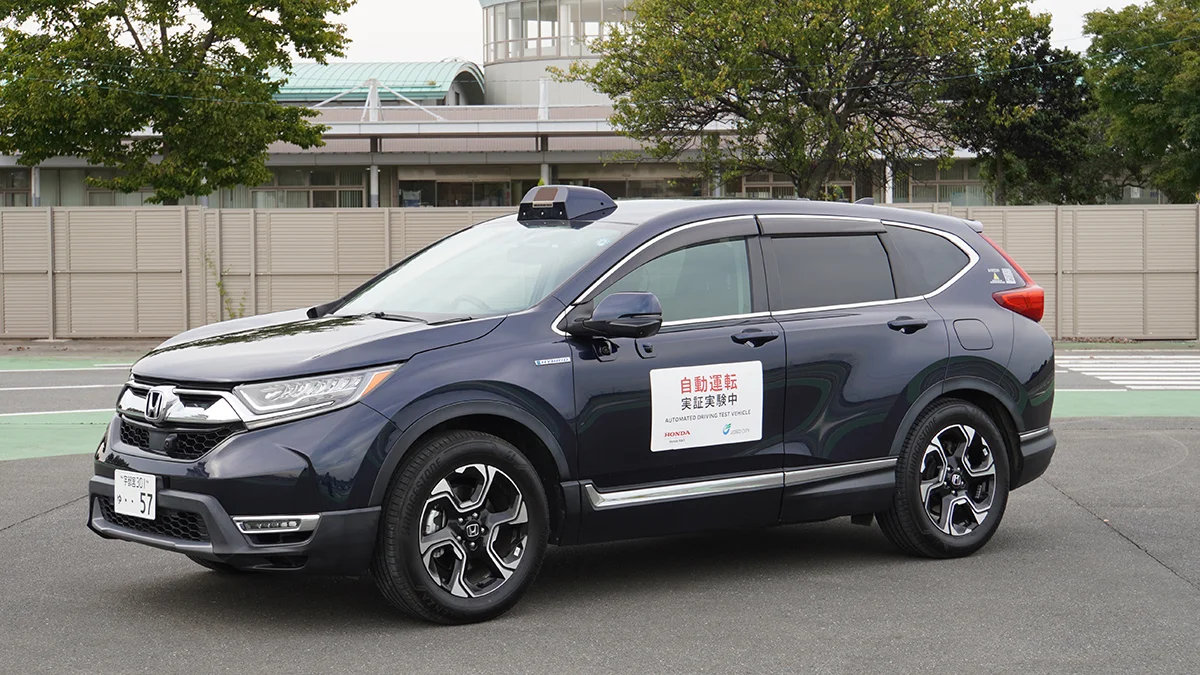
Honda is developing CI (cooperative intelligence) autonomous driving, in which vehicles coordinate with their…
Yahoo! Finance published an AI-written explainer on why Sumitomo Mitsui Trust Group stock (ticker 8309) has be…

Kubota will launch Japan's first remotely monitored unmanned autonomous tractor in April next year

Nikkan Kogyo Shimbun published the fifth installment of RoboNext 2026, its series on the robot industry in the…

Broadcom is reported to face reduced AI accelerator shipments to Google, which is said to be scaling back orde…