What happened
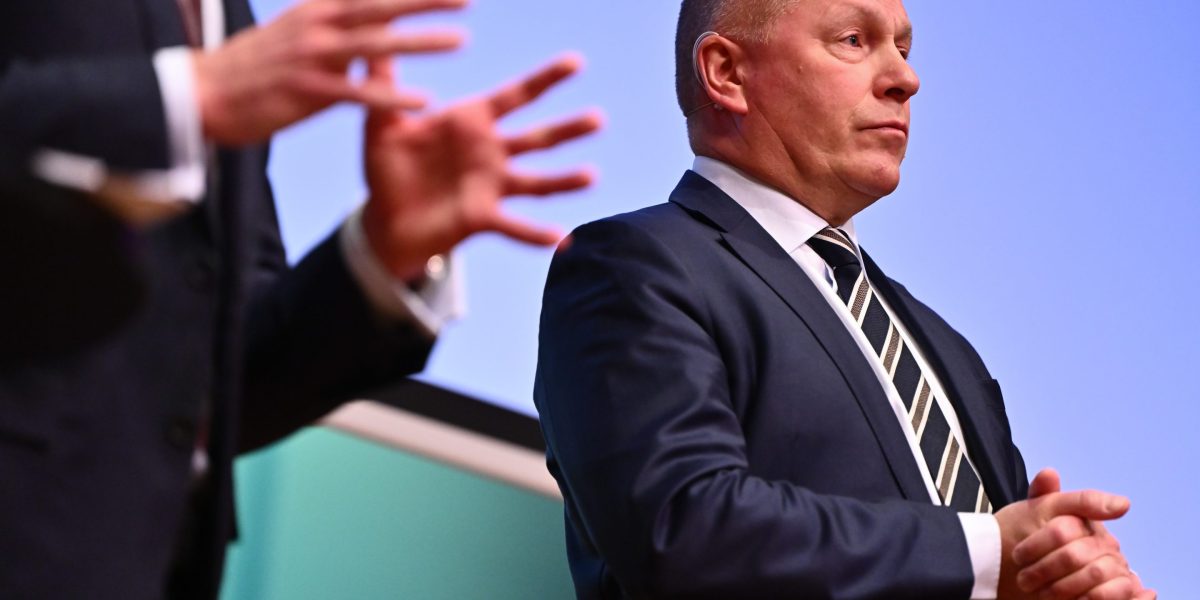
Norway's sovereign wealth fund reported an all-time high gain of 1.4 trillion kroner ($150 billion) in the first half of the year, driven by gains in global technology companies. CEO Nicolai Tangen said the return is "as good as it gets."
Why it matters
Despite the record performance, Tangen expressed caution about mounting risks. The fund has identified an AI bubble as a potential threat that could cost it 35% of its value, and geopolitical risks (including investment restrictions and tariffs) could wipe out as much as 37% in a worst-case scenario. The largest 10 holdings now account for "nearly" 25% of the fund's value—a concentration risk the CEO says the fund has "never seen" before.
What to watch
The $2.3 trillion fund, which owns about 1.5% of the world's total listed companies, is constrained in its ability to make active moves because it invests along a benchmark index set by Norway's finance ministry. This limits how quickly it can respond to the risks Tangen has flagged.
Summaries like this, in your inbox every morning.
Norway's $2.3 trillion sovereign wealth fund, formally known as NBIM, invests outside Norway and owns about 1.5% of the world's total listed companies. The fund's structure is defined by a benchmark index set by Norway's finance ministry, which constrains its scope for active moves and means it largely follows market trends rather than making independent bets. This structure amplified the fund's exposure to the technology sector during the first half of 2024, delivering a record $150 billion gain but also concentrating risk in a way the fund's leadership now views as unprecedented.
Tangen's nervousness stems from two interconnected concerns: valuation and concentration. The top 10 holdings now represent nearly 25% of the fund's value—a concentration the CEO described as unprecedented. Separately, the fund has modeled two catastrophic scenarios: an AI bubble costing 35% of value and geopolitical disruption (restrictions and tariffs) costing 37%. These are not forecasts but risk assessments, yet their magnitude reflects genuine concern about the stability of the technology-heavy positions that drove the record half-year return. The fund's limited ability to deviate from its benchmark index means it cannot quickly hedge these risks; it must largely absorb whatever the market delivers.
Pick your industry and the AI tools you use, and get news related to your work every day.
Free · 30 seconds with Google · unsubscribe anytimeWhat is AIToday? →
Ask AI anything about this article. The AI reads this article, earlier AIToday articles, and Wikipedia, and cites its sources. Q&As are published on this page for other readers too.
Hewlett Packard Enterprise stock is down 5% at $55.87

The Motley Fool argues Amazon is the AI company of the two, since AWS was just 21% of first-half 2026 revenue…

Vercel data published Thursday shows TypeSafe AI's Jev, a lightweight decision model for choosing among predet…
Chunghwa Telecom president Rong-shy Lin said the shift from conversational AI to autonomous AI agents is resha…
CoreWeave fell 5% in premarket trading Friday and was on track to finish the week down 15%, after rebounding f…
Apple and Meta said they would jointly release a new open-weight AI model designed to run on high-end Macs, ai…