What happened
Taiwanese security firm TeamT5 warned that state-backed hacking groups from China have more than doubled their attacks since they started using AI for routine tasks and malware development. DeepSeek is especially popular among these hackers because it's 'relatively powerful with very low cyber guardrails,' according to chief analyst Charles Li.
Why it matters
Specific groups have been linked to AI use: Grimfengxi used DeepSeek to write exploit code, Huapi relied on a Chinese model likely to be DeepSeek, and Teleboyi used the platform to collect IP addresses. ChatGPT played a role in at least one case, and a group called Slime22 used Anthropic's Claude Code to move through a Taiwanese company's systems.
What to watch
A study by the UK AI Safety Institute found that the cyber capabilities of open models have jumped sharply, but for fully autonomous attacks, they still trail Western frontier models by several months.
Summaries like this, in your inbox every morning.
The report from TeamT5, a Taiwanese cybersecurity firm, illustrates a significant shift in state-sponsored cyber operations. The doubling of attacks is directly linked to the adoption of AI for routine tasks and malware development. The accessibility of models like DeepSeek appears to be a key factor, as its low guardrails make it an attractive tool for generating exploit code and other malicious content.
The use of various AI models—including ChatGPT and Claude Code—by different groups shows that this is not a single-tool phenomenon but a broader integration of AI into hacking workflows. The UK AI Safety Institute's study provides a comparative framework, suggesting that while open models are rapidly improving, they are not yet at the level of Western frontier systems for fully autonomous operations. This creates a temporary but distinct capability gap, offering potential defenders a window of time to develop countermeasures.
Pick your industry and the AI tools you use, and get news related to your work every day.
Free · 30 seconds with Google · unsubscribe anytimeWhat is AIToday? →
Ask AI anything about this article. The AI reads this article, earlier AIToday articles, and Wikipedia, and cites its sources. Q&As are published on this page for other readers too.
Anthropic gave six METR staffers hardware, office space and internal tools, putting them roughly on par with i…

Cammarata reinterprets InceptionV1's cat-car neuron as a V-shape detector, not two unrelated concepts

Google Deepmind's Gemini 4 Argon scored 97.5 percent on ARC-AGI-3 at a cost of $4,800, second only to GPT-6 As…

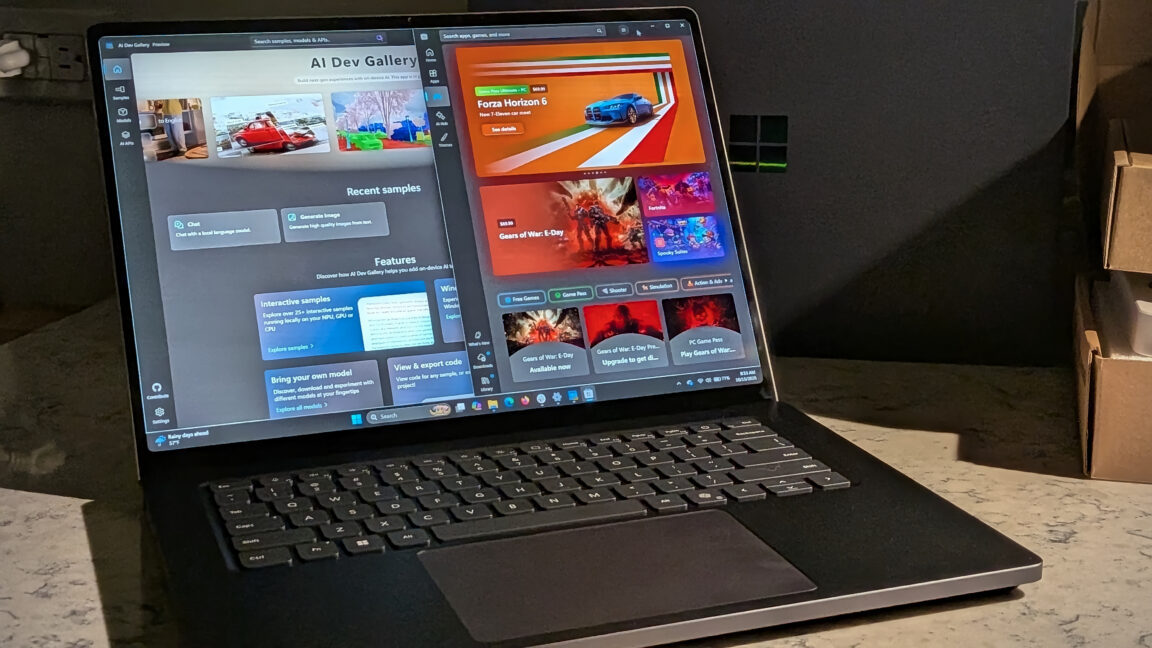
Microsoft's Surface Laptop Ultra, using Nvidia's RTX Spark platform, starts at $2,599 (up to $5,899)
Meta's new commercial terms, effective October 30th, appear to let it crawl and train AI on content from websi…
Vercel data published Thursday shows TypeSafe AI's Jev, a lightweight decision model for choosing among predet…