
What happened
Lam Research announced plans to invest more than US$3.00 billion over five years to expand its global R&D lab network, aiming to increase experiment capacity by over 50% and shorten product development cycles for chipmaking tools. The company's lab system already runs more than one million experiments annually.
Why it matters
The expansion reinforces Lam's position as a supplier of etch and deposition tools for advanced chip architectures (gate-all-around, 3D NAND, complex packaging) as AI-driven chip complexity lifts demand. Combined with US$5.95 billion in share repurchases completed since May 2024, faster time-to-market from the expanded labs could amplify per-share earnings gains if Lam captures a larger share of advanced nodes and packaging tools.
What to watch
The investment does not directly address key risks including export controls on China, customer concentration, and memory spending volatility. Some low-ranked analysts project export controls and rising Chinese competition could offset gains from AI tools, forecasting US$38.6 billion revenue and US$14.3 billion earnings by 2029—below the consensus projection of US$37.5 billion revenue and US$12.4 billion earnings by 2029.
Summaries like this, in your inbox every morning.
Lam Research's $3 billion R&D commitment arrives at a critical juncture for the chipmaking equipment supplier. The company's growth narrative depends entirely on sustained demand from customers building advanced AI chips—a bet that requires belief in two things: that AI-driven chip complexity will keep lifting orders for Lam's etch and deposition tools, and that Lam can execute despite cyclical wafer fab equipment spending and heavy exposure to China. The timing matters because Lam has already repatriated US$5.95 billion through share repurchases since May 2024, a move that amplifies the per-share earnings effect of any product wins the expanded labs enable. If faster R&D cycles help Lam secure a larger slice of advanced-node and packaging-tool orders, the smaller share count compounds the benefit—supporting earnings power even if overall wafer fab equipment spending flattens.
Yet the expansion also reveals what it does not solve. Export controls on China remain a structural headwind unaddressed by faster experiments or more lab capacity. Analyst views already diverge sharply: consensus projects US$37.5 billion revenue and US$12.4 billion earnings by 2029, requiring 20% yearly revenue growth; lower-ranked analysts pencil in US$38.6 billion revenue and US$14.3 billion earnings by 2029 but argue export controls and Chinese competition could undermine those gains. The R&D push reinforces Lam's AI equipment catalyst near-term but does not retire the geopolitical and competitive risks that could compress returns over the medium term.
Pick your industry and the AI tools you use, and get news related to your work every day.
Free · 30 seconds with Google · unsubscribe anytimeWhat is AIToday? →
Ask AI anything about this article. The AI reads this article, earlier AIToday articles, and Wikipedia, and cites its sources. Q&As are published on this page for other readers too.
In Q2, billionaires or their funds sold six 'Magnificent Seven' AI stocks

Nvidia was rising early Friday, even as the wider chip sector kept falling, Barron's reported

ElevenLabs completed a $300 million employee tender at a $22 billion valuation, and co-founder Mati Staniszews…

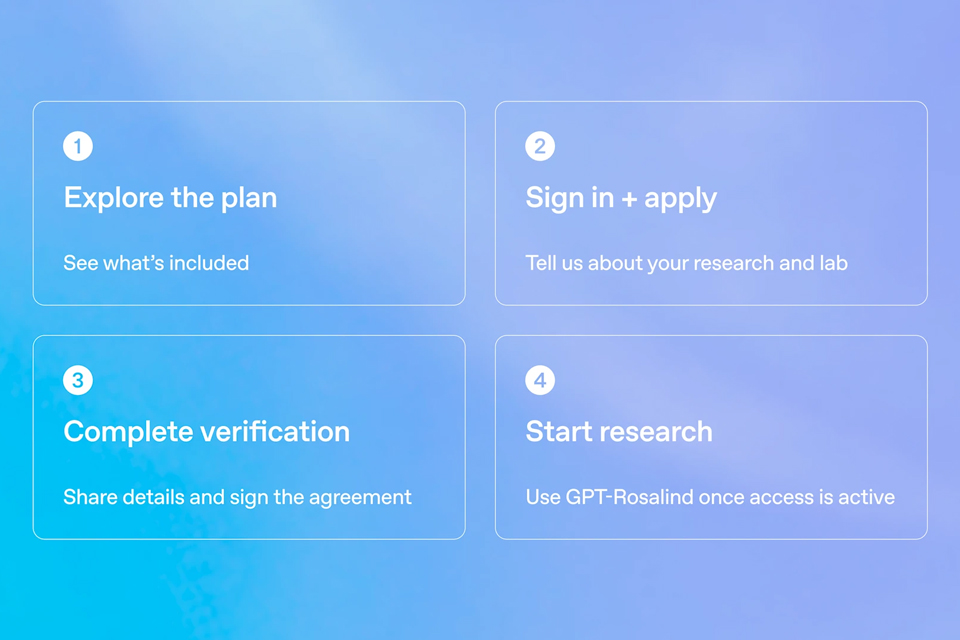
On October 15, OpenAI announced the Rosalind Academic Plan, giving approved US university labs free access to…
Neostellar Capital principal Evan Schlossman said CoreWeave's $103.7 billion in remaining performance obligati…

Supermicro Computer appointed Mark Long as chief financial officer, bringing an experienced technology finance…