What happened
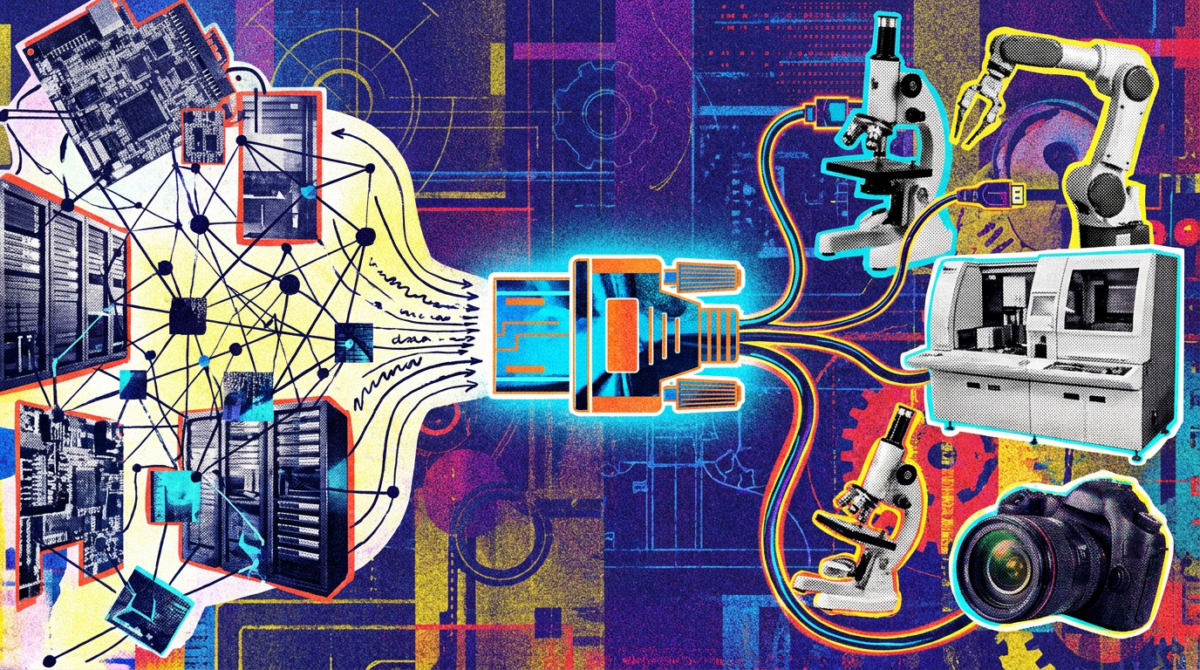
Anthropic has introduced the Model Hardware Standard (MHS), a spec that gives AI agents a unified interface to control physical devices like robotic arms and lab equipment. It is being released as a research preview for select labs and manufacturers, with an open-source release planned later.
Why it matters
The company says MHS cuts integration time for lab equipment from weeks or months down to hours or minutes. The standard builds on Anthropic's Model Context Protocol (MCP) for software and extends that approach to machines, potentially making it easier for AI agents to work in labs and factories.
What to watch
In a test at quantum computing company QuEra, a Claude-developed control program succeeded in 695 out of 700 attempts, a 99.3 percent success rate, running entirely on its own. However, Anthropic notes that Claude still struggles with physical cause and effect, and all three partner examples haven't been independently verified.
Summaries like this, in your inbox every morning.
Anthropic's new Model Hardware Standard (MHS) tackles a practical bottleneck in lab and factory automation: devices from different manufacturers speak different protocols, making integration a slow, custom job. By standardizing how AI agents read from and control physical hardware, MHS aims to turn a weeks-long engineering task into an hours-long setup. The approach directly extends Anthropic's Model Context Protocol (MCP) for software, applying the same principle of a common interface to the physical world.
The partner tests show promise but also reveal the limits of current AI. At Genentech, Claude coordinated lab equipment to automate a protein assay but struggled when bubbles formed in a viscous solution, repeatedly restarting the process with tweaked parameters until a human explained the physical cause. This underscores Anthropic's own admission that Claude's physical reasoning is limited and still requires expert oversight. The company plans to build additional safety evaluations with partners during the research preview and is working on a physical safety roadmap to guard against misuse, highlighting that the path to fully autonomous physical AI is still a work in progress.
Pick your industry and the AI tools you use, and get news related to your work every day.
Free · 30 seconds with Google · unsubscribe anytimeWhat is AIToday? →
Ask AI anything about this article. The AI reads this article, earlier AIToday articles, and Wikipedia, and cites its sources. Q&As are published on this page for other readers too.
Hewlett Packard Enterprise stock is down 5% at $55.87

The Motley Fool argues Amazon is the AI company of the two, since AWS was just 21% of first-half 2026 revenue…

Vercel data published Thursday shows TypeSafe AI's Jev, a lightweight decision model for choosing among predet…
Chunghwa Telecom president Rong-shy Lin said the shift from conversational AI to autonomous AI agents is resha…
CoreWeave fell 5% in premarket trading Friday and was on track to finish the week down 15%, after rebounding f…
Apple and Meta said they would jointly release a new open-weight AI model designed to run on high-end Macs, ai…