
Home Depot expanded its AI assistant Magic Apron to over 2,000 U.S. stores.
It also filed a shelf registration for 1.5 million shares.
The company aims to offset weaker remodeling demand with tech investments and financial flexibility.
What happened
Home Depot expanded its Magic Apron AI assistant with localized, multi-language in-store support across more than 2,000 U.S. locations in late August and early September 2026. It also completed a prior share repurchase program and filed a US$477.11 million shelf registration for 1,500,000 common shares.
Why it matters
The moves pair AI-enabled customer service with added capital-raising flexibility, supporting Home Depot's strategy to invest in technology while keeping balance sheet optionality. This could help counter pressures on earnings growth and margins from rising costs and softer big-ticket remodeling demand, though it does not materially change near-term margin risk.
What to watch
The success of Magic Apron hinges on whether it supports higher project attachment and more efficient operations. Watch for Home Depot's projected $187.2 billion revenue and $17.3 billion earnings by 2029, requiring 4.0% yearly revenue growth and about a $3.3 billion earnings increase from $14.0 billion.
Ask the AI about this article →
Summaries like this, in your inbox every morning.
Home Depot's latest actions reflect a dual strategy: leveraging AI to enhance in-store customer experience and securing financial flexibility through a shelf registration. The expansion of Magic Apron aligns with the company's broader push to use digital tools to improve productivity, potentially mitigating pressures from softer remodeling demand and rising costs. However, the article notes that these moves do not materially change near-term margin risks, which remain tied to macroeconomic conditions.
The shelf registration, while not a direct capital raise, signals preparedness to access markets if needed, complementing the technology investments. This balance between innovation and financial prudence is central to Home Depot's investment narrative, which projects steady growth through 2029.
The key variable is whether Magic Apron's AI capabilities translate into higher project attachment and operational efficiency. If successful, it could offset some earnings pressures, but the outcome remains uncertain and depends on execution and macro trends. Investors should watch for signs of adoption and its impact on margins.
For example, today's edition would include:
AI-summarized, only the topics you pick — one digest a day via Email, Slack, or Discord.
Free · 30 seconds with Google · unsubscribe anytimeWhat is AIToday? →
Ask AI anything about this article. Q&As are published on this page for other readers too.
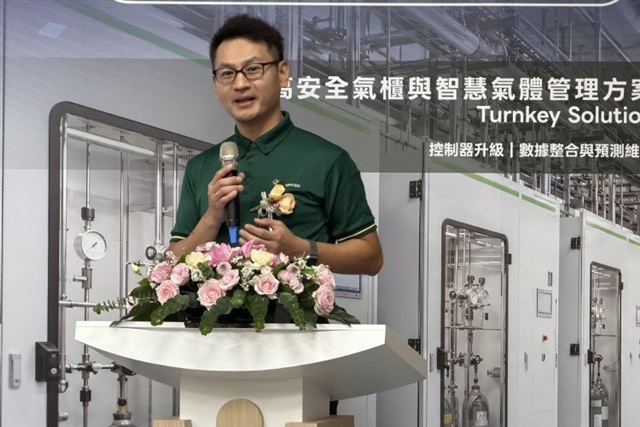
JM-Applied, a Taiwanese semiconductor gas equipment maker and supply chain member for Micron and TSMC, said on…
OpenAI's product lead Tibo Sotiou posted on X on September 6 that GPT-6 Astra's 'low' setting outperforms GPT-…

Nvidia disclosed roughly $99 billion of public and private equity investments as of July 26, plus about $25 bi…
In January, Ukraine's defense ministry said it would share millions of data points from tens of thousands of d…

OpenAI Group PBC acknowledged it did not publicly disclose an episode where its AI agents wrote to outside web…

Eaton is expanding beyond traditional power management into modular power deployment, next-generation DC conve…