What happened
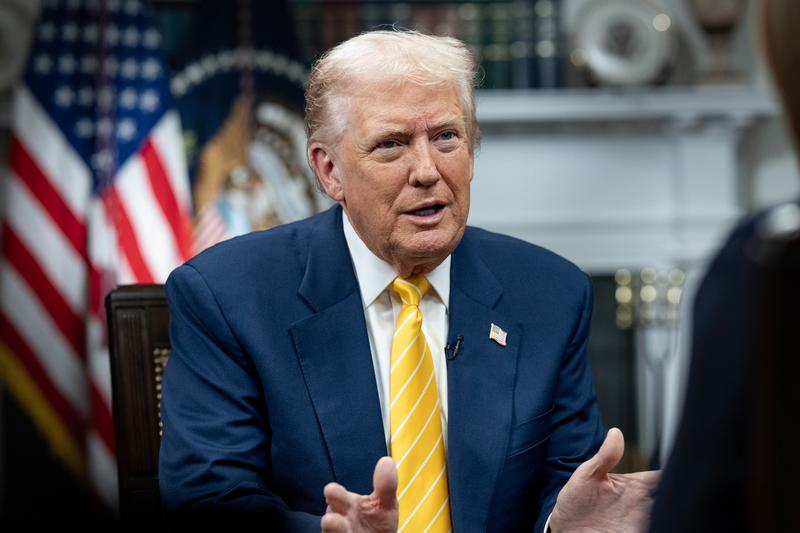
President Trump says the US should have the lowest interest rates anywhere in the world and claims lower rates could push GDP growth to 14%–20%. The Fed's preferred inflation gauge, PCE, came in at 3.7% in July 2026, nearly double the Fed's 2% target.
Why it matters
Trump's own policies—tariffs and the Iran war—are boosting inflation. The Iran war closed the Strait of Hormuz to most shipping, halting the daily flow of a fifth of the world's petroleum, while the AI data-center build-out gives infrastructure providers pricing power that pushes higher costs to consumers.
What to watch
Further rate hikes by Fed Chair Kevin Warsh could cool the AI build-out and risk ending Wall Street's four-year bull market. Watch whether core PCE, which ran at 3.3% in the latest reading, stays elevated.
Summaries like this, every morning.
Trump has long pressed the Fed to cut rates, pointing to strong stock market gains, but his own policies have made cuts politically and economically difficult. After the Supreme Court struck down his 2025 Liberation Day tariffs, his administration reimposed new duties on imports from over 80 countries in July 2026, and the Iran war has blocked key oil shipping lanes, pushing energy and broader prices up. Meanwhile, the AI boom has created huge demand for hardware, giving suppliers the power to raise prices, which also feeds into consumer inflation.
The Fed, now led by Kevin Warsh, likely faces a tough choice: raising rates to fight entrenched inflation might slow the AI data-center build-out and could end the current bull market—which is already the second-priciest in history. The outcome hinges on whether these inflationary pressures ease on their own or force the Fed into a cycle of hikes. If rates stay higher, borrowing for AI projects and other investments becomes more costly, potentially weighing on economic growth and stock prices. The article suggests that Trump's vision of very low rates is incompatible with the reality of his policies and the AI-driven demand pressures.
Pick your industry and the AI tools you use, and get news related to your work every day.
Free · 30 seconds with Google · unsubscribe anytimeWhat is AIToday? →
Ask AI anything about this article. The AI reads this article, earlier AIToday articles, and Wikipedia, and cites its sources. Q&As are published on this page for other readers too.
Memory is the current AI bottleneck, and Micron Technology's fiscal Q4 2026 revenue jumped to $54.23 billion f…

Canva launched Canva Craft, its first in-house image model, trained by Canva Research mainly on millions of de…

Anthropic launched an "Anthropic managed" version of Claude on Google Cloud on the 22nd (US time), giving main…
Robinhood Ventures disclosed a $10 million check to Cognition, maker of the Devin AI coding tool, as part of t…

Pantheon Macroeconomics' Samuel Tombs and Oliver Allen track AI-exposed sectors and put net U.S

Twilio's marketing team reduced account research and personalized content creation for a single campaign from…