What happened
AI inference workloads are now the main driver of data center design, requiring companies to treat memory, storage, and networking as core system elements rather than add-ons.
Why it matters
Data movement has become the key bottleneck, so infrastructure decisions now directly affect latency, cost, and business outcomes. Jim McGregor of Tirias Research says buyers can no longer rely on a single OEM or cloud provider to handle supply and architecture complexity.
What to watch
The test is whether companies can shift from raw-compute thinking to coordinated infrastructure decisions, since winners will be those that improve performance per watt. Watch whether procurement cycles can keep pace with rapidly changing workloads.
Summaries like this, in your inbox every morning.
The article, produced by MIT Technology Review's custom content arm, reflects a growing industry consensus that AI is shifting from training-centric models to inference-heavy deployments. As Jim McGregor of Tirias Research notes, AI is not one workload but millions, so the old approach of stacking the fastest processors no longer suffices. Instead, every part of the data center—compute, memory, storage, and networking—must be architected together to minimize data movement, which has become the primary constraint.
For business leaders, this turns infrastructure planning into a strategic exercise. The article warns that buying for generic "AI readiness" can lead to overspending while leaving actual bottlenecks unresolved. It suggests a modular, flexible approach that can adapt as workloads and technologies change, and it stresses that efficiency will matter for both cost and public perception, given scrutiny over power and water use.
Ultimately, the piece argues that competitive advantage will go to companies that integrate infrastructure with business outcomes and measure ROI rather than just performance. As McGregor puts it, executives should ask how AI will change their business model—because the answer determines the right infrastructure investments.
Pick your industry and the AI tools you use, and get news related to your work every day.
Free · 30 seconds with Google · unsubscribe anytimeWhat is AIToday? →
Ask AI anything about this article. The AI reads this article, earlier AIToday articles, and Wikipedia, and cites its sources. Q&As are published on this page for other readers too.
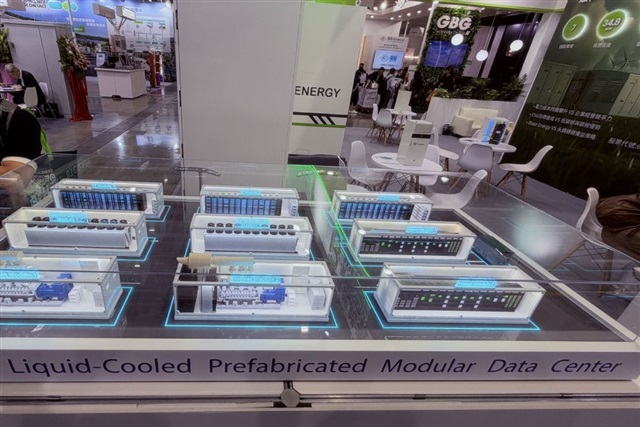
Taiwan-based iBase Solution is expanding from industrial computers (IPCs) and energy storage into liquid-coole…
Setagaya Ward tested Genspark, an AI agent tool, and cut roughly 2,900 hours of work, according to Sho Miyama…

Anthropic said it will place 5% of its stock in the Anthropic Public Benefit Fund, pending shareholder approva…

Asian stocks mostly fell Monday after Wall Street's tech-led selloff, with the Nasdaq more than two percent do…

Anthropic, developer of Claude, committed 5% of its shares to a new public benefit fund, with an extra 2% per…

Mercedes-Benz and NVIDIA are expanding their partnership to jointly develop next-generation driver-assistance…