What happened
RouterFuel, an open-source AI gateway, entered open beta offering access to 330+ language models through a single async proxy layer. The tool is built on Tokio and Axum, supports OpenRouter integration, and achieves sub-20ms p99 latency. All features are free during the preview period.
Why it matters
Developers can now route inference requests across multiple model providers (OpenAI, Anthropic, Google, Meta, Mistral, and OpenRouter's catalog) through one API without vendor lock-in. Built-in semantic caching cuts repetitive API spend by up to 40%, and automatic circuit-breaking reroutes requests to healthy providers if one fails — reducing operational overhead for teams managing multiple model integrations.
What to watch
Pricing launches soon—Hobby tier free with 35,000 requests/month (overages $20 per 100k requests), Developer tier $15/month with 150,000 requests/month included, and Enterprise custom pricing. The core is AGPL-3.0 licensed; commercial licenses are available for closed-source embedding.
Summaries like this, in your inbox every morning.
RouterFuel addresses a fragmentation problem for AI application developers: accessing models from different providers (OpenAI, Anthropic, Google, Mistral, and others) typically requires separate API integrations and error-handling logic. By providing a single proxy layer that supports 330+ models and automatically syncs new models from OpenRouter, RouterFuel reduces integration work and simplifies failover logic.
The semantic caching engine is a practical cost-reduction tool—by vector-matching incoming prompts against cached completions, the system can serve near-duplicate requests from cache rather than sending redundant API calls, cutting repetitive spend by up to 40%. The circuit-breaking resiliency layer handles provider outages or latency spikes in microseconds, rerouting requests to healthy alternatives without dropping calls—a critical feature for production inference workloads.
The project's open-source licensing (AGPL-3.0 core) and free beta access lower the barrier for teams to experiment, while the upcoming tiered pricing model charges for throughput rather than seats, aligning costs with actual usage. Commercial licensing is available for teams embedding RouterFuel in closed-source products, broadening its addressable market.
Pick your industry and the AI tools you use, and get news related to your work every day.
Free · 30 seconds with Google · unsubscribe anytimeWhat is AIToday? →
Ask AI anything about this article. The AI reads this article, earlier AIToday articles, and Wikipedia, and cites its sources. Q&As are published on this page for other readers too.
Cammarata reinterprets InceptionV1's cat-car neuron as a V-shape detector, not two unrelated concepts

Google Deepmind's Gemini 4 Argon scored 97.5 percent on ARC-AGI-3 at a cost of $4,800, second only to GPT-6 As…
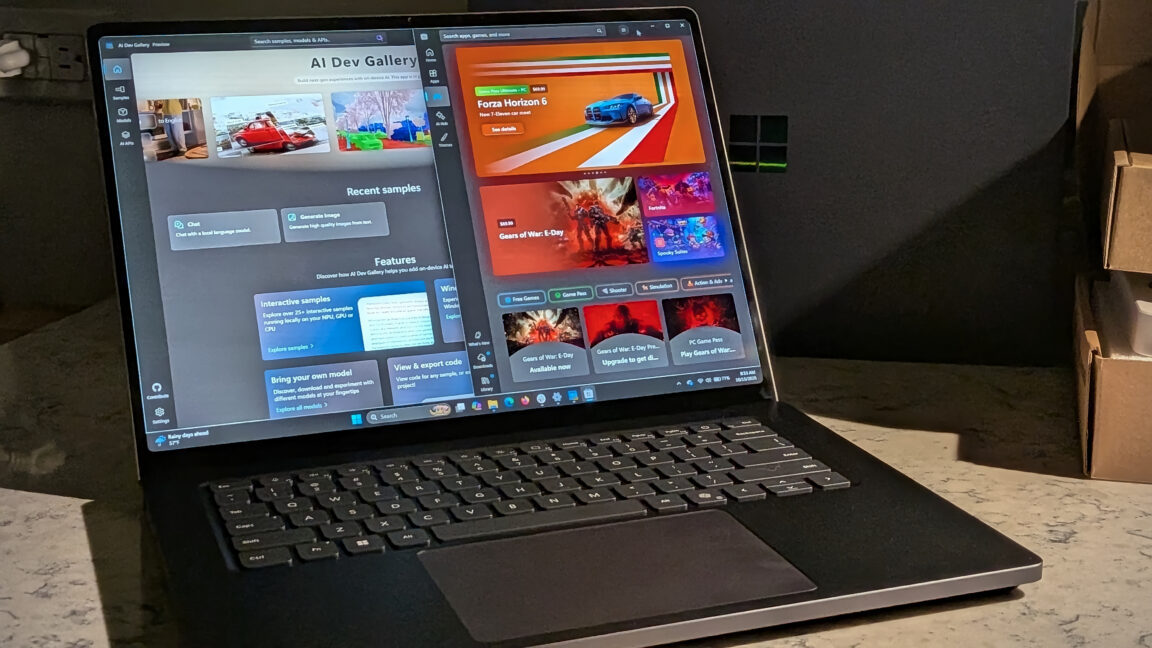
Microsoft's Surface Laptop Ultra, using Nvidia's RTX Spark platform, starts at $2,599 (up to $5,899)
Meta's new commercial terms, effective October 30th, appear to let it crawl and train AI on content from websi…
Vercel data published Thursday shows TypeSafe AI's Jev, a lightweight decision model for choosing among predet…
Reflection AI introduced Beam, an open-weight model for agentic coding and long-horizon tasks, with 501 billio…