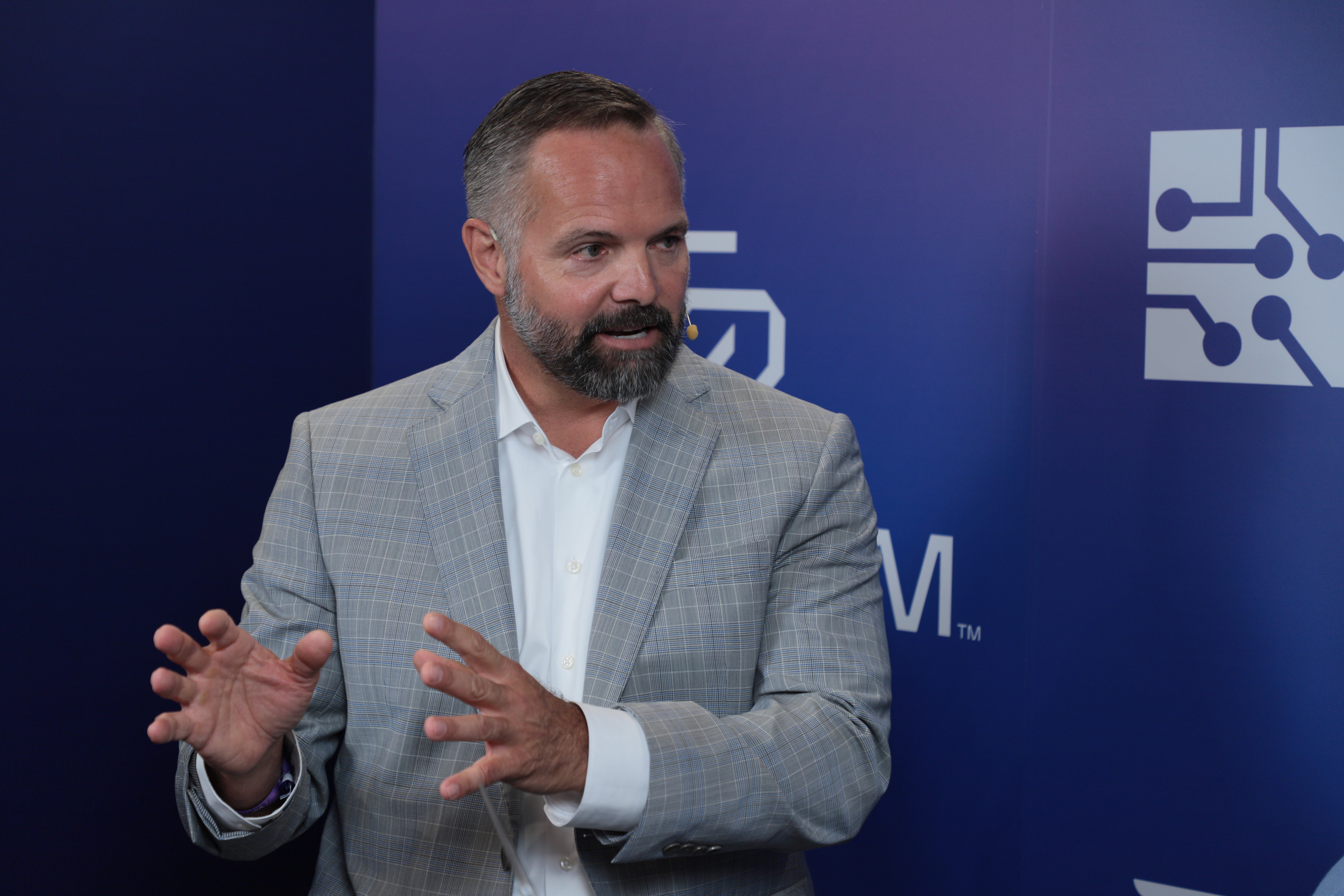
What happened
At RAISE Summit, infrastructure leaders revealed that agentic inference—longer-running AI agent tasks—is creating new bottlenecks in storage, memory, and power consumption. Solidigm's Greg Matson explained that storage has moved into the critical path, becoming "a whole new storage tier that's being created to extend the memory for the system." AMD is optimizing across CPUs, GPUs, and networking rather than individual chips; Tensordyne's Napier inference chip uses logarithmic math to cut power draw to 30 kilowatts (versus 150 kilowatts for a comparable Nvidia system); and d-Matrix is pairing purpose-built accelerators with GPUs for heterogeneous inference in production.
Why it matters
As enterprises move from single-task AI workloads to long-running agentic systems, the infrastructure bottleneck has shifted from raw compute speed to keeping GPUs continuously fed with data and managing power costs. Storage positioned near accelerators is now critical to prevent idle GPU time—which wastes capital since GPUs are the most expensive part of the infrastructure. This reshaping of the AI stack means businesses cannot rely on GPU capacity alone; they must rethink storage, memory staging, and power architecture to stay competitive.
What to watch
Data sovereignty and financing are emerging as infrastructure concerns alongside hardware. Argentum AI is addressing capital constraints by securing customer contracts first, then financing construction—a model that treats "power, compute and capital" as an integrated product. Agentcy Labs and Neo4j are advancing knowledge graphs as a way to give enterprises deterministic control and explainability alongside large language models, positioning sovereignty (territorial, operational, and stack control) as a core infrastructure requirement for agentic deployments.
Summaries like this, in your inbox every morning.
The article documents a fundamental shift in how enterprises design AI infrastructure. The race to scale training—which dominated the past two years—has given way to a phase where inference, particularly agentic inference (longer-running AI agent tasks), is reshaping priorities. Agentic workloads are exposing new bottlenecks that were previously secondary: storage capacity and bandwidth, power efficiency, and the need for heterogeneous computing (specialized accelerators working alongside GPUs rather than replacing them).
This shift is not merely a technical optimization but a strategic reorientation. As Greg Matson explained, hyperscalers are now treating storage as an active extension of GPU memory, not an isolated component. The imperative is to keep GPUs "humming 100% of the time generating tokens," because idle GPU time wastes the largest capital investment. This logic has also accelerated the adoption of power-efficient architectures—Tensordyne's use of logarithmic math to replace multiplications with additions is a concrete example of rethinking silicon design for the constraints of continuous inference rather than batch training.
Beyond hardware, the article reveals that capital and governance have become infrastructure concerns. Argentum AI's financing-first model and the emphasis on data sovereignty through knowledge graphs indicate that enterprises building agentic systems are no longer purchasing isolated components but assembling integrated stacks that account for speed of deployment, cost of capital, and control over proprietary data. This reframing—treating capital, sovereignty, and architecture as co-equal challenges—signals a maturation of the agentic AI market from proof-of-concept to production scale.
Pick your industry and the AI tools you use, and get news related to your work every day.
Free · 30 seconds with Google · unsubscribe anytimeWhat is AIToday? →
Ask AI anything about this article. The AI reads this article, earlier AIToday articles, and Wikipedia, and cites its sources. Q&As are published on this page for other readers too.
ElevenLabs completed a $300 million employee tender at a $22 billion valuation, and co-founder Mati Staniszews…

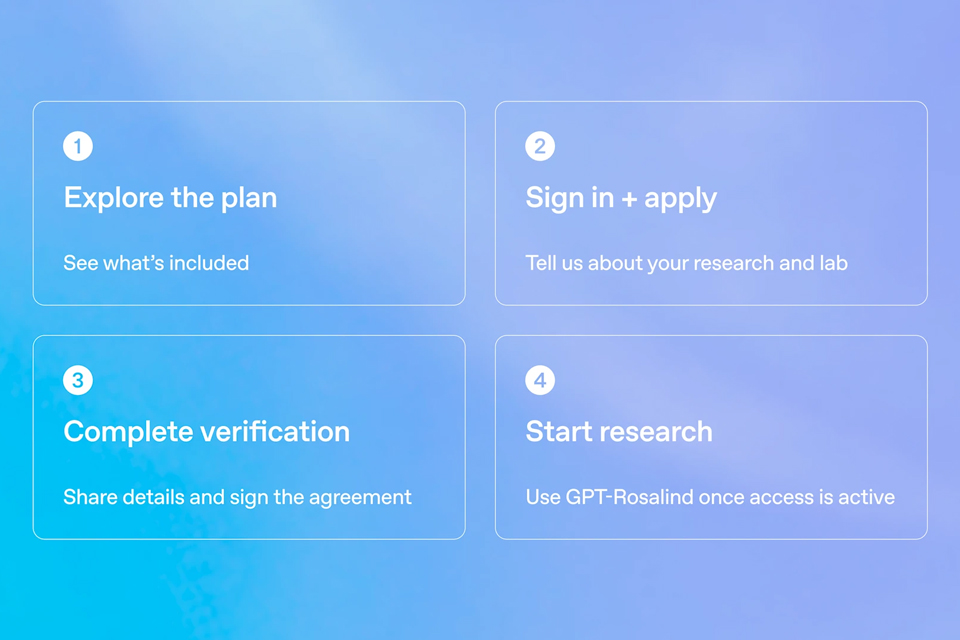
On October 15, OpenAI announced the Rosalind Academic Plan, giving approved US university labs free access to…
A Qiita article compared automated red-teaming methods for LLM apps — GCG, PAIR, and TAP — using mock implemen…

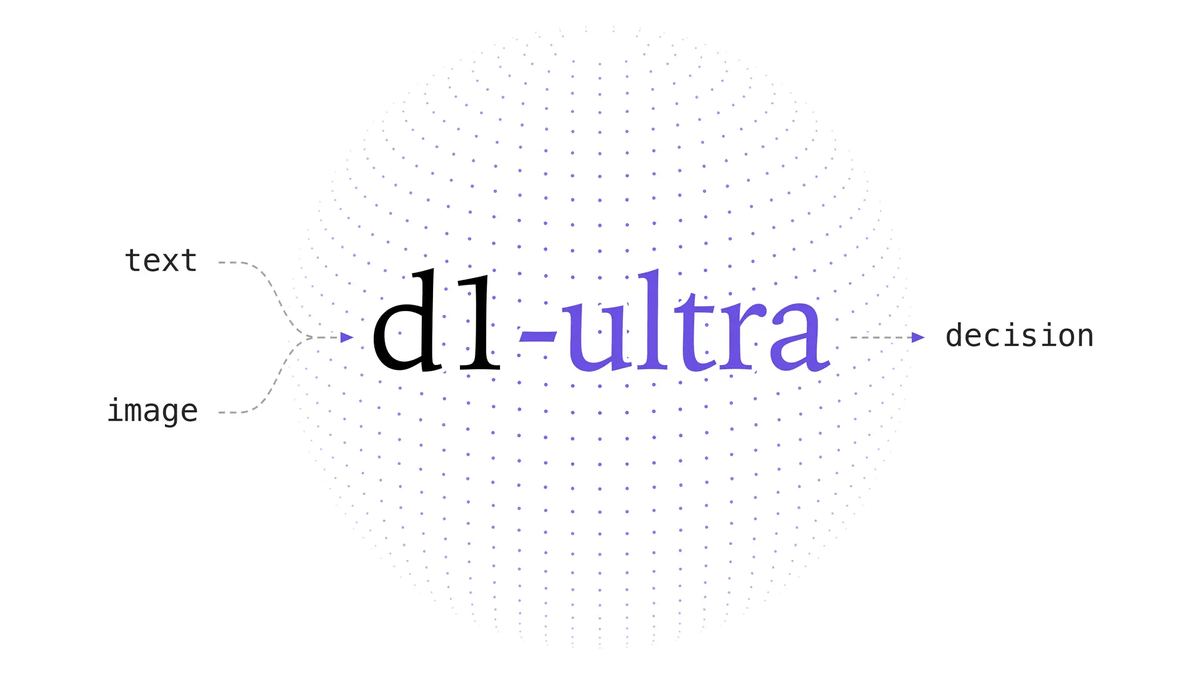
Liquid AI released d1-ultra on October 15, 2026, an upgraded open-weights decision model that averaged 76.7 ac…
Circlia started a proof-of-concept for TASTE SIGNAL: visitors to Holland Village Cafe FUKUOKA taste cookies an…

In a webinar hosted by French Mathematical Society president Isabelle Gallagher, Fields Medal winner Hugo Dumi…

