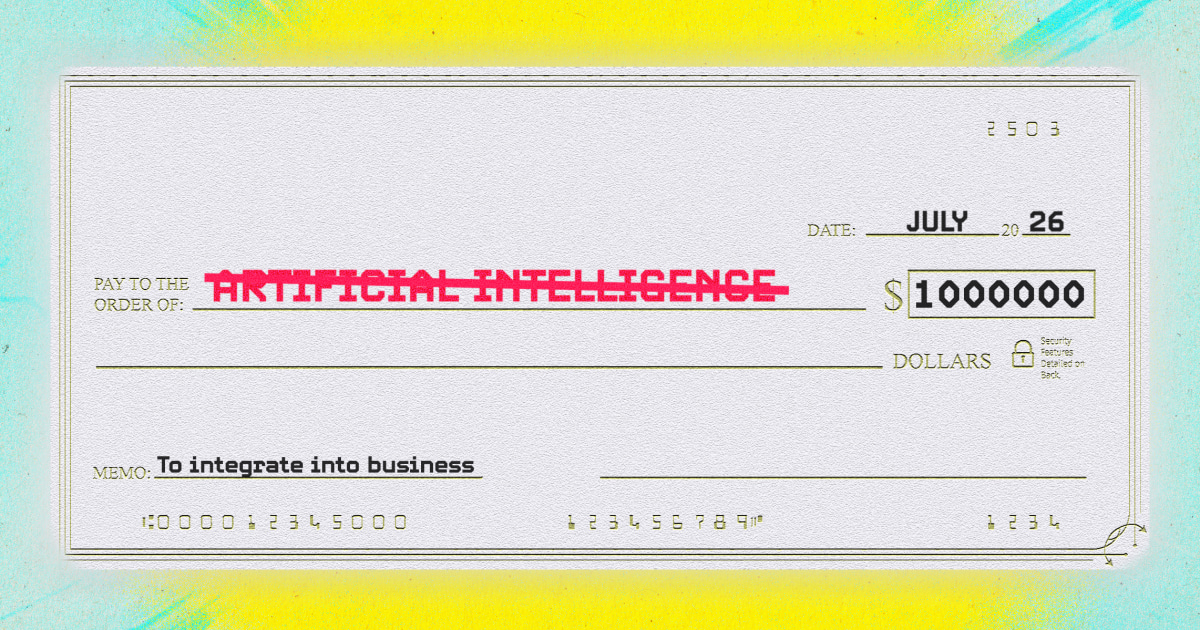
Businesses across sectors are discovering that moving AI from experimental projects into production deployment involves far higher operational costs than initially anticipated. Companies must now rigorously assess whether the productivity benefits and revenue generated by AI systems justify the substantial and ongoing infrastructure spending required to run them.
Summaries like this, in your inbox every morning.
Sign up free →What happened
Companies are confronting rapidly escalating costs for AI infrastructure and compute resources as their AI workloads expand, raising questions about whether AI projects are economically sustainable.
Why it matters
The shift from experimental AI spending to sustained production deployment means businesses can no longer absorb AI costs as overhead—they must now justify AI investments like any other capital expenditure, which could reshape which companies and use cases remain viable.
What to watch
Organizations are beginning to evaluate whether the promised productivity gains and efficiency improvements from AI deployments justify the substantial ongoing compute and infrastructure expenses required to operate them at scale.
Companies implementing AI systems at meaningful scale are discovering that the true cost of AI extends far beyond the initial adoption phase. What began as relatively modest experimental budgets—allowing teams to test language models, prototype applications, and explore use cases—has evolved into substantial ongoing compute and infrastructure expenses as those pilot projects transition to production. The shift reflects the reality that running AI systems continuously to serve business operations or customer needs requires significant computational resources, particularly for inference (the stage where an AI system produces answers or outputs in response to user input). Organizations cannot simply absorb these mounting costs as overhead; instead, they face pressure to demonstrate that their AI deployments generate sufficient productivity gains, efficiency improvements, or new revenue streams to justify the sustained spending. This represents a fundamental change in how companies evaluate AI—no longer as an experimental technology worthy of investment on faith, but as a business tool that must deliver measurable financial returns. The challenge is compounded by the fact that many organizations underestimated the operational cost gap between running AI in controlled pilot environments and operating it reliably at production scale, leaving finance leaders and technology executives confronting budgets that have exceeded initial projections and facing difficult decisions about which AI initiatives to continue funding.
The article highlights a critical inflection point in corporate AI adoption: the transition from speculative, proof-of-concept spending to sustained production operations. During the initial wave of AI enthusiasm, companies could justify relatively small experimental budgets and absorb costs as part of R&D overhead. However, as AI systems move into production—powering real business processes and customer-facing applications—the infrastructure and compute costs multiply significantly. This shift forces finance and technology leaders to apply rigorous cost-benefit analysis to AI projects in a way they did not during the experimental phase. The stakes are higher because production AI systems require continuous compute resources, specialized hardware, and ongoing operational support, transforming what appeared to be discretionary innovation spending into a steady operational expense. For businesses, this means the earlier assumption that AI investments would quickly pay for themselves is now being tested against actual usage patterns and output quality.
No comments yet. Be the first to share your thoughts!
Log in to join the discussion



Get curated AI news from 200+ sources delivered daily to your inbox. Free to use.
Get Started FreeFree · takes 30 seconds · unsubscribe anytime
1 minute a day. The AI essentials.
200+ sources · Email / LINE / Slack
