
Uber depleted its entire 2026 artificial intelligence budget in four months after deploying Anthropic's Claude Code to its engineering teams in December 2025, with adoption reaching 95% by spring and individual engineers accumulating bills as high as $1,200 per coding session. The company's financial models did not anticipate the rapid uptake of the consumption-based tool, and Uber President Andrew Macdonald has since acknowledged difficulty in justifying the rising costs without clear evidence of improved customer features, raising broader questions about whether corporate AI spending is delivering measurable value.
Summaries like this, in your inbox every morning.
Sign up free →What happened
Uber deployed Anthropic's Claude Code to its engineering organization in December 2025, and adoption accelerated rapidly—84% of engineers used it by March, climbing to 95% using AI tools monthly by spring, with roughly 70% of committed code originating from those tools. One executive's two-hour coding session cost $1,200; average monthly costs per engineer ranged from $150 to $250, while heavy users ran up bills of $500 to $2,000.
Why it matters
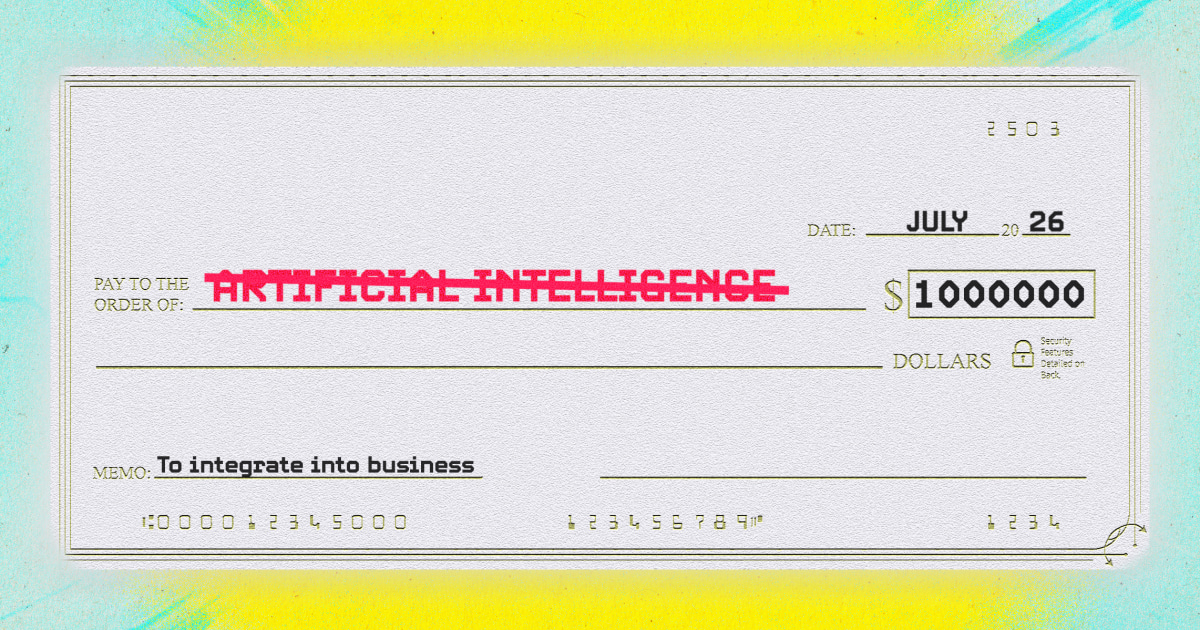
Uber consumed its entire 2026 AI budget in just four months, illustrating how quickly costs spiral when companies roll out consumption-based AI tools broadly without constraints. The company's financial models did not anticipate the speed of adoption, and internal leaderboards ranking engineers by Claude Code usage encouraged higher consumption even though the teams promoting adoption were not responsible for the budget.
What to watch
Uber President and Chief Operating Officer Andrew Macdonald stated it was becoming harder to justify rising token costs without evidence that they were producing more useful features for customers. The core tension remains unresolved: whether the billions of dollars corporate America is pouring into AI are delivering measurable returns.
Uber's artificial intelligence spending crisis began with a promising initiative: rolling out Anthropic's Claude Code to its engineering organization in December 2025. Claude Code is not a simple autocomplete tool—it enables engineers to direct AI agents to work on multiple tasks simultaneously, refactor large sections of software, generate tests, and produce backend code, all of which consume substantial computing resources. The company expected measured, gradual adoption, but instead saw explosive growth driven partly by its own incentive structure.
Adoption accelerated far faster than financial models predicted. In February 2026, just two months after the rollout, 32% of Uber's engineers were using agentic coding tools. That figure jumped to 84% by March and reached 95% by spring, with roughly 70% of committed code originating from AI tools. The speed reflected the tool's power and ease of use, but also Uber's own promotion strategy: the company maintained internal leaderboards ranking engineers by Claude Code usage, creating social and competitive pressure to consume more resources. Critically, the teams that championed adoption were not held accountable for costs, breaking the link between encouragement and financial responsibility.
The bill climbed steeply. Average monthly costs per engineer ranged from $150 to $250, but heavy users faced substantially higher tabs—between $500 and $2,000 per month. A single two-hour coding session by one executive cost $1,200. Within four months, Uber had exhausted its entire 2026 AI budget, a shortfall that forced a reckoning with executives. Uber President and Chief Operating Officer Andrew Macdonald acknowledged the mounting problem, telling The Verge that the company found it increasingly difficult to justify the rising token costs without concrete evidence that they were translating into more useful features for customers. The underlying question—whether the billions of dollars corporate America is investing in AI are producing meaningful returns—remains unanswered.
Uber's experience reveals a critical gap between AI adoption incentives and cost accountability in large organizations. When the company rolled out Claude Code to its engineering teams in December 2025, it created a structure that actively encouraged consumption without tying that consumption to financial responsibility—internal leaderboards ranked engineers by usage, motivating heavier tool engagement without involving budget owners in the decision-making. The result was explosive adoption that overwhelmed financial projections: from 32% adoption in February to 95% monthly use by spring, with roughly 70% of committed code eventually originating from AI tools. This consumption-based model, where costs scale with usage rather than operating under a fixed monthly fee, proved far more expensive than anticipated.
The underlying tension surfaced clearly in Uber President Andrew Macdonald's observation that the company struggled to justify rising token costs without measurable evidence that they were producing more useful features for customers. This captures a broader challenge facing corporate America as it pours hundreds of billions into AI: the link between spending and tangible business results remains unclear. Uber's case shows that rapid adoption of powerful, easy-to-use AI coding tools does not automatically translate into demonstrable customer value, and the organizational dynamics that drive adoption can work against cost discipline.
No comments yet. Be the first to share your thoughts!
Log in to join the discussion



Get curated AI news from 200+ sources delivered daily to your inbox. Free to use.
Get Started FreeFree · takes 30 seconds · unsubscribe anytime
1 minute a day. The AI essentials.
200+ sources · Email / LINE / Slack
