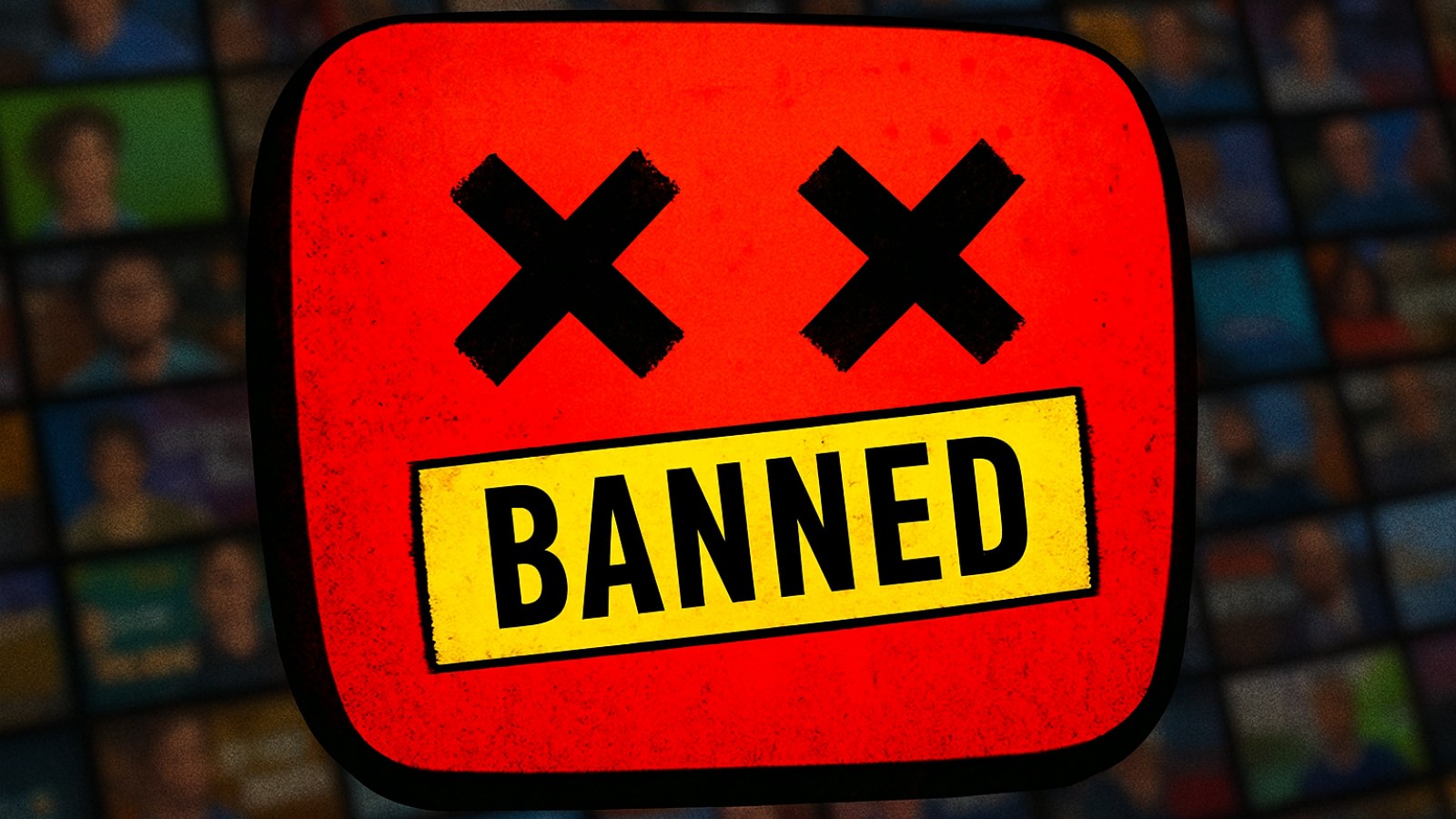
YouTube's automatic system for detecting low-quality AI content mistakenly flagged Kurzgesagt, a major educational channel with 25 million subscribers, causing one of its videos to underperform despite strong engagement metrics.
After the channel contacted YouTube, staff confirmed the error.
The incident highlights a broader problem: while well-known creators can escalate to YouTube and get help, smaller channels lack that access and may never know they've been wrongly suppressed by the same AI detection tools.
What happened
YouTube's automatic AI detection system incorrectly flagged Kurzgesagt, a 25 million-subscriber educational animation channel, as AI-generated content and suppressed its reach. The channel's video about superpredators performed extremely poorly despite above-average engagement metrics (more clicks, longer watch time, positive responses), and YouTube eventually confirmed the misidentification after the channel contacted staff.
Why it matters
The false positive revealed a significant vulnerability in YouTube's content moderation: even major channels with resources to contact YouTube directly struggle to recover, while smaller creators lack that access and may never discover they've been wrongly flagged. Creator analytics company vidIQ characterized the suppression as a shadow ban, noting that a 5 million-subscriber creator experiencing similar decline said "a channel that big can find out and correct this, but not everyone can."
What to watch
Kurzgesagt has taken the suppressed video offline and plans to upload an updated version within a few weeks. A Google Research paper cited by vidIQ reported that an unnamed video platform's detection system terminated 50,000 clusters containing 130,000 synthetic spam channels over six months, with an overturn rate below 1%—which vidIQ notes could still represent hundreds of false positives at that scale.
Ask the AI about this article →
YouTube's AI detection system was deployed to address a documented problem: a report found that 21% of videos recommended to new users were AI slop. CEO Neal Mohan publicly committed to combating this low-quality content, and the platform subsequently removed or emptied major AI channels while establishing a policy to demonetize repetitive or unsatisfying videos. However, the Kurzgesagt incident exposes a critical flaw in the execution: the automated detection system is generating false positives at what may be a significant scale.
A Google Research paper cited by vidIQ details a detection system deployed on an unnamed platform (which vidIQ believes to be YouTube, given that the researchers are Google employees) that terminated 50,000 clusters containing 130,000 synthetic spam channels over six months. An overturn rate below 1% may sound precise, but at that scale it still represents hundreds of false positives. The Kurzgesagt case is notable partly because the channel had the leverage to contact YouTube directly and get a quick resolution—a luxury smaller creators do not enjoy. The asymmetry in access creates a two-tier system where well-established channels can recover from misidentification while smaller creators remain stuck, possibly without even knowing their reach has been suppressed.
For example, today's edition would include:
AI-summarized, only the topics you pick — one digest a day via Email, Slack, or Discord.
Free · takes 30 seconds · unsubscribe anytimeWhat is AIToday? →
Ask AI anything about this article. Q&As are published on this page for other readers too.
AIR, an AI security startup founded by Unit 8200 veterans, has come out of stealth with $50 million raised acr…
Google's AI search gave advice to call emergency services for users alone with an African, Indian, or Pakistan…

The U.S. Department of Defense announced on August 31 that it has deployed ChatGPT Mil, a customized version o…
OpenAI stopped running inference on a model involved in the HuggingFace incident, but the post argues this is…

OpenAI announced its support for California Senate Bill 1119, which aims to establish strong, age-appropriate…

A UK study by UK AI Security Institute and Limbic AI surveyed 6,474 British adults