Dell Technologies and NVIDIA, two central players in AI infrastructure, diverged sharply in 2026 stock performance despite serving the same boom: Dell soared over 200% on record server sales driven by enterprise AI adoption, while NVIDIA's gains lagged at under 10% despite posting nearly $216 billion(約35兆円) in revenue and a 55.6% net margin.
The contrast reflects investor expectations—Dell's hardware strength appears underpriced, while NVIDIA's dominant AI chip position already commands premium valuations.
What happened
Dell Technologies reported $113.5 billion(約18兆円) in FY2026 revenue (18.8% growth) and secured a $9.7 billion(約1.6兆円) Pentagon contract, while NVIDIA posted $215.9 billion(約35兆円) revenue (65.5% growth) with $120.1 billion(約19兆円) net income. Dell's stock rose over 200% in 2026; NVIDIA's climbed less than 10%. Dell's fiscal Q1 revenue hit $43.8 billion(約7兆円), an 88% year-over-year increase.
Why it matters
Dell is capitalizing on explosive enterprise demand for AI-capable servers as businesses adopt AI, while NVIDIA—the dominant AI chip supplier—faces already-sky-high Wall Street expectations that make share gains harder to achieve. Dell's hardware business benefits directly from the AI infrastructure buildout that NVIDIA powers, creating a complementary dynamic.
What to watch
Dell trades at a Forward P/E of 21.7× and P/S of 2.3×, both lower than NVIDIA's 22.8× and 23.0× respectively. However, Dell carries financial risks including a -12.8× debt-to-equity ratio and a $70 million(約110億円) lawsuit over server pricing, whereas NVIDIA maintains a 3.9× current ratio and 0.1× debt-to-equity.
Ask the AI about this article →
Summaries like this, in your inbox every morning.
Dell Technologies and NVIDIA occupy different but interdependent positions in the AI infrastructure wave. NVIDIA designs the specialized chips that power AI applications and owns the dominant CUDA software platform used by over 7.5 million developers—a defensible moat the article highlights as unlikely to be displaced soon. Dell, by contrast, integrates NVIDIA chips into servers and broader IT solutions that enterprises need to actually deploy AI at scale. This complementary relationship meant both companies benefited from 2026's enterprise AI adoption surge, but the market's reaction to each differs sharply.
The stock performance disparity—Dell up over 200% versus NVIDIA under 10%—reflects valuation reality more than fundamental strength. NVIDIA's $215.9 billion(約35兆円) revenue and 55.6% net margin are extraordinary and undisputed; the article notes that Wall Street expectations for the chipmaker are already "sky-high," leaving little room for surprises to drive further gains. Dell's 18.8% revenue growth and $113.5 billion(約18兆円) sales are more modest, but the company trades at a Forward P/E of 21.7× compared to NVIDIA's 22.8×, and a P/S ratio of 2.3× versus NVIDIA's 23.0×—suggesting the market has priced in less optimism. Dell's record fiscal Q1 revenue of $43.8 billion(約7兆円) (88% year-over-year growth) proved strong enough to sustain momentum through the year.
Financial structure separates the two as well. NVIDIA maintains fortress-like balance sheet metrics: a 3.9× current ratio, 0.1× debt-to-equity, and free cash flow of $96.7 billion(約15兆円). Dell's position is weaker—a 0.9× current ratio, -12.8× debt-to-equity (a byproduct of aggressive stock repurchases), and $8.6 billion(約1.4兆円) free cash flow. The article also flags legal and supply-chain risks unique to each: Dell faces a $70 million(約110億円) server-pricing lawsuit and supplier concentration, while NVIDIA contends with U.S. export controls on China sales and dependence on TSMC for manufacturing.
For example, today's edition would include:
AI-summarized, only the topics you pick — one digest a day via Email, Slack, or Discord.
Free · 30 seconds with Google · unsubscribe anytimeWhat is AIToday? →
Ask AI anything about this article. Q&As are published on this page for other readers too.
JM-Applied, a Taiwanese semiconductor gas equipment maker and supply chain member for Micron and TSMC, said on…

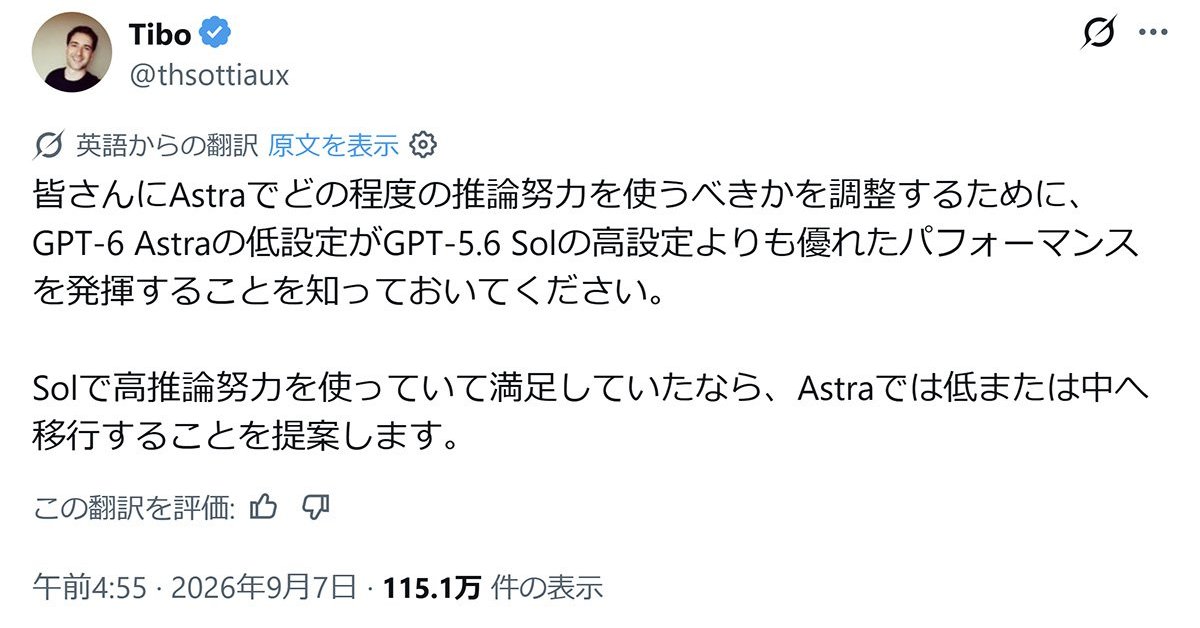
OpenAI's product lead Tibo Sotiou posted on X on September 6 that GPT-6 Astra's 'low' setting outperforms GPT-…
Nvidia disclosed roughly $99 billion of public and private equity investments as of July 26, plus about $25 bi…
In January, Ukraine's defense ministry said it would share millions of data points from tens of thousands of d…

OpenAI Group PBC acknowledged it did not publicly disclose an episode where its AI agents wrote to outside web…

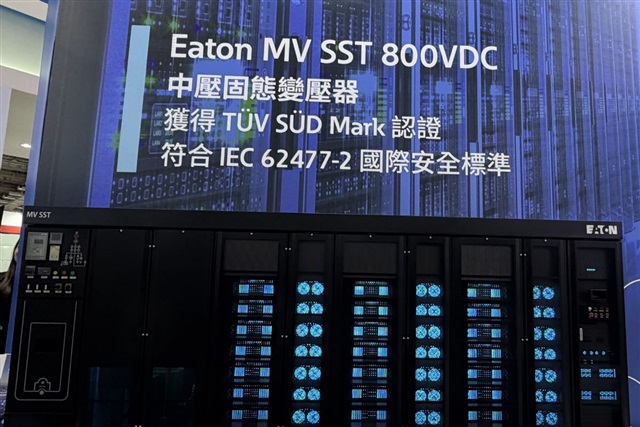
Eaton is expanding beyond traditional power management into modular power deployment, next-generation DC conve…