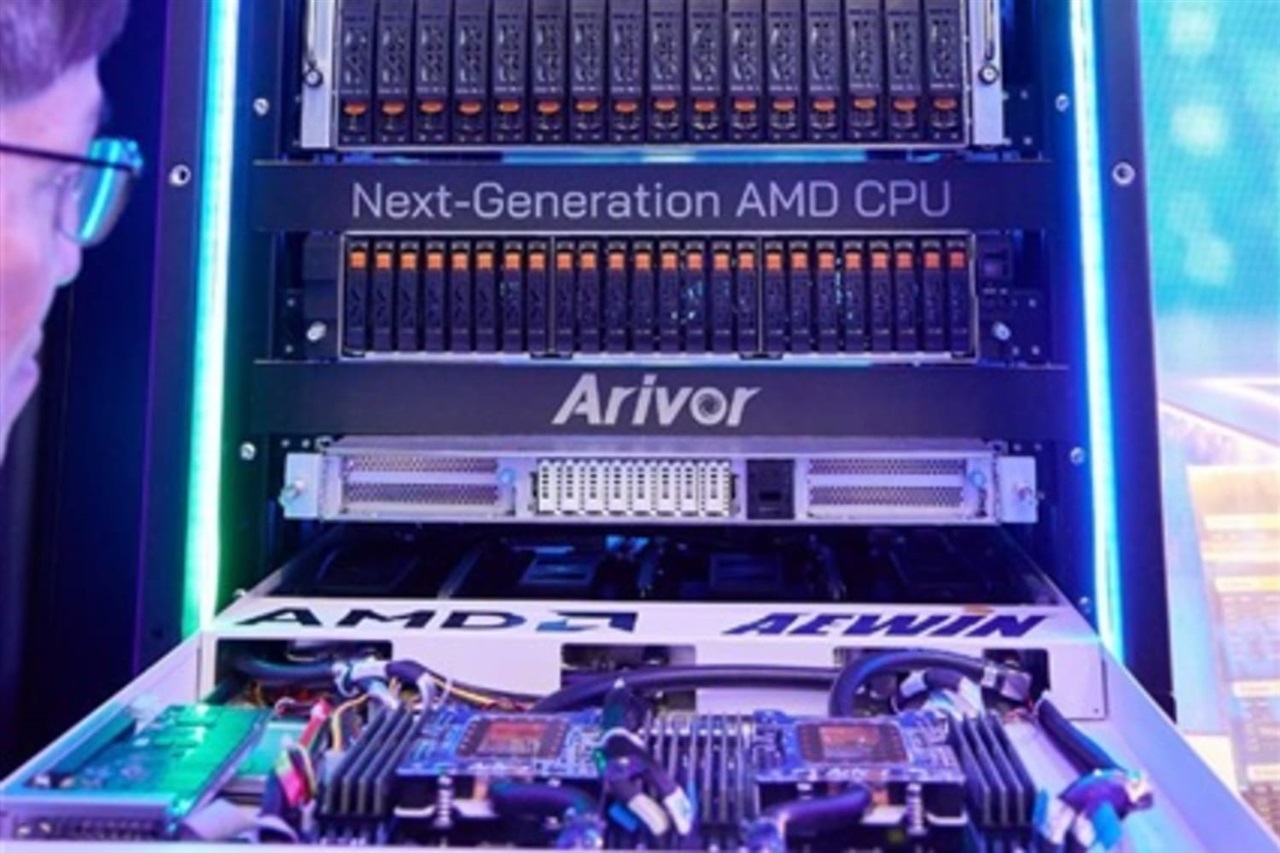
Aewin Technologies has unveiled a four-product server lineup using AMD's EPYC 9006 processors to address AI, computing, and storage needs. The move reflects growing demand fragmentation across different server workloads—training, inference, enterprise applications, and data storage—pushing vendors to offer specialized hardware rather than generic solutions.
Summaries like this, in your inbox every morning.
Sign up free →What happened
Aewin Technologies introduced a four-product server lineup built around AMD's newly launched EPYC 9006 processor family, targeting AI, general-purpose computing, and storage workloads.
Why it matters
Server demand is fragmenting across different use cases—training, inference, enterprise IT, and data storage—requiring vendors to offer specialized hardware solutions rather than one-size-fits-all designs.
What to watch
Aewin's expansion of its product offerings around EPYC 9006 processors reflects the industry's shift toward workload-specific server architectures.
Aewin Technologies has announced a four-product server lineup centered on AMD's newly launched EPYC 9006 processor family. The portfolio is designed to address three distinct workload categories: AI, general-purpose computing, and storage. This launch comes against a backdrop of fragmenting server demand, as customers increasingly require specialized hardware for different computational tasks. The server market has historically centered on general-purpose architectures, but the surge in AI workloads—particularly training and inference—combined with the persistent need for enterprise IT and data storage infrastructure, has splintered demand into multiple specialized segments. Aewin's decision to build a four-product lineup acknowledges this reality, offering vendors and enterprises the ability to select hardware optimized for their specific use case rather than compromising with a one-size-fits-all design. The EPYC 9006 processor family provides the foundation for this portfolio expansion, though the body does not specify the individual product names, configurations, or technical differentiation between the four offerings.
Aewin's introduction of a multi-product server lineup around AMD's EPYC 9006 processors signals a shift in how server vendors approach the market. Rather than deploying a single processor family across all use cases, Aewin is building distinct products tailored to different workload categories. This strategy reflects an underlying market reality: server demand is no longer monolithic. The body notes that demand continues to fragment across training, inference, enterprise IT, and data storage use cases—each with distinct performance, memory, and connectivity requirements. By offering four distinct products rather than one, Aewin is positioning itself to capture market share across these specialized niches, acknowledging that a single architecture cannot efficiently serve both AI training (which demands high compute density) and data storage (which demands capacity and I/O throughput) at the same time.
AI-summarized, only the topics you pick — one digest a day via Email, Slack, or Discord.
Free · takes 30 seconds · unsubscribe anytime
No comments yet. Be the first to share your thoughts!
Log in to join the discussion


Get curated AI news from 200+ sources delivered daily to your inbox. Free to use.
Get Started FreeFree · takes 30 seconds · unsubscribe anytime
