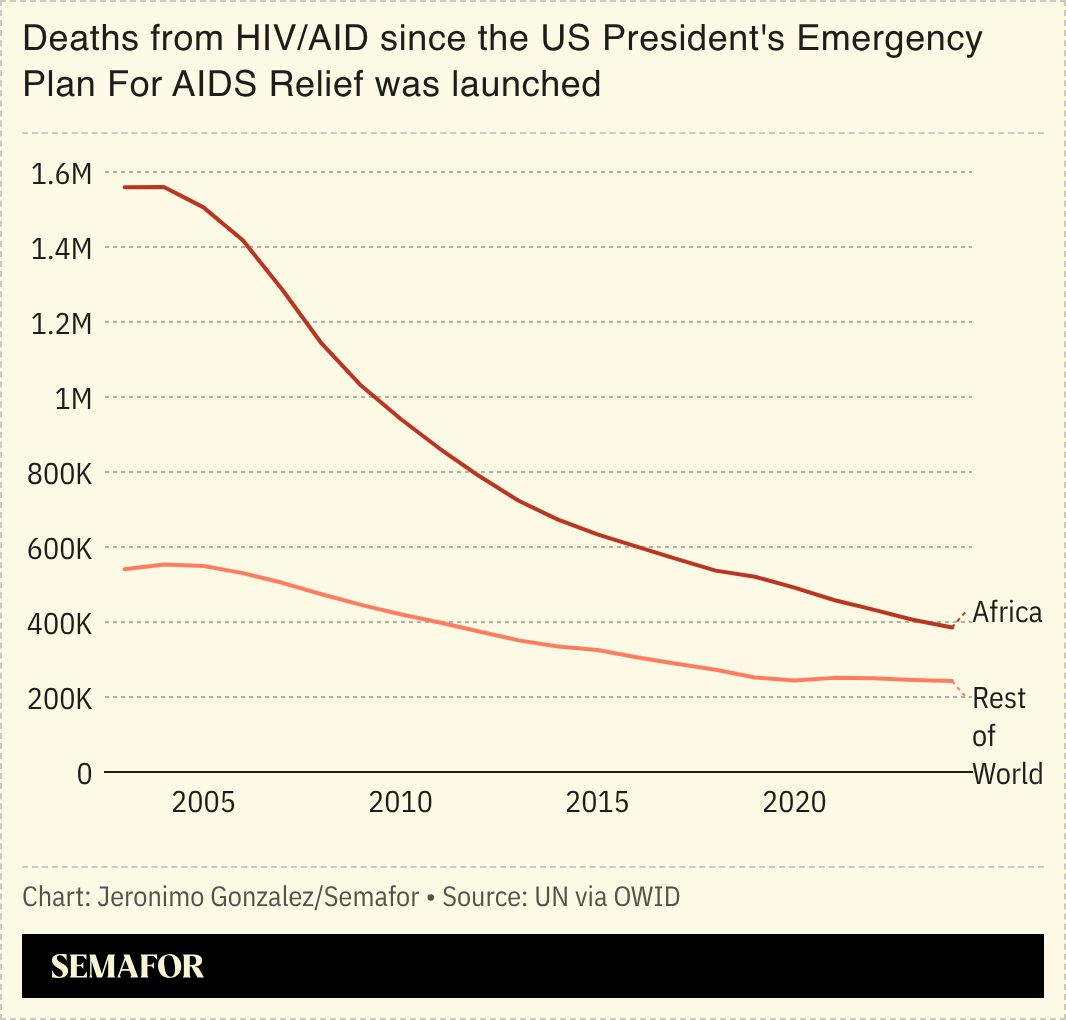
Global HIV funding has fallen to its lowest level in nearly two decades, driven by US and European aid cuts. The United States previously provided almost three-quarters of international AIDS funding; those reductions now threaten to reverse years of progress, particularly in Africa, where HIV deaths dropped from almost 1.5 million two decades ago to less than 400,000 in 2024.
Summaries like this, in your inbox every morning.
Sign up free →What happened
International AIDS funding fell to its lowest level in nearly two decades last year. The United States, which accounted for almost three-quarters of international AIDS funding, slashed foreign aid spending under President Donald Trump, and European countries have followed suit.
Why it matters
The cuts risk reversing progress made against HIV. Deaths in Africa have dropped from almost 1.5 million two decades ago to less than 400,000 in 2024—gains that funding reductions now threaten to undo, putting tens of thousands of lives at risk.
What to watch
An expert quoted by The New York Times warned that "the long-term trajectory could be back to as depressing as I thought it was going to be," signaling concern that without restored funding, HIV mortality could rebound sharply.
Global funding for HIV and AIDS prevention and treatment fell to its lowest level in nearly two decades in the past year, creating alarm among public health officials about a potential resurgence of cases. The United States has historically dominated international AIDS funding, providing almost three-quarters of all international funding before recent cuts. President Donald Trump's administration slashed foreign aid spending, and European countries have responded with similar reductions of their own. These funding cuts threaten to reverse hard-won progress against the disease. In Africa particularly, the gains have been substantial: deaths have dropped sharply from almost 1.5 million two decades ago to less than 400,000 in 2024. An expert speaking to The New York Times expressed deep concern about the trajectory, warning that "the long-term trajectory could be back to as depressing as I thought it was going to be." The combined effect of US and European aid reductions puts tens of thousands of lives at immediate risk and risks undoing years of international effort to control the pandemic.
The resurgence of HIV cases follows a dramatic shift in international funding priorities. The United States has long been the dominant source of global AIDS financing, providing almost three-quarters of international funding before the recent cuts. That leadership, combined with sustained European investment, enabled substantial progress against the disease over the past two decades—most notably in Africa, where mortality fell by more than three-quarters. The body's framing makes clear that these cuts represent a reversal of that trajectory rather than a pause: an expert quoted in The New York Times expressed concern that funding reductions could restore HIV to epidemic conditions reminiscent of an earlier era. The specific mention of Africa underscores where the human cost of defunding is likely to be most severe, given that the continent accounts for a large share of global HIV cases and has benefited most from years of international support.
AI-summarized, only the topics you pick — one digest a day via Email, Slack, or Discord.
Free · takes 30 seconds · unsubscribe anytime
No discussion yet for this article
Get curated AI news from 200+ sources delivered daily to your inbox. Free to use.
Get Started FreeFree · takes 30 seconds · unsubscribe anytime

