What happened
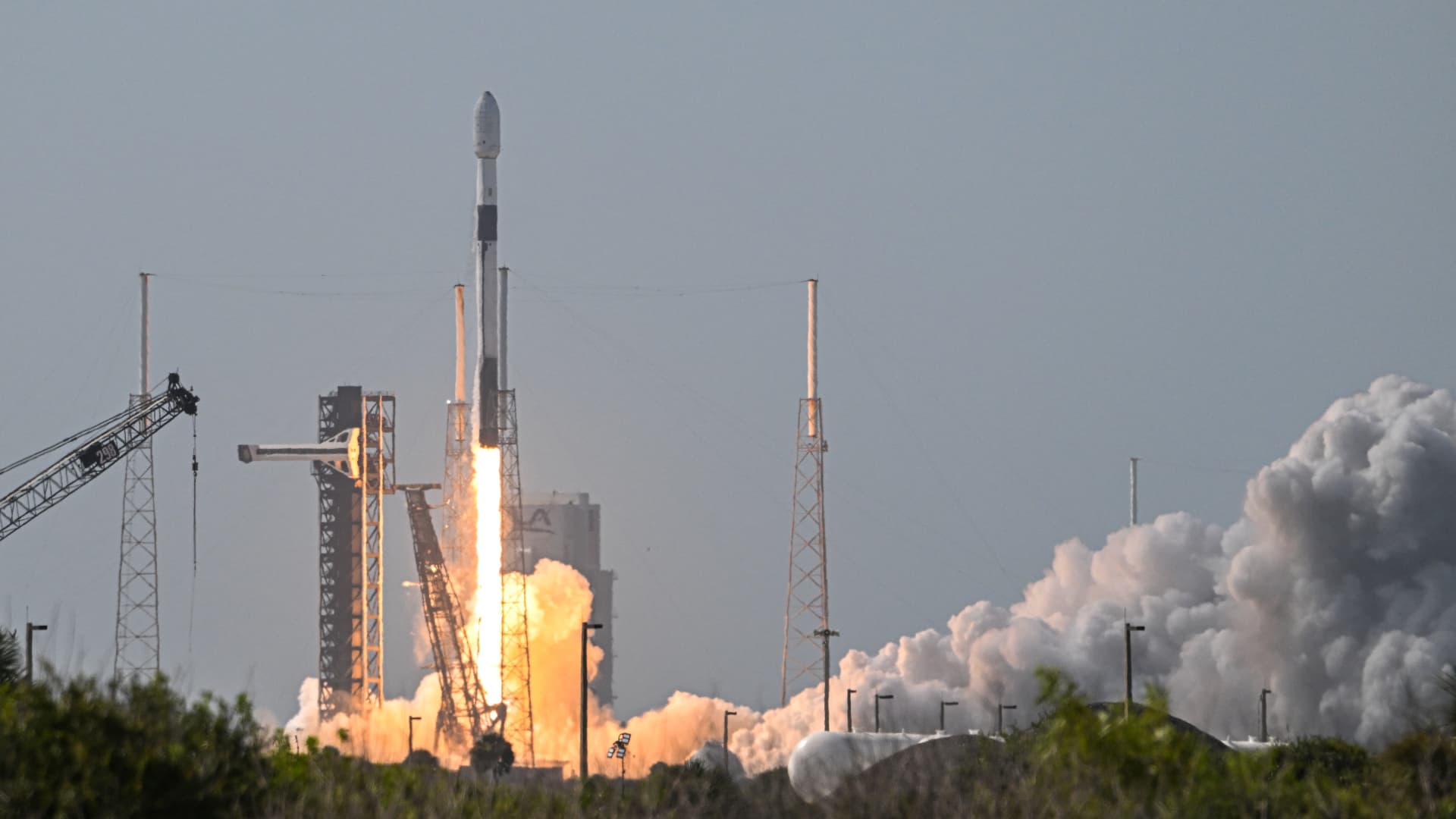
Alphabet launched its own tensor processing units (TPUs — Google's custom AI chips) on a SpaceX Falcon 9 on Thursday, the first in-orbit test for Project Suncatcher, first revealed in November 2025.
Why it matters
Chip performance in orbit is still unknown.
What to watch
Industry experts say orbital data centers would need cooling systems and radiation-hardened chips, and remain limited by expensive rocket launches. SpaceX COO Gwynne Shotwell said 'supercompute in space' will be deployed in 2027.
WHO IT HITSCloud and AI infrastructure planners evaluating where future compute capacity will live, and satellite operators like Planet Labs whose hardware rode the same mission, may now see orbital AI as a nearer-term test rather than a distant concept.
Summaries like this, in your inbox every morning.
Alphabet's Thursday launch marks a shift from ground-based testing to actual orbital conditions. The company had already run its TPUs on AI workloads at a facility at the University of California at Davis, but does not yet know how the chips will perform in the challenging conditions of low Earth orbit. Low Earth orbit offers near-constant sunlight, which Alphabet says can generate up to eight times more solar power than on Earth — a potential answer to the data center backlash on the ground that SpaceX has cited as motivation.
The two companies are unusually intertwined for competitors in AI: Alphabet is a significant investor in SpaceX, which went public in June in a record IPO, and Alphabet's stake is currently valued at over $82 billion. SpaceX, led by Elon Musk, has separately announced plans to build and launch its own orbital data centers — swarms of satellites developed in Redmond, Washington, equipped with graphics processing units and solar arrays it plans to produce with Tesla.
Whether orbital data centers become viable hinges on whether chips can survive extreme temperatures and radiation, and whether launch costs and capacity can support them. For Alphabet, the test also carries a strategic edge: if its TPUs work in orbit, it would validate its own silicon for a market where it now competes with its own investee. The outcome may not be clear until later missions confirm whether in-orbit AI workloads can run reliably at scale.
Pick your industry and the AI tools you use, and get news related to your work every day.
Free · 30 seconds with Google · unsubscribe anytimeWhat is AIToday? →
Ask AI anything about this article. The AI reads this article, earlier AIToday articles, and Wikipedia, and cites its sources. Q&As are published on this page for other readers too.
Chunghwa Telecom president Rong-shy Lin said the shift from conversational AI to autonomous AI agents is resha…

Apple and Meta said they would jointly release a new open-weight AI model designed to run on high-end Macs, ai…

A writer and entrepreneur opened his daily to-do list and found 156 items, and concluded that an AI assistant…

A Zenn contributor sorted AI use into three modes — AI as an assistant, AI running alongside people, and AI th…

A non-engineer operator says one person ships four smartphone apps on Google Play, three on the App Store, wit…
The walkthrough points the CLI at a local mock via the ANTHROPIC_BASE_URL environment variable

