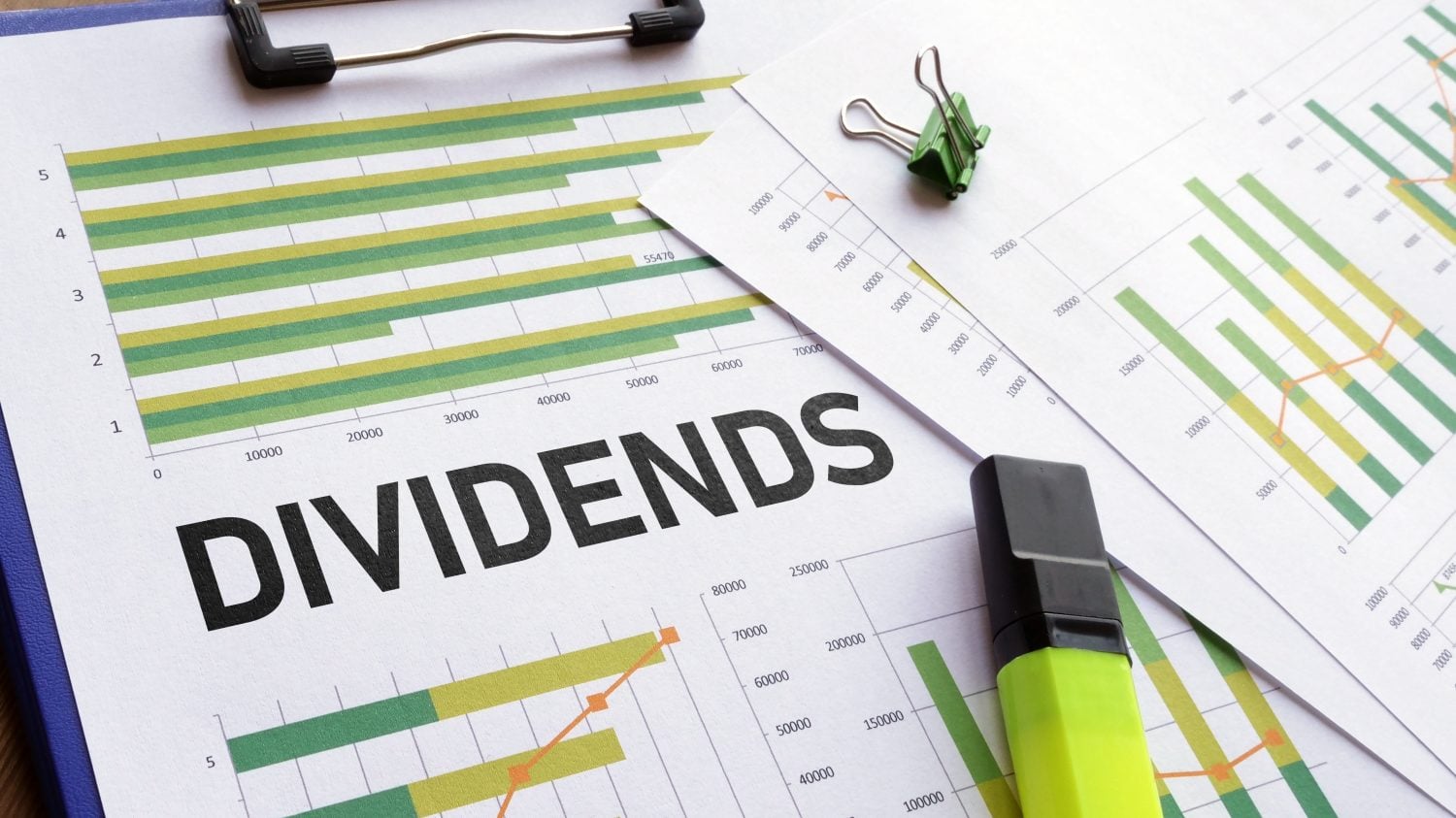
The Vanguard High Dividend Yield ETF has returned 17% year-to-date through August 19, beating the S&P 500's 13% return by owning cheaper, mature companies with high dividend payouts—a mechanical screen that excludes most megacap AI names.
While this valuation advantage is real, over ten years VYM returned only 207% versus the S&P 500's 252%, reflecting the long-term cost of missing AI-driven growth.
The outperformance is defensible only if the market's recent shift away from expensive growth stocks continues.
What happened
The Vanguard High Dividend Yield ETF (VYM) returned 17% year-to-date through August 19, outpacing the S&P 500's 13% gain. VYM trades at a forward earnings multiple around 16, while the S&P 500 sits closer to 23. The fund's mechanical yield screen automatically excludes most megacap AI companies that reinvest rather than pay dividends, leaving top holdings like Exxon, Johnson & Johnson, AbbVie, Chevron, JPMorgan, and Coca-Cola at single-digit and low-teens valuations.
Why it matters
VYM's outperformance reflects a temporary valuation advantage—the fund owns the cheaper half of large-cap America while the index is concentrated in expensive AI leaders. However, over a ten-year period, VYM returned 207% compared with the S&P 500's 252%, showing the cost of excluding growth. The fund's 4 basis point expense ratio means investors keep gains from any valuation shift. For business leaders and investors, this illustrates the risk of concentration in AI: valuations require continued execution to justify their premium, while VYM's discount is defensible only if growth-led leadership pauses.
What to watch
VYM's relative performance depends on whether "the cheapest half of large-cap America outperforms the most expensive quarter"—a trade that has held since 2022 began but is not guaranteed to continue. The fund is unsuitable for those seeking spendable income (its quarterly distribution is irregular, most recently $0.9795 against $0.8617 the prior quarter, and yield sits well below the 10-year Treasury at 5%) or those betting the AI capex cycle will drive index returns for years ahead.
Ask the AI about this article →
VYM's 2024 outperformance is driven by a structural mismatch in valuations. The fund's rules-based dividend yield screen mechanically excludes companies with below-average payouts, which removes most of the megacap AI complex that has dominated index returns since 2023. As a result, VYM holds mature, cash-generative businesses—companies with 50-plus-year dividend growth streaks—that trade at a 16x forward P/E versus the S&P 500's 23x. That seven-point gap in earnings multiple is the entire engine of the 2024 lead.
The article frames this explicitly as a valuation story with two competing interpretations. It is "earned" in the sense that dividend-paying businesses are fundamentally cheaper because they distribute cash rather than reinvest it in growth; over ten years, VYM lagged the index by 45 percentage points (207% vs. 252%) because it missed the AI trade that has defined equity returns. It is an "opportunity" in the sense that the S&P 500's 23x multiple requires continued execution from the AI leaders to justify their premium—execution that is not guaranteed. The body does not predict which interpretation will prevail; it notes only that VYM wins "when the cheapest half of large-cap America outperforms the most expensive quarter, and that is exactly what is happening now."
AI-summarized, only the topics you pick — one digest a day via Email, Slack, or Discord.
Free · takes 30 seconds · unsubscribe anytime
Ask AI anything about this article. Q&As are published on this page for other readers too.
Salesforce trades at a P/E of 23 with free cash flow yield of 8.53%, down 21.8% year-to-date, ahead of its fis…
In August 2026, NVIDIA announced memorandums of understanding with KKR and five other global financial institu…

RBC Capital Markets models Nvidia's fiscal Q2 revenue at $91.1 billion and adjusted EPS at $2.06, slightly bel…
SK Hynix and SanDisk, two major memory-chip makers, are being compared for investment potential through end-20…
Wolfe Research told clients that clarity on how AI labs are financing multi-gigawatt chip deals, along with st…

The Vanguard Growth ETF (VUG), which holds major AI infrastructure players including Nvidia, Microsoft, Amazon…

The AI news that matters, in one minute each morning.
Sign up free