What happened
Alibaba released Qwen Image 3.0 Pro, a text-to-image API that converts natural-language prompts into images for creative, commercial, editorial, and product workflows. The model supports flexible aspect ratios, seed-based reproducibility, and multiple creative styles (photorealistic, editorial, illustrative, product, cinematic).
Why it matters
The API is positioned as an alternative to competitors like GPT Image, FLUX, and Midjourney, tailored for teams building image production around Qwen and Alibaba integrations. Unlike Midjourney's community-driven interface, Qwen Image 3.0 Pro is designed for developers who need programmatic generation inside product and content pipelines.
What to watch
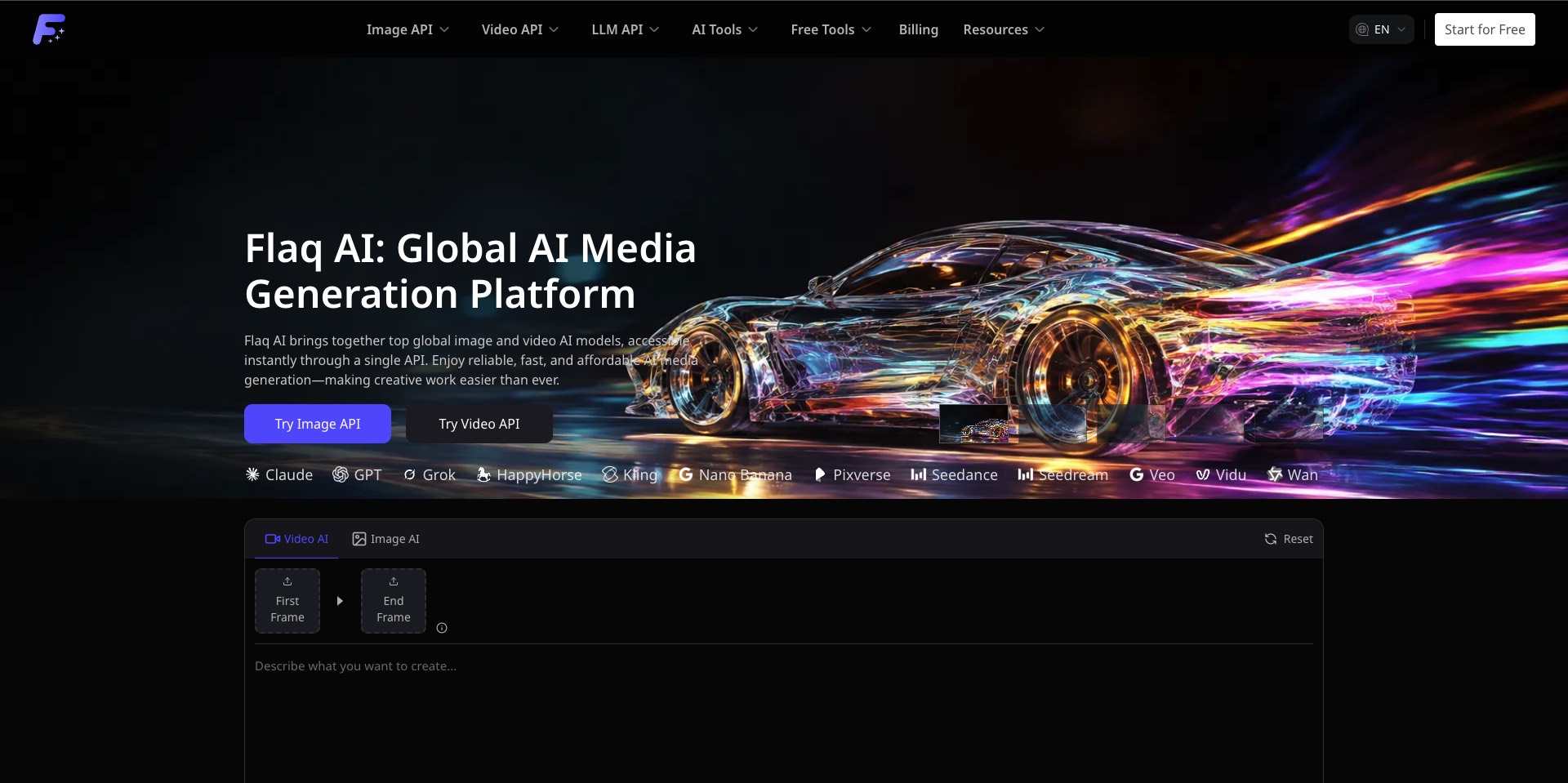
The API is free to try through Flaq AI, which provides an application-ready interface for repeatable image production. Image quality and reproducibility depend on prompt specificity and seed selection, so users should review generated assets for visual accuracy and suitability before publishing.
Summaries like this, in your inbox every morning.
Alibaba's release of Qwen Image 3.0 Pro enters a crowded market of text-to-image generation tools, but targets a specific segment: developers and teams who need programmatic access to image generation within production pipelines rather than interactive creative tools. The article frames the model's value around reproducibility and composition control—features it achieves through seed support and flexible aspect-ratio settings—which appeal to commercial workflows where consistency and iterative refinement matter. The comparison section positions Qwen Image 3.0 Pro as a developer-first alternative to Midjourney's community platform and as an Alibaba-native choice against more general competitors like GPT Image and FLUX. The free trial availability through Flaq AI lowers the barrier to testing, though the article notes that output quality depends on prompt specificity and seed selection, placing responsibility on users to validate results before publication.
Pick your industry and the AI tools you use, and get news related to your work every day.
Free · 30 seconds with Google · unsubscribe anytimeWhat is AIToday? →
Ask AI anything about this article. The AI reads this article, earlier AIToday articles, and Wikipedia, and cites its sources. Q&As are published on this page for other readers too.
Chunghwa Telecom president Rong-shy Lin said the shift from conversational AI to autonomous AI agents is resha…
CoreWeave fell 5% in premarket trading Friday and was on track to finish the week down 15%, after rebounding f…
Apple and Meta said they would jointly release a new open-weight AI model designed to run on high-end Macs, ai…
Investors put $38.5 billion into Asian startups in Q3, per Crunchbase data

A longtime Anthropic investor told Fortune he expects shares priced around $1.8 trillion, below the company's…
In Q2, billionaires or their funds sold six 'Magnificent Seven' AI stocks