What happened
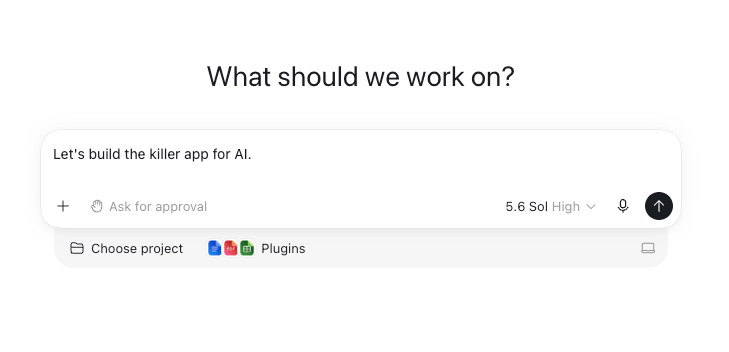
OpenAI released ChatGPT Work last month, a version of its Codex coding tool for non-engineers. It connects AI agents to email, Slack, Notion, and more, and is available on the lowest subscription tier at $20 a month.
Why it matters
The product aims to bring AI agents to white-collar workers beyond software engineers, a market OpenAI sees as crucial for growth. An OpenAI-backed study found only 17% of organizational and less than 1% of individual subscribers used Codex, versus 98% of employees, highlighting the adoption gap.
What to watch
OpenAI faces challenges in making the tool intuitive and reliable for non-technical users, and in evaluating work that isn't as measurable as code. The company uses its GDPval benchmark, drawn from 44 occupations, to guide development.
Summaries like this, in your inbox every morning.
ChatGPT Work is OpenAI's attempt to expand AI agents beyond software development, a field where tools like Codex have seen strong adoption. The company's internal study shows a stark contrast between employee usage (98%) and subscriber usage (17% for organizations, under 1% for individuals), underscoring the challenge of making AI agents appealing to a broader workforce. OpenAI's engineers are focused on improving the 'harness'—the software that connects the model to tools and instructions—to make the experience more intuitive, much like how graphical interfaces replaced command lines for everyday users.
The product's commercial logic is clear: agents that work longer consume more tokens, increasing revenue per user. To succeed, OpenAI must not only refine the technology but also convince cautious users to grant access to sensitive data, a barrier the article's author personally grappled with. The company also faces competition from vertical-specific rivals like Harvey and Clay, which tailor AI to law and sales, respectively. OpenAI's path forward relies on learning from early adopters and continuously improving the product based on feedback, as the broader goal is to move AI from answering questions to autonomously completing complex tasks for everyone.
Pick your industry and the AI tools you use, and get news related to your work every day.
Free · 30 seconds with Google · unsubscribe anytimeWhat is AIToday? →
Ask AI anything about this article. The AI reads this article, earlier AIToday articles, and Wikipedia, and cites its sources. Q&As are published on this page for other readers too.
Chunghwa Telecom president Rong-shy Lin said the shift from conversational AI to autonomous AI agents is resha…

CoreWeave fell 5% in premarket trading Friday and was on track to finish the week down 15%, after rebounding f…
Apple and Meta said they would jointly release a new open-weight AI model designed to run on high-end Macs, ai…

Investors put $38.5 billion into Asian startups in Q3, per Crunchbase data

A writer and entrepreneur opened his daily to-do list and found 156 items, and concluded that an AI assistant…

A longtime Anthropic investor told Fortune he expects shares priced around $1.8 trillion, below the company's…