What happened
Wistron, a Taipei-based electronics manufacturer spun off from Acer in 2001, reported $70.2 billion in revenue in 2025—more than double the year before—with servers accounting for 70% of total sales. The company ranked No. 198 on this year's Fortune Global 500, a rise of 298 spots from the year before and the largest jump on the ranking. In the first half of 2026, revenue already hit $55 billion.
Why it matters
Wistron's growth shows how the AI wave is lifting manufacturers of the physical infrastructure behind the AI revolution, not just chipmakers and software developers. The company made a strategic bet almost a decade ago to become a key Nvidia partner, manufacturing servers that hold Nvidia's AI processors—a far higher-margin business than the low-margin PC and smartphone assembly it had been doing. After exiting the smartphone business in 2023 due to low margins and labor unrest, Wistron was freed to focus entirely on AI servers, capitalizing on the explosion of demand following ChatGPT's launch in late 2022.
What to watch
Wistron's two Texas complexes near Fort Worth, covering 1.09 million square feet and dedicated to assembling Nvidia AI supercomputers, represent a $761 million investment made official last August. The facilities are expected to create over 800 jobs and allow Wistron to serve U.S. customers while avoiding potential tariffs on imports from Taiwan. Nvidia booked all capacity at Wistron's newly inaugurated 287,000-square-foot server plant in Zhubei, Taiwan through 2026, and the company immediately leased a nearby textile factory to expand AI server production further.
Summaries like this, in your inbox every morning.
Wistron's ascent represents a classic corporate comeback enabled by strategic timing and a decades-long partnership with Nvidia. The company was founded in 2001 as a spinoff of Acer's manufacturing division, tasked with escaping what cofounder Stan Shih called the "smiling curve"—an economic model positing that assembly and manufacturing occupy the lowest-margin position in the supply chain, while higher margins accrue at design and retail ends. For two decades, Wistron struggled in that low-margin middle ground, first assembling PCs and then attempting to build smartphones. The iPhone's 2007 unveiling left Wistron "stuck in the middle," as chair Simon Lin later recalled, and despite launching one of India's first iPhone factories in 2017, the smartphone business proved unsustainable due to thin margins and labor challenges. By 2023, that exit looked prescient: it freed Wistron to bet entirely on AI servers, a business it had begun manufacturing for Nvidia almost a decade earlier.
The catalyst was OpenAI's December 2022 unveiling of ChatGPT, which triggered skyrocketing demand for Nvidia's processors suited to training large language models. Wistron, as a longtime Nvidia manufacturing partner, found itself at the center of a supply-chain bottleneck. The company had to find new factory space, hire talent, and navigate new supply chains at unprecedented speed—a challenge Lin described as "very practical challenges, day and night." When Wistron opened a 287,000-square-foot server plant in Zhubei, Taiwan last year, Nvidia immediately booked all its capacity through 2026, forcing the company to lease a nearby textile factory for rapid conversion into additional server production. The speed of innovation itself has unsettled even Lin: where server generations once lasted two and a half to three years, with roughly a year of design time followed by two years in market, AI server generations now arrive yearly with "revolutionary" changes each time.
Wistron's $761 million investment in Texas complexes reflects both defensive and strategic thinking. While Trump's threatened 32% tariff on Taiwan imports provided immediate motivation, the location offers practical advantages: AI servers are heavy (sometimes over six tons), making them difficult to ship globally, and a U.S. manufacturing footprint positions Wistron to serve American customers directly. The Texas facilities are expected to create over 800 jobs and signal that even companies partially driven by tariff concerns can find longer-term business logic in geographic diversification.
Pick your industry and the AI tools you use, and get news related to your work every day.
Free · 30 seconds with Google · unsubscribe anytimeWhat is AIToday? →
Ask AI anything about this article. The AI reads this article, earlier AIToday articles, and Wikipedia, and cites its sources. Q&As are published on this page for other readers too.
Supermicro Computer appointed Mark Long as chief financial officer, bringing an experienced technology finance…
Holtek Semiconductor unveiled its 2026 product roadmap on October 15, focusing on four core areas: smart prote…
TSMC reported about NT$763.1b in Q3 net profit and confirmed that demand for advanced processors is running ah…
Nvidia-backed CoreWeave steadied Thursday after a sharp slump, as investors worried about the debt financing b…
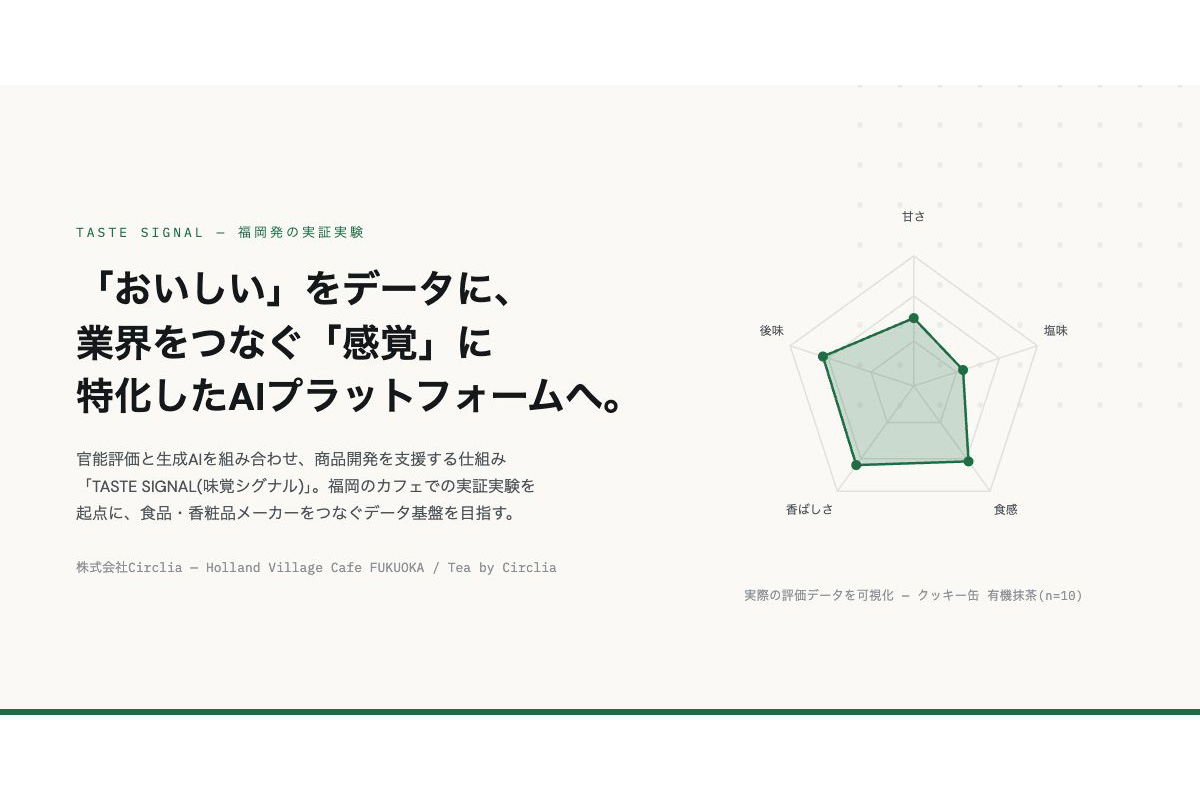
Circlia started a proof-of-concept for TASTE SIGNAL: visitors to Holland Village Cafe FUKUOKA taste cookies an…
TOPPAN Holdings and Keio University ran a quantum-computer and generative-AI proof-of-concept from February 1…