What happened
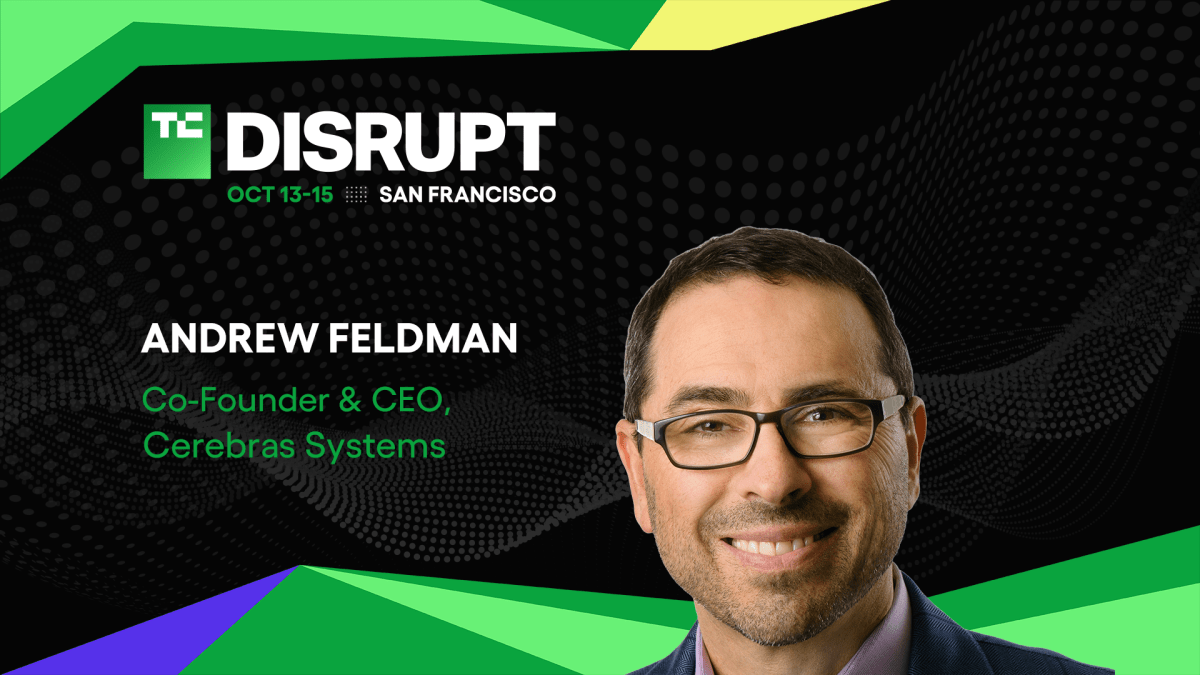
Cerebras Systems CEO and co-founder Andrew Feldman will take the Disrupt Stage at TechCrunch Disrupt 2026 for a session titled "Can AI Keep Scaling?" about compute, energy, and infrastructure demand.
Why it matters
The session will explore whether AI hardware can keep pace with increasingly capable models, and what happens when conventional architectures hit their limits.
What to watch
The discussion's outcome hinges on Feldman's assessment of scaling constraints, with the session taking place October 13-15 at Moscone West in San Francisco.
WHO IT HITSFounders, investors, and technology leaders making AI infrastructure decisions will hear one founder's take on compute demand and hardware limits. The session also offers a networking opportunity for 10,000+ expected attendees.
Summaries like this, in your inbox every morning.
Cerebras Systems has spent the past decade challenging the assumption that powerful AI requires conventional chip architectures. Instead of cutting a silicon wafer into individual chips, the company developed a processor built on the wafer itself, an approach designed for demanding AI workloads. That bet was made long before today's AI infrastructure boom.
Now the company is scaling that approach. It raised $5.5 billion in its May IPO and signed a multiyear agreement with OpenAI to deploy 750 megawatts of Cerebras systems from 2026 through 2028. In August, Cerebras introduced CS-4, its latest generation of wafer-scale AI infrastructure. The company also reported more than 600 megawatts of data center capacity live or under contract for delivery by the end of 2027, and said it was increasing manufacturing capacity more than tenfold during 2026.
At TechCrunch Disrupt 2026, Feldman will put those constraints into context. For those building, funding, or deploying AI, the session may offer a view of where compute demand is heading and where today's hardware could hit its limits. The stakes hinge on whether wafer-scale computing can deliver on its promise as AI models demand ever more compute, energy, and infrastructure.
Pick your industry and the AI tools you use, and get news related to your work every day.
Free · 30 seconds with Google · unsubscribe anytimeWhat is AIToday? →
Ask AI anything about this article. The AI reads this article, earlier AIToday articles, and Wikipedia, and cites its sources. Q&As are published on this page for other readers too.
Gabelli Dividend Growth Fund started a 1.2% position in Microsoft Corporation (NASDAQ:MSFT) near its 52-week l…

Rosenblatt raised its Amazon price target to $360 from $335, kept a Buy rating, and called concerns that AI sh…

In Oracle's 80-turn evaluation, Oracle AI Agent Memory held input near 1,300 tokens per request while flat his…
Arrowfly launched AI for Engineers, combining a news desk, a Sept

Deepseek released open-source programming tools for Huawei's Ascend chips, including libraries for computation…

LinkedIn CEO Dan Shapero told the Wall Street Journal that job seekers have sent out 30% more applications tha…