What happened
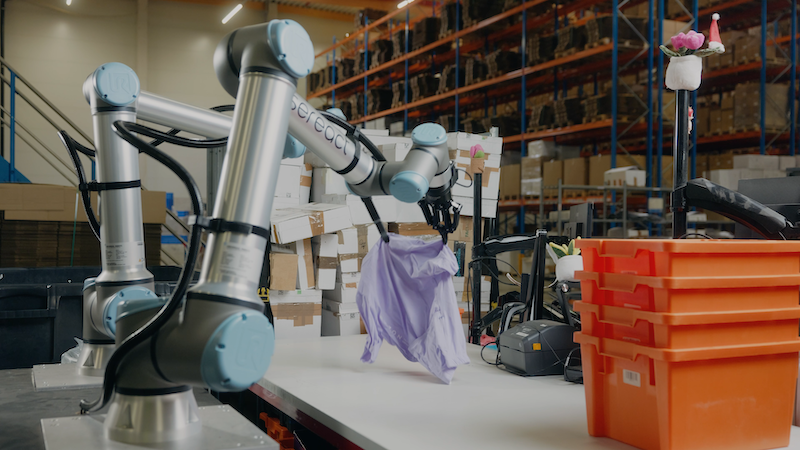
Sereact, Zalando and CEVA Logistics launched AI-powered automated returns processing at fulfillment sites in Greven, Germany and Świebodzin, Poland, with dual-arm robots running live under Cortex.
Why it matters
The system handles items it has never seen before, without article-specific training, so it can work on the poorly packed, disheveled returns that defy conventional robotic pre-programming.
WHO IT HITSWarehouse and returns-processing teams at fashion e-commerce fulfillment sites are most directly affected, as the robots take on repetitive handling and the company says staff can move into higher-value roles. Logistics operators weighing Robotics-as-a-Service for returns may see a live production reference at Zalando volumes.
Summaries like this, in your inbox every morning.
The launch sits at the end of a longer relationship. In July, Zalando joined Sereact's Series B round as a strategic investor, and the two companies have been working together to scale intelligent automation across their shared European logistics footprint. The live operations in Greven and Świebodzin are described as the first operational milestone of that collaboration, delivered as a Robotics-as-a-Service model. The choice of returns as the starting point reflects how the partners frame the problem: Sereact CEO and co-founder Dr Ralf Gulde calls returns "the hardest manipulation problem in fashion logistics," and notes that a system which only works on articles it has seen before does not work in a returns operation at all. CEVA Logistics SVP Chris Walton points to the extreme operational nature and scale of returns handling, including unpredictable volumes, manual quality checks, seasonality, value decay and a high cost per unit, and says the model classifies items faster and reduces manual touchpoints. Zalando SVP Masood Choudhry frames the collaboration as one where technology and human potential advance together. The companies describe this as the initial phase of a broader initiative to scale returns automation across Europe, so further sites and volumes may follow.
Pick your industry and the AI tools you use, and get news related to your work every day.
Free · 30 seconds with Google · unsubscribe anytimeWhat is AIToday? →
Ask AI anything about this article. The AI reads this article, earlier AIToday articles, and Wikipedia, and cites its sources. Q&As are published on this page for other readers too.
Holtek Semiconductor unveiled its 2026 product roadmap on October 15, focusing on four core areas: smart prote…

Supermicro Computer appointed Mark Long as chief financial officer, bringing an experienced technology finance…

TSMC reported about NT$763.1b in Q3 net profit and confirmed that demand for advanced processors is running ah…

Nvidia-backed CoreWeave steadied Thursday after a sharp slump, as investors worried about the debt financing b…

Weathernews said on October 15 it implemented its own AI weather-forecasting model, AI-Nowcast, in its Weather…

TOPPAN Holdings and Keio University ran a quantum-computer and generative-AI proof-of-concept from February 1…


