What happened
Chinese-developed models claimed all five top positions on OpenRouter in July, with Xiaomi's MiMo V2.5 ranked first by token volume. Chinese models now carry more than 60% of the platform's traffic, which exceeds 20 trillion tokens a week. By mid-July, Chinese models accounted for 58% of tokens processed by American firms on the platform—a shift from roughly 70% US model traffic a year ago.
Why it matters
US companies are choosing Chinese AI workload-by-workload because of cost, not compulsion. DeepSeek V4 Flash costs $0.14 per million input tokens versus $5.00 for GPT-5.5; Chinese open models run 60% to 90% cheaper than leading American offerings. Meanwhile, Alibaba's Qwen family has passed one billion cumulative downloads and replaced Meta's Llama as the most-downloaded open model family—a shift that locks developers into an ecosystem. Most Fortune 500 AI strategies are stuck in a "death zone": neither frontier-class nor cheap enough to compete.
What to watch
The article argues American labs must release frontier-class open-weight models on a regular schedule to compete. Without credible US open-weight alternatives, the risk is that "when the next generation of global software is built, [it will be] built on" Chinese models. Companies deploying hybrid routing—frontier models for high-stakes work, efficient open models for high-volume tasks—are cutting inference costs 60% to 90% on the majority of workloads.
Summaries like this, in your inbox every morning.
The article identifies a structural shift in AI adoption driven by economics rather than capability. While American labs (OpenAI, Anthropic, Google) still hold the frontier on the hardest reasoning tasks—GPT 5.5, Claude Fable 5, and Gemini 3.x lead on demanding enterprise work—the deployment market has bifurcated. Chinese labs, constrained by export controls on large GPU clusters, engineered around scarcity with token efficiency and novel architectures from the start. The cost gap is now decisive: American firms face a choice between paying premium prices for frontier capabilities they often do not need, or adopting cheaper alternatives. The author notes that Anthropic captures roughly half of total OpenRouter spending despite holding only 12% of token share—the "premium lane." Everything else is being crushed into either the commodity floor (cheap, open models) or disappearing from the middle.
The ecosystem lock-in effect mirrors historical platform shifts: developers optimize for what they can download and build tooling around what they deploy, just as Linux won servers and Android won phones. Alibaba's Qwen family passing one billion cumulative downloads signals that Chinese models are becoming the default foundation for developer projects globally. The article argues this outcome was not accidental: state support lowered effective costs, Xiaomi cut API prices by up to 99% in May, and the labs prioritized inference efficiency from day one. For American strategy, the implication is stark—the race is no longer just about frontier capability but about who owns the distribution and ecosystem.
Pick your industry and the AI tools you use, and get news related to your work every day.
Free · 30 seconds with Google · unsubscribe anytimeWhat is AIToday? →
Ask AI anything about this article. The AI reads this article, earlier AIToday articles, and Wikipedia, and cites its sources. Q&As are published on this page for other readers too.
The Motley Fool argues Amazon is the AI company of the two, since AWS was just 21% of first-half 2026 revenue…

Hewlett Packard Enterprise stock is down 5% at $55.87
Cammarata reinterprets InceptionV1's cat-car neuron as a V-shape detector, not two unrelated concepts

Google Deepmind's Gemini 4 Argon scored 97.5 percent on ARC-AGI-3 at a cost of $4,800, second only to GPT-6 As…
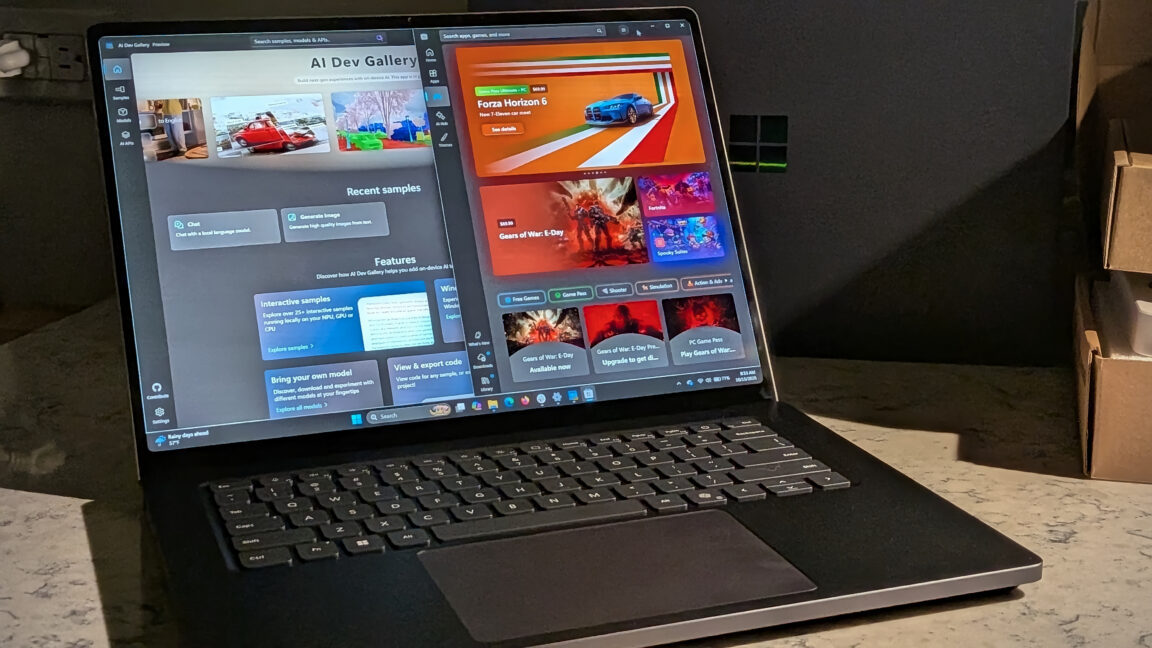
Microsoft's Surface Laptop Ultra, using Nvidia's RTX Spark platform, starts at $2,599 (up to $5,899)
Meta's new commercial terms, effective October 30th, appear to let it crawl and train AI on content from websi…