What happened
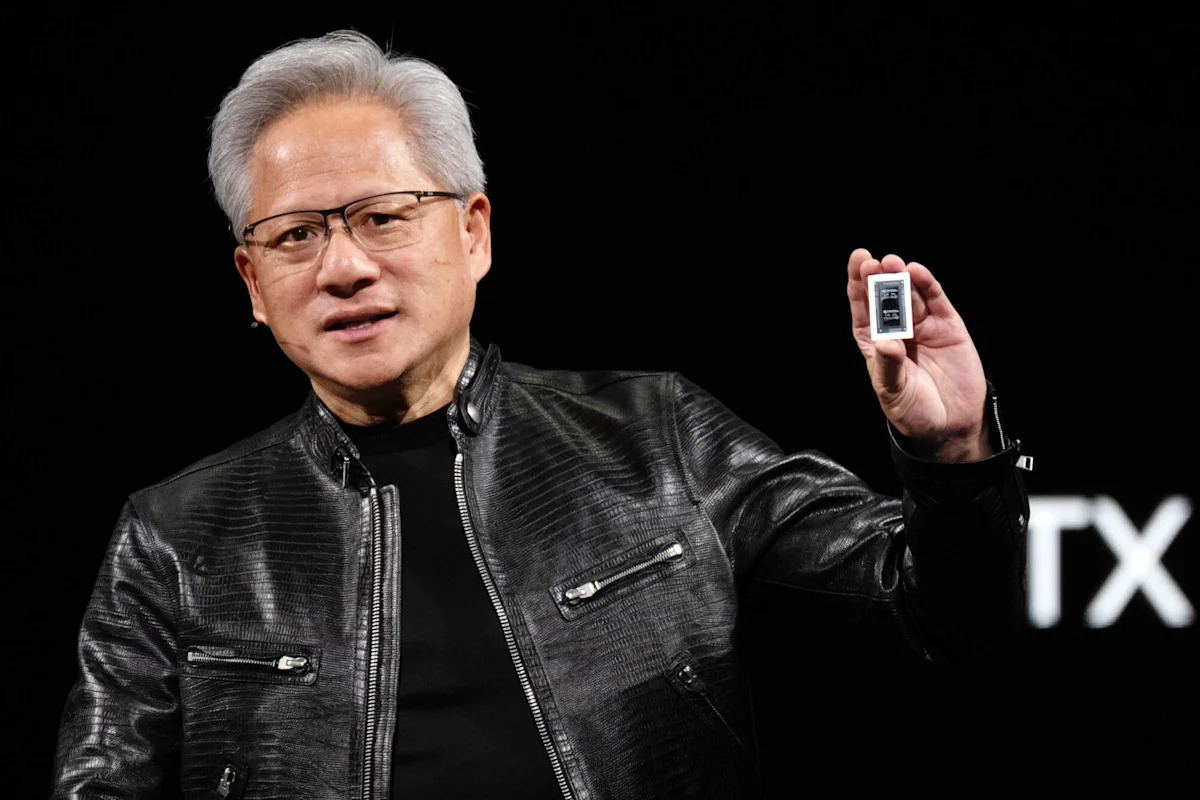
Nvidia and Broadcom are providing what's called "residual value" support — financial backstops that don't appear on their balance sheets — for debt deals tied to AI chip purchases by companies like Anthropic and Meta. Nvidia's latest move is poised to provide potentially tens of billions of dollars of this support. These arrangements mean if an AI company stops paying for chips or returns them early, the chip maker absorbs the loss.
Why it matters
The roughly $70 billion in phantom liabilities could materialize "at the worst possible time" for investors, according to bond traders now scrutinizing the deals. For Nvidia and Broadcom, the backstops function as a way to bolster sales to customers and AI firms without taking debt onto their own books — a hidden cost that masks the true risk of the AI infrastructure buildout. If demand for chips weakens or a major customer defaults, these companies could face unexpected losses.
What to watch
These backstops are expected to expand as AI chip debt explodes. The arrangements typically work through a chain in which a special-purpose vehicle borrows money to buy chips backed by a customer's contract payments; if the customer stops paying, assets are leased or sold to cover debt, and any remaining shortfall falls to the chip maker. Investors are examining past Meta and Broadcom deals for clues about how Nvidia will structure its agreements.
Summaries like this, in your inbox every morning.
The emergence of residual value guarantees reflects the tension between explosive demand for AI chips and the fragile financial structures being used to fund that buildout. Nvidia and Broadcom are effectively using their strong credit ratings as a subsidy for AI companies' infrastructure purchases, while keeping the associated risk off their own balance sheets. Meta pioneered this approach for its data centers, disclosing in filings that such payments are "not probable" and therefore require no liability reserve. Broadcom extended the model to chip financing for companies like Anthropic, tying its exposure directly to whether customers continue paying.
What troubles bond traders is the scale and timing. With $70 billion in phantom liabilities floating in the market and AI chip debt expected to expand dramatically, the assumption that these risks are remote is increasingly being questioned. The proponents' argument — that chip demand will outstrip supply for years, that debt will be paid down over time, and that tech risk lands on balance sheets of companies with cash to absorb it — may not hold if the AI market faces a demand shock or a major customer defaults. The very fact that companies must explicitly state these risks are "not probable" suggests they are at least conceivable, and conceivable risks backed by tens of billions in hidden exposure can move quickly from theoretical to realized when market conditions shift.
Pick your industry and the AI tools you use, and get news related to your work every day.
Free · 30 seconds with Google · unsubscribe anytimeWhat is AIToday? →
Ask AI anything about this article. The AI reads this article, earlier AIToday articles, and Wikipedia, and cites its sources. Q&As are published on this page for other readers too.
Chunghwa Telecom president Rong-shy Lin said the shift from conversational AI to autonomous AI agents is resha…

CoreWeave fell 5% in premarket trading Friday and was on track to finish the week down 15%, after rebounding f…
Apple and Meta said they would jointly release a new open-weight AI model designed to run on high-end Macs, ai…

Investors put $38.5 billion into Asian startups in Q3, per Crunchbase data

A longtime Anthropic investor told Fortune he expects shares priced around $1.8 trillion, below the company's…

In Q2, billionaires or their funds sold six 'Magnificent Seven' AI stocks


