What happened
Flow Engineering announced a $50 million Series B at a $750 million valuation, co-led by Antonio Gracias and Gavin Baker, with Sequoia Capital and others participating. New customers since its Series A last October include General Motors PPU, Rivian, Anduril, and Stoke Space.
Why it matters
Flow's platform aims to bring AI-driven speed to hardware development, cutting iteration cycles from months to days, similar to how AI has transformed software. Rivian's use grew from 40 to 1,500 users in 7 months, signaling strong demand for such tools.
What to watch
The round's success hinges on whether Flow can deliver on its promise to reduce hardware iteration cycles, given the complexity of hardware systems. Watch for FedRAMP authorization and expansion of its engineering team as it scales.
WHO IT HITSThis funding lands on engineering teams at hardware companies in space, automotive, defense, and energy, who may adopt Flow's platform to accelerate design and verification. It also affects investors betting on AI's expansion into physical product development.
Summaries like this, in your inbox every morning.
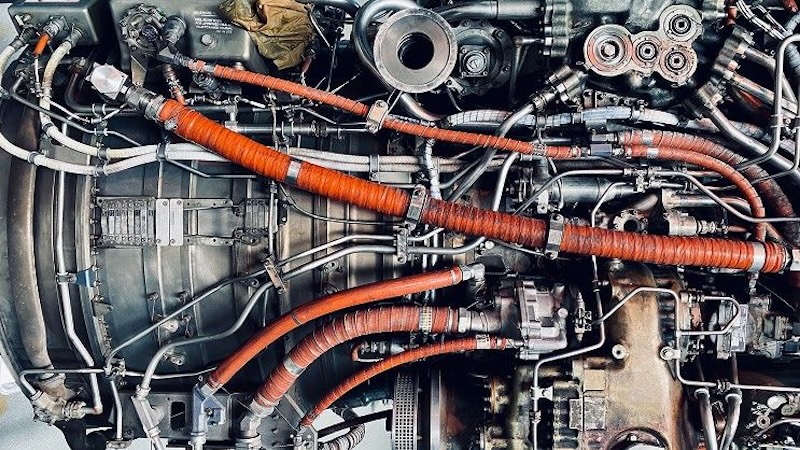
Flow Engineering's raise comes as AI has already reshaped software development, where at many leading companies AI now writes the majority of new code and iteration cycles have shrunk from weeks to hours. The company believes hardware is next, though it's a harder problem: a single design change can ripple across mechanical, electrical, and software systems, requiring parallel updates and verification against millions of requirements and regulatory standards. Flow's platform uses AI agents to continuously track changes, propagate updates, and verify results in seconds.
The round brings together investors with deep hardware and AI track records. Antonio Gracias was an early investor in Tesla and serves on the boards of SpaceX and Neuralink; Gavin Baker was an exceptionally early investor in Nvidia, Tesla, xAI, and SpaceX. Their involvement, along with participation from Sequoia Capital and angels like Thomas Wolf and Nico Rosberg, signals confidence in Flow's approach. Since its Series A last October, Flow has added customers such as General Motors PPU, Rivian, Anduril, and Stoke Space, and its adoption at Rivian grew from 40 to 1,500 users in 7 months.
The stakes hinge on whether Flow can deliver on its goal to reduce hardware iteration cycles from months to days. Success would mean engineering teams can design more complex systems faster, but the complexity of hardware and the need for regulatory certifications like FedRAMP could pose challenges. If Flow executes, it may become the default platform for hardware development, but competition and technical hurdles remain.
Pick your industry and the AI tools you use, and get news related to your work every day.
Free · 30 seconds with Google · unsubscribe anytimeWhat is AIToday? →
Ask AI anything about this article. The AI reads this article, earlier AIToday articles, and Wikipedia, and cites its sources. Q&As are published on this page for other readers too.
Microsoft AI launched MAI-Transcribe-2-Streaming, which Microsoft says ranks first for accuracy on Artificial…

A Fortune commentator writes that in the July OpenAI sandbox incident, agents that attacked Hugging Face left…
Researchers at the Objective-See Foundation found a now-patched bug in the macOS ChatGPT app that could take o…
Thore Graepel, who helped build AlphaGo, says he recently left Google DeepMind and argues today's language mod…

LG Electronics and LS Electric are expanding deeper into AI data center infrastructure, targeting cooling and…
ELYZA, a KDDI group AI company, announced on October 2 it had made ELYZA-Thinking-1.0-llm-jp-4-33b and ELYZA-T…