AIToday
AI Business & IndustryFortune AIPublished: Aug 12, 2026, 22:01 JST7 min read

Gulf powers race to build AI data highways bypassing Red Sea

Gulf powers race to build AI data highways bypassing Red Sea

Key takeaway

  • Qatar's Ooredoo Group and other Gulf tech players are investing billions in alternative subsea and terrestrial fibre routes to support the region's AI ambitions, bypassing the Red Sea as Houthi attacks disrupt traditional Europe–Asia data highways.

  • Ooredoo's Fibre in the Gulf system—a $500 million investment with 720 terabits per second capacity—will be the largest cable ever built in the GCC and route data from Asia through Oman, Iraq, and Turkey to Europe, avoiding the Suez Canal and Bab-el-Mandeb strait.

  • The projects address a critical vulnerability: over 90% of Europe–Asia data traffic currently flows through the Red Sea region, yet regional data demand grows about 30% annually with no new capacity added in five to seven years.

3 Key Points

  1. What happened

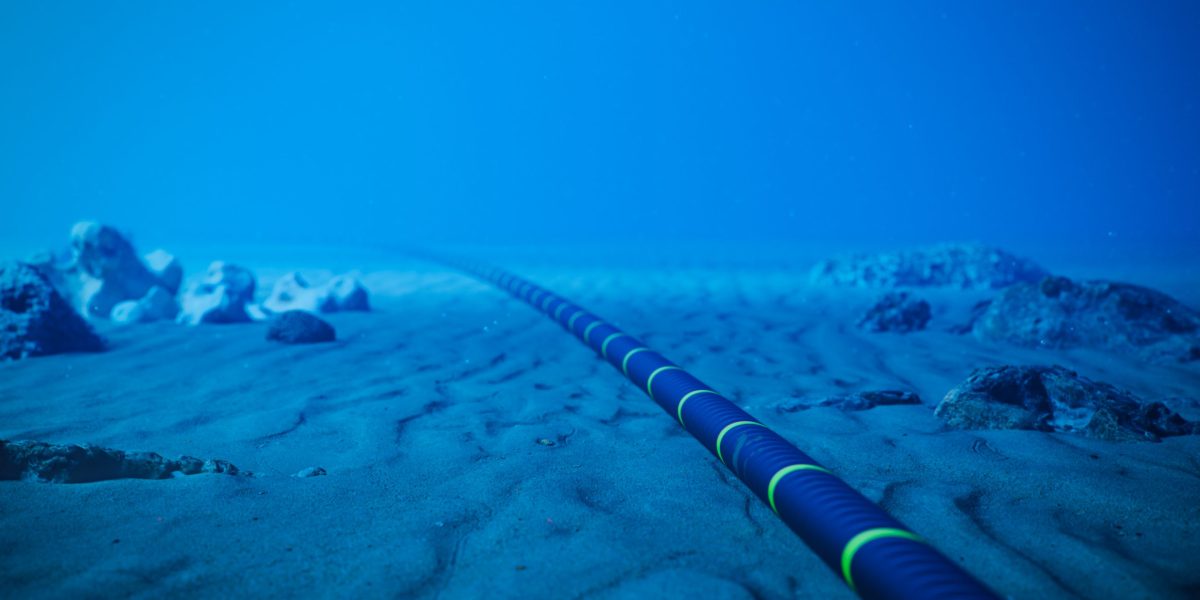
    Qatar's Ooredoo Group is investing over $500 million in Fibre in the Gulf (FIG), a subsea cable system spanning almost 2,000 kilometres with planned capacity of up to 720 terabits per second, scheduled for completion in late 2027. FIG will connect Asia to Europe while bypassing the Suez Canal and Bab-el-Mandeb strait, routing instead from Oman through Iraq and Turkey. Saudi Arabia and the UAE are also building alternative routes: Saudi Telecom Company (STC) is investing $800 million in SilkLink (a 4,500-kilometre fibre network through Syria to the Mediterranean), and an Iraqi-UAE consortium announced plans for WorldLink, a $700 million hybrid network running from the UAE through Iraq and Kurdistan to Turkey.

  2. Why it matters

    Over 90% of Europe–Asia data traffic currently flows through the Red Sea and Suez Canal region, creating a critical chokepoint. Houthi attacks have halted subsea cable projects from Google and Meta since 2024, making alternative routes urgent for the Gulf's ambitions to become AI powerhouses. Gulf states are targeting 8–10 GW of collective AI compute capacity, but that growth depends on reliable data infrastructure independent of the Red Sea. Ooredoo CEO Aziz Aluthman Fakhroo noted that data flows increase by about 30% annually while no new capacity has been built in five to seven years, creating extreme growth pressure.

  3. What to watch

    FIG is scheduled for completion in late 2027; SilkLink's first phase is expected to start within 18 to 24 months; WorldLink is due to be rolled out in phases over the next five years. Ooredoo's data center company Syntys is targeting installed capacity of 120 MW by 2030 and expects to exceed targets set in 2024. Geopolitical constraints—particularly the U.S.–Iran war affecting access through the Strait of Hormuz—are currently delaying some markets like Iraq, though Ooredoo is continuing ground surveys and land-based construction.

In Depth

Read the full story

As geopolitical tensions make the Red Sea increasingly hostile to infrastructure development, Qatar's Ooredoo Group is spearheading a shift in how the Gulf approaches data connectivity. On 18 May, Ooredoo announced a partnership with du to land its Fibre in the Gulf (FIG) system in the UAE and advanced construction of landing infrastructure and cable landing stations in both Qatar and Iraq. FIG itself is a landmark project: spanning almost 2,000 kilometres with planned capacity of up to 720 terabits per second, it will be the largest subsea cable ever built in the GCC. Scheduled for completion in late 2027, it represents an investment of over $500 million and offers a radically different routing from traditional Europe–Asia paths. "FIG will be the first cable connecting Asia to Europe, but completely circumventing both the Suez Canal and the Bab-el-Mandeb strait and running from Oman through Iraq and Turkey into Europe," Ooredoo CEO Aziz Aluthman Fakhroo told Fortune.

The urgency of this shift became apparent when Houthi attacks effectively halted subsea cable construction in the Red Sea since 2024, affecting even tech giants like Google and Meta. The vulnerability of the traditional route is stark: research by the Center for Strategic and International Studies shows that over 90% of Europe–Asia data and telecommunications traffic flows through Egypt and the subsea cable corridors converging at the Red Sea and Suez Canal region. Fakhroo emphasized the problem: "There hasn't been any new capacity built in the last five to seven years due to a number of reasons, including geopolitical events. And yet, every year, these data flows increase by about 30%." This mismatch between growing demand and stalled infrastructure underpins the region's push for alternatives.

Ooredoo is pursuing a vertically integrated strategy, moving beyond cable ownership to control the entire data pathway. Alongside FIG, Ooredoo is partnering with Saudi Telecom Company (STC) on the Saudi Oman Network Infrastructure Corridor (Sonic), a terrestrial fiber-optic network spanning 1,931 kilometres announced in February last year and scheduled for completion within 24 months. Sonic runs from cable landing stations in Jeddah through primary data center clusters in Riyadh and Muscat, extending toward the southeastern border with Oman, effectively creating a "Digital Bridge" across the Arabian Peninsula. In February this year, Ooredoo formalized this strategic focus by establishing Ooredoo Fibre Networks (OFN) as a dedicated entity to scale subsea cables and fiber infrastructure.

The broader Gulf strategy extends beyond Ooredoo. STC, majority-owned by Saudi Arabia's Public Investment Fund, is investing $800 million in SilkLink, a project announced in February this year that will span 4,500 kilometres of fiber optic cable across Syria to a submarine cable landing station at Tartus on the Mediterranean, with connections to Jordan, Lebanon, and Turkey. The first phase is expected to start within 18 to 24 months. One week after SilkLink's announcement, an Iraqi-UAE private consortium revealed plans for WorldLink, a $700 million hybrid subsea and terrestrial network running from the UAE to Iraq's Al-Faw Peninsula and overland through Iraq and Kurdistan to Turkey. Due to be rolled out in phases over the next five years, WorldLink explicitly targets hyperscalers, international carriers, and AI applications, aiming to ease congestion and reduce transit times compared to traditional Suez Canal routes.

The geopolitical environment, however, remains volatile. Fakhroo acknowledged that the U.S.–Iran war has complicated FIG's rollout, particularly given its planned route through the Strait of Hormuz. "Certain markets, such as Iraq, have been somewhat put on hold or delayed, but these markets are not the main drivers of our growth strategy over the next two to three years." Ooredoo is adapting by accelerating land-based infrastructure and accelerating cable purchases while ground seabed surveys continue in accessible areas. Despite security incidents, including recent attacks on data centers in the UAE and Bahrain, regional appetite for AI and cloud infrastructure remains robust. In July, Qatari data center developer Meeza completed a 4 MW expansion for an unnamed "leading global hyperscaler" nine months ahead of schedule. Ooredoo's data center subsidiary, Syntys, is targeting 120 MW of installed capacity by 2030—well ahead of targets set in 2024.

The scale of regional AI ambitions underscores why these data highways are critical. The UAE, Saudi Arabia, and Qatar are collectively targeting 8–10 GW of AI compute capacity across announced projects and national ambitions. This includes the UAE's planned 5-GW campus and Saudi Arabia's HUMAIN project, which is targeting 1.9 GW of compute capacity by 2030 with further expansion planned. Fakhroo summed up the strategic rationale: "As economies across the region become increasingly digital, there's a growing focus on sovereignty—sovereign cloud, sovereign AI, and sovereign data residency. And such solutions require a presence in the country where they're being sold, because the data they host cannot leave that country's borders."

Context & Analysis

The Red Sea's volatility has created an urgent infrastructure crisis for the Gulf's AI ambitions. Houthi attacks have effectively halted subsea cable construction in the region since 2024, freezing projects from major players like Google and Meta. For Gulf states positioning themselves as AI powerhouses—the UAE, Saudi Arabia, and Qatar collectively targeting 8–10 GW of compute capacity—this disruption threatens their growth trajectory. The underlying problem is concentration: over 90% of Europe–Asia data traffic flows through a narrow corridor at the Red Sea and Suez Canal, and this dependency has become increasingly untenable as data demand grows approximately 30% annually while no new capacity has been built in five to seven years.

The response from Ooredoo and other regional players reflects a strategic shift toward sovereignty and diversification. Rather than relying on the chokepoint routes controlled by Egypt and vulnerable to geopolitical risk, Gulf players are investing in alternative pathways that also serve a secondary purpose: supporting the data residency requirements of "sovereign cloud" and "sovereign AI" initiatives. Ooredoo's CEO Fakhroo emphasized that these solutions require data to remain within national borders, a constraint that drives local demand and justifies the scale of investment. The terrestrial and subsea routes being built—FIG through Oman, Iraq, and Turkey; SilkLink through Syria to the Mediterranean; WorldLink through Iraq and Kurdistan—are all designed to create optionality and reduce dependency on a single corridor. This diversification is especially critical given ongoing volatility, including recent attacks on data centers in the UAE and Bahrain, which have not yet deterred regional demand.

FAQ

When will the Fibre in the Gulf cable be ready?
FIG is scheduled for completion in late 2027. Ooredoo is currently accelerating investment in land-based infrastructure while geopolitical constraints affect access through the Strait of Hormuz.
How much data can these new cables carry?
FIG will deliver planned capacity of up to 720 terabits per second. For comparison, over 90% of Europe–Asia data and telecommunications traffic currently flows through the Red Sea and Suez Canal region.
What is the total investment in these Gulf data highways?
Ooredoo is investing over $500 million in FIG, STC is investing $800 million in SilkLink, and an Iraqi-UAE consortium announced a $700 million investment in WorldLink.
How much AI compute capacity are Gulf countries targeting?
The UAE, Saudi Arabia, and Qatar are collectively targeting 8–10 GW of AI compute capacity across announced projects and national ambitions, including the UAE's planned 5-GW campus and Saudi Arabia's HUMAIN, which is targeting 1.9 GW by 2030.

Get the latest AI Business & Industry news every morning

AI-summarized, only the topics you pick — one digest a day via Email, Slack, or Discord.

Free · takes 30 seconds · unsubscribe anytime

Ask AI

Ask AI anything about this article. Q&As are published on this page for other readers too.

Related Articles

Next articleAI Newsroom Scoops Human Reporters at Security Conference

The AI news that matters, in one minute each morning.

Sign up free