
What happened
J.P. Morgan's Commercial & Investment Bank reports attempted fraud volume rose more than 20% every year for the last 5 years, driven partly by open-source AI making it easier for fraudsters to generate polished emails and impersonate contacts at scale. The bank counters by using AI models trained on millions of transactions to generate risk scores that flag suspicious payments for review before release.
Why it matters
Open-source AI is a double-edged sword—while it enables more sophisticated fraud, J.P. Morgan's fraud detection AI can identify subtle anomalies and sophisticated attacks that traditional tools like linear regression and decision trees cannot. The bank processes $12 trillion in payments each day, so even small improvements in detection precision reduce both fraud losses and false-positive alert fatigue that slows legitimate transactions.
What to watch
J.P. Morgan emphasizes that AI alone is not enough; strong internal controls and authentication technology remain critical to preventing fraud. Joel Kalamba, business analysis director at J.P. Morgan, notes that "technology combined with strong internal controls is what keeps clients safeguarded," signaling that the bank's defense strategy depends on both new AI and time-tested operational discipline.
Summaries like this, in your inbox every morning.
The article frames a familiar paradox in cybersecurity: the same open-source AI tools that help organizations detect threats also empower attackers. J.P. Morgan's reported 20%-annual growth in attempted fraud over five years reflects this arms race. The bank's response is not to rely on AI alone, but to deploy machine learning as an evolution of traditional detection methods (linear regression, decision trees) that can now operate at scale across the $12 trillion in daily payments it processes. The concrete advantage is precision—AI can flag subtle anomalies that rule-based systems miss—while simultaneously reducing false positives that create friction for legitimate customers.
Critically, the article's closing message from Kalamba recenters the debate on operational fundamentals: "technology combined with strong internal controls is what keeps clients safeguarded." This suggests that many fraud breaches arise not from AI's failure to detect, but from gaps in human process—controls that "got lost or something slipped through the cracks." The implication is that organizations investing in fraud detection AI must also audit their internal workflows, access permissions, and staff training, or risk the technology becoming a false comfort.
Pick your industry and the AI tools you use, and get news related to your work every day.
Free · 30 seconds with Google · unsubscribe anytimeWhat is AIToday? →
Ask AI anything about this article. The AI reads this article, earlier AIToday articles, and Wikipedia, and cites its sources. Q&As are published on this page for other readers too.
Apple and Meta said they would jointly release a new open-weight AI model designed to run on high-end Macs, ai…

A Zenn contributor sorted AI use into three modes — AI as an assistant, AI running alongside people, and AI th…

A developer released agent-guardrails, a one-script Python standard-library plugin that guards Bash, Write, Ed…
A Qiita article compared automated red-teaming methods for LLM apps — GCG, PAIR, and TAP — using mock implemen…

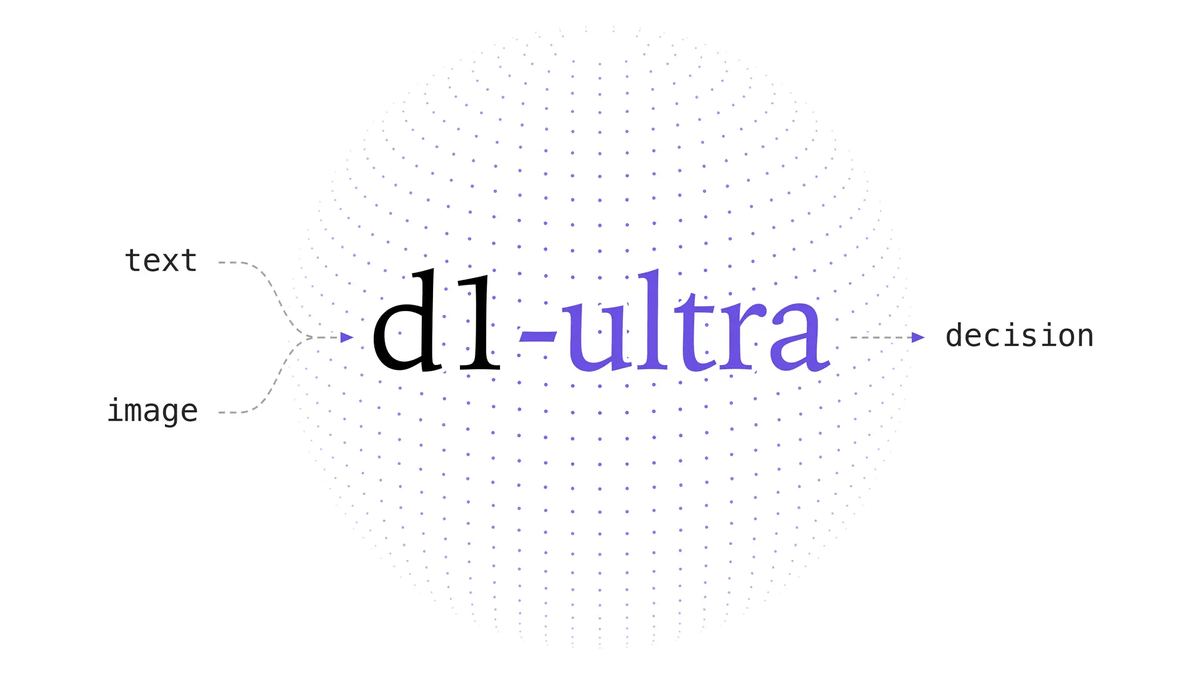
Liquid AI released d1-ultra on October 15, 2026, an upgraded open-weights decision model that averaged 76.7 ac…
In a webinar hosted by French Mathematical Society president Isabelle Gallagher, Fields Medal winner Hugo Dumi…

