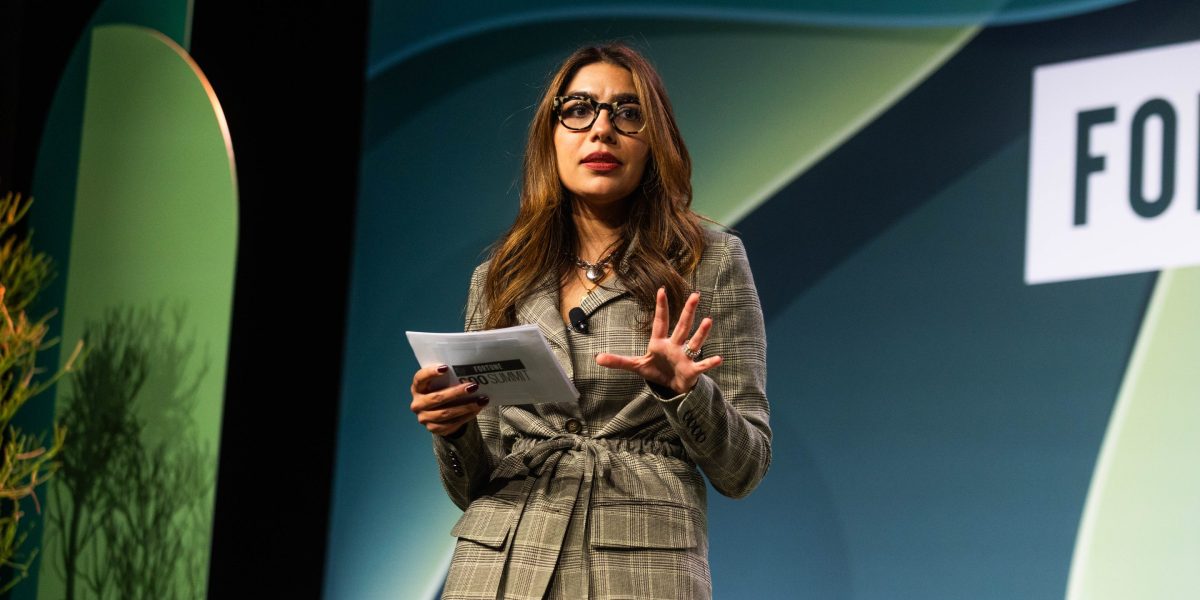
At the Fortune COO Summit, clinical health psychologist and 'The Optimism Doctor®' Dr. Deepika Chopra told enterprise leaders that resistance to AI adoption is a normal neurological response to uncertainty, not stubbornness or capability gaps—the brain's amygdala activates when uncertainty increases, narrowing thinking and reducing risk tolerance.
The underlying concern driving AI angst is not job security or workflow disruption, but a deeper question: 'Will I still matter? Will my contribution matter? Where do I create value?'—questions Chopra identifies as fundamentally human rather than technological.
Chopra outlined three operational imperatives: create clarity about what is known and unknown (people tolerate uncertainty but struggle with confusion); build adaptability through exercises like mapping worst-case, most-likely, and best-possible scenarios to develop cognitive flexibility; and treat purpose and contribution as central to leadership during disruption, not secondary to operations.
Summaries like this, in your inbox every morning.
Pick your industry and the AI tools you use, and get news related to your work every day.
Free · 30 seconds with Google · unsubscribe anytimeWhat is AIToday? →
Ask AI anything about this article. The AI reads this article, earlier AIToday articles, and Wikipedia, and cites its sources. Q&As are published on this page for other readers too.

