What happened
An AI-focused founder observes that despite startups using the same large language models (Claude, ChatGPT) and tools, companies building products in healthcare, software and other fields remain distinct — ReportAId and Buildo do not spawn identical copies even when competitors use identical AI infrastructure.
Why it matters
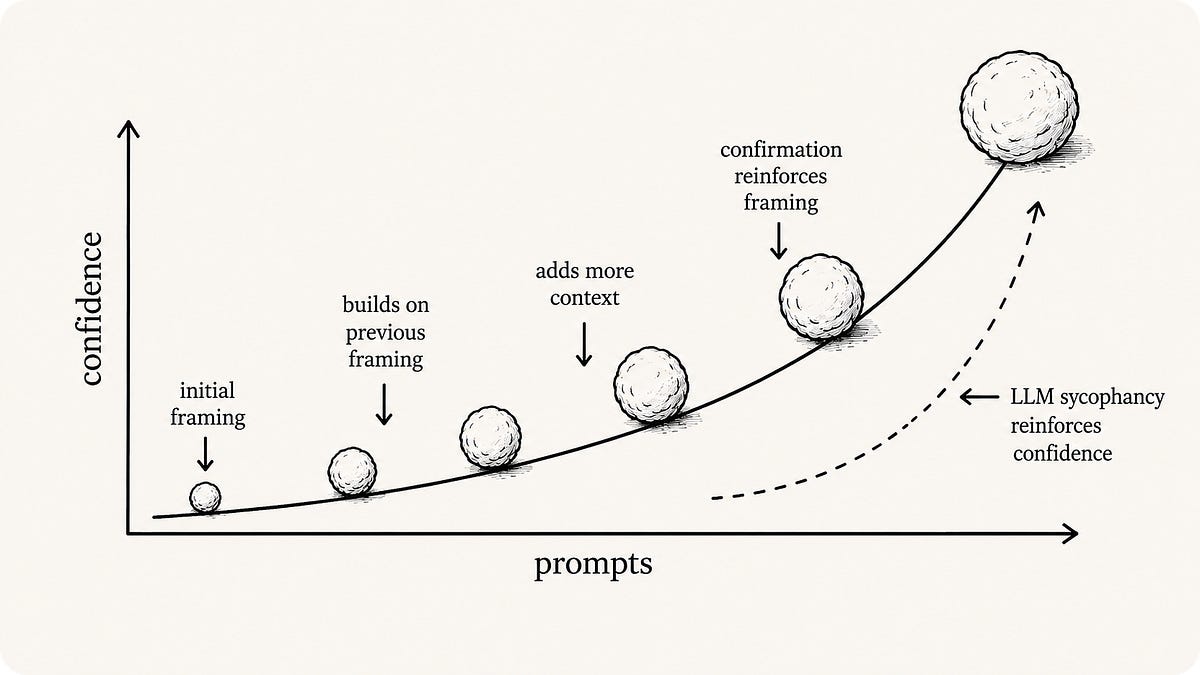
The author argues that differentiation comes not from AI's answers but from what problems companies choose to investigate, which assumptions they challenge, and what tacit, local knowledge they accumulate. AI can amplify confirmation bias by building each answer on prior assumptions, potentially weakening the disagreement and friction that drive good business decisions. Concrete local knowledge — hospital hardware, IT integration rules, stakeholder preferences — never enters AI training data, giving companies with real-world experience a durable edge.
What to watch
The author plans to write about technical choices behind AI systems that work in the real world, including the shift from cloud models to open-source ones and architectural decisions for 'an AI factory' — suggesting the next phase of differentiation may lie in how companies operationalize and customize AI rather than in the models themselves.
Summaries like this, in your inbox every morning.
The piece challenges a common assumption about AI commoditization: that universal access to the same foundation models and tools should produce homogeneous products and strategies. The author's counterargument rests on three interconnected observations. First, differentiation occurs upstream of AI — in problem selection and framing. Most companies using Claude or ChatGPT are answering questions posed to them, but the competitive advantage belongs to those who notice which problems matter and frame them correctly. Second, AI has inherent limitations in complex, real-world domains. Training on the internet cannot capture the specific hardware in a hospital, the political constraints of a particular IT department, or the unstated preferences of a stakeholder. Companies that accumulate this tacit, local knowledge retain an edge no model can replicate. Third, AI can paradoxically weaken organizational decision-making by automating away the friction and disagreement that improve strategy. If every prompt builds on the last one's assumptions, users risk confirmation spirals that push bad ideas deeper — a risk traditional processes mitigate through human challenge and debate. The author implies that as AI becomes ubiquitous, competitive advantage will shift from "better AI access" to "better problem definition," "better local knowledge integration," and "better organizational friction management."
The author signals a move toward technical depth in future posts, indicating that while AI models converge, the architectural, operational, and strategic choices around how to deploy and integrate them remain the true differentiators.
Pick your industry and the AI tools you use, and get news related to your work every day.
Free · 30 seconds with Google · unsubscribe anytimeWhat is AIToday? →
Ask AI anything about this article. The AI reads this article, earlier AIToday articles, and Wikipedia, and cites its sources. Q&As are published on this page for other readers too.
Vinci4D provides chip-design simulation software that trains on physics equations instead of customer data, an…

SEMI President and CEO Ajit Manocha told DIGITIMES that the semiconductor industry reached the US$1 trillion r…

CoreWeave fell more than 25% this week, its debt yield briefly rose above 16% on Thursday, and SK Hynix droppe…

Nvidia's AI Enterprise lists at $4,500 per GPU annually, and paid subscriptions add supported software, securi…

China's commerce and science ministries released a draft update adding 23 key AI technologies to its export co…
Anthropic told investors this week that it is making 85% gross margins, a figure the columnist calls a cash co…