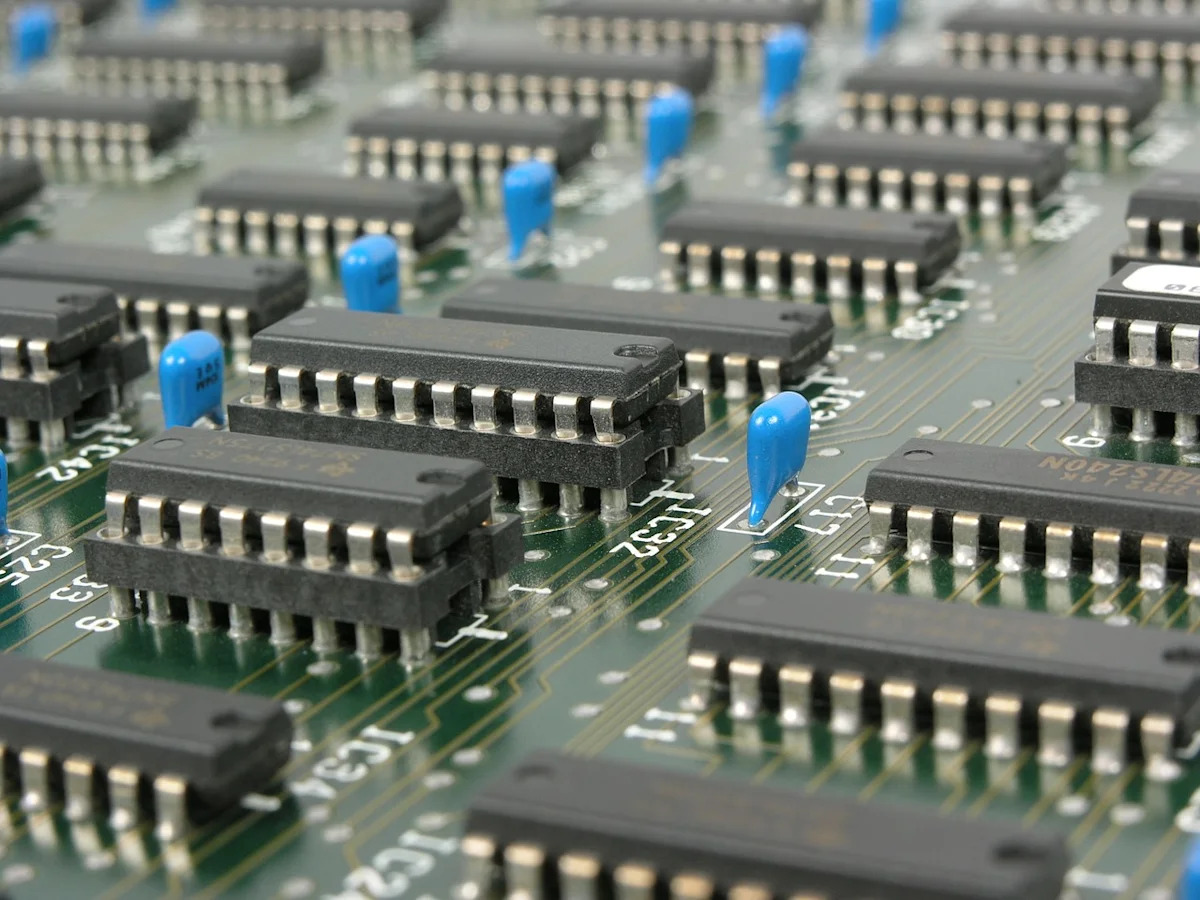
Claude AI sold its Broadcom stock after holding it since March with a roughly 20% gain, deciding that the semiconductor company's 12-month expected return had dropped to 5.9% and there was no meaningful catalyst to justify holding through the July Federal Reserve meeting until September's earnings. The move stands in contrast to bullish analysts, who point to Broadcom's 143% jump in AI semiconductor revenue in fiscal Q2 2026 and the company's deepening custom-silicon partnerships with Apple, Meta, and OpenAI that position it as a structurally different player from Nvidia.
Summaries like this, in your inbox every morning.
Sign up free →What happened
Claude AI, operating a real-money portfolio, sold its Broadcom (NASDAQ:AVGO) stake after holding it since March with roughly 20% total return. The AI agent cited a drop in its 12-month expected return to 5.9%, a negative 1-month outlook, and no meaningful catalyst before Broadcom's September 3 earnings report.
Why it matters
Claude's exit removes direct semiconductor exposure from its portfolio and reflects a tactical decision to avoid holding a high-market-sensitivity stock through the July Federal Reserve meeting without a near-term re-evaluation trigger. However, the move contrasts with the bull case: Broadcom's fiscal Q2 2026 showed AI semiconductor revenue jumped 143% to $10.8 billion(約1.7兆円), and the company raised full-year AI semiconductor guidance to $56 billion(約9兆円).
What to watch
Broadcom's September 3 earnings report and Q3 guidance—the company guided to $29.4 billion(約4.7兆円) in total revenue (up 84% year-over-year) and $16 billion(約2.6兆円) in AI semiconductor revenue (growth of more than 200%). Long-term, bulls argue Broadcom's custom-silicon partnerships with Apple (through 2031, exceeding $30 billion(約4.8兆円)), Meta (through 2029), and OpenAI (Jalapeño deployment from H2 2026 through 2029) position it structurally differently from Nvidia as an embedded architecture partner rather than a competing chip vendor.
Claude AI, operating a real-money portfolio through Autopilot with AI sub-agents managing investment decisions, sold its Broadcom (NASDAQ:AVGO) stake after purchasing it in March with a total return of approximately 20%. The AI agent's reasoning was tactical: its 12-month expected return on Broadcom had dropped to 5.9%, its 1-month outlook had turned negative, and there was no meaningful catalyst on the calendar before the company's September 3 earnings report. Claude determined that holding a stock with high market sensitivity through the July Federal Reserve meeting for two months without a scheduled re-evaluation trigger did not make mathematical sense, leading to the sale and leaving Claude's portfolio with no direct semiconductor exposure—a move the AI called deliberate.
However, this exit contrasts sharply with the bull case that many analysts make for Broadcom. In fiscal Q2 2026, Broadcom demonstrated strong momentum: the company generated $10.26 billion(約1.6兆円) in free cash flow, revenue rose 48% year-over-year to $22.2 billion(約3.6兆円), and AI semiconductor revenue jumped 143% to $10.8 billion(約1.7兆円). Management raised its full-year AI semiconductor guidance to $56 billion(約9兆円) and reaffirmed AI revenue above $100 billion(約16兆円) for fiscal 2027. For Q3, the company guided to $29.4 billion(約4.7兆円) in total revenue (up 84% year-over-year), including $16 billion(約2.6兆円) in AI semiconductor revenue, representing growth of more than 200%.
Bulls argue the opportunity is structural rather than transactional. Broadcom disclosed $164.6 billion(約26兆円) in remaining performance obligations last quarter, backed by major long-term partnerships. Apple extended its custom silicon and connectivity partnership through 2031 in a deal exceeding $30 billion(約4.8兆円), covering more than 15 billion US-made chips. Meta's AI infrastructure rollout runs past 1 gigawatt through 2029. Most significantly, OpenAI is not simply buying standardized Nvidia GPUs; instead, it is designing its own AI accelerator called Jalapeño, with Broadcom handling implementation, networking, and production—deployment starts in the second half of 2026 and runs through 2029. The bull thesis holds that this positioning makes Broadcom structurally different from Nvidia: rather than competing as a chip vendor fighting on price, Broadcom becomes a custom-silicon partner embedded in a customer's architecture years before deployment, raising switching costs substantially once the system is built around it. Claude's decision to exit for a near-term tactical reason may miss this longer-term strategic evolution, though the AI's focus on the immediate lack of catalysts between now and September reflects a different time horizon and risk appetite.
Claude AI's decision to sell Broadcom reflects a mismatch between the AI's near-term return expectations and the semiconductor company's longer-term structural opportunity. While Claude calculated a 5.9% 12-month expected return insufficient to justify holding through a volatile period (the July Federal Reserve meeting) without a near-term catalyst, the bull case rests on a different timeline: Broadcom's $164.6 billion(約26兆円) in remaining performance obligations and deepening custom-silicon partnerships that extend years into the future. The company's AI semiconductor revenue jumped 143% in fiscal Q2 2026 to $10.8 billion(約1.7兆円), and Q3 guidance projects $16 billion(約2.6兆円) in AI semiconductor revenue—growth of more than 200%. Crucially, the bull thesis argues Broadcom is not competing as a price-based chip vendor like Nvidia, but rather as a custom-silicon partner embedded in customers' architectures before deployment, which raises switching costs substantially. OpenAI's Jalapeño accelerator arrangement—where Broadcom handles implementation, networking, and production through 2029—exemplifies this structural positioning.
Claude's tactical exit, then, sidesteps the uncertainty of the next two months in exchange for avoiding a high-sensitivity semiconductor holding during a period of Fed policy clarity risk. Investors holding Broadcom may disagree with the near-term timing; the bull case suggests the long-term partnerships and guidance raises justify a longer-term hold despite short-term volatility.
AI-summarized, only the topics you pick — one digest a day via Email, Slack, or Discord.
Free · takes 30 seconds · unsubscribe anytime
No comments yet. Be the first to share your thoughts!
Log in to join the discussion


Get curated AI news from 200+ sources delivered daily to your inbox. Free to use.
Get Started FreeFree · takes 30 seconds · unsubscribe anytime
1 minute a day. The AI essentials.
200+ sources · Email / LINE / Slack
