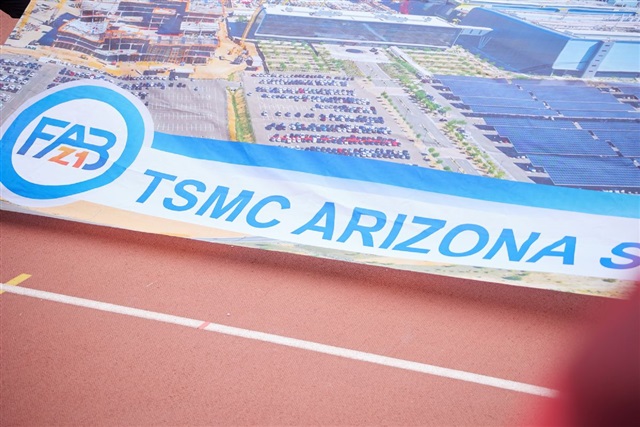
TSMC is committing an additional US$100 billion(約16兆円) to US operations, bringing its total investment to US$265 billion(約42兆円) and building 12 fabs in Arizona alongside an R&D center. While the scale of spending has captured market attention, investors are weighing whether TSMC can justify the near-term margin pressure against the long-term benefits of embedded US manufacturing capacity and government backing.
Summaries like this, in your inbox every morning.
Sign up free →What happened
TSMC announced an additional US$100 billion(約16兆円) investment in the United States on top of its existing US$165 billion(約26兆円) commitment, expanding its Arizona footprint to 12 fabs and one R&D center.
Why it matters
The expansion represents TSMC's largest bet yet on US manufacturing, though the company faces margin pressure in the near term as it absorbs the costs of building and running these new facilities while ramping production.
What to watch
TSMC is betting that the long-term payoff—likely from sustained US government support and captive demand for advanced chips—will offset the short-term margin hit from the massive capex outlay.
TSMC announced an additional US$100 billion(約16兆円) investment in the United States on top of its existing US$165 billion(約26兆円) commitment, bringing total planned US spending to US$265 billion(約42兆円). The expansion will increase TSMC's Arizona footprint to 12 fabrication plants (fabs) and one research and development center. While market analysts and commentators have focused heavily on the headline investment figure, the article notes that investors are paying closer attention to a different question: whether TSMC can absorb the margin impact in the near term while building out this massive capacity. The company faces a classic capex dilemma—heavy upfront spending and the costs of ramping new production lines depress profitability in the short run. However, TSMC's strategy appears to rest on the premise that long-term payoffs will justify the near-term pain. Those payoffs likely include sustained US government support (in the form of subsidies, tax incentives, or preferential procurement), as well as captive demand from US-based customers in defense and AI infrastructure who value supply security and may be willing to accept a US manufacturing premium. The decision signals TSMC's confidence that the US market and policy environment will remain supportive over the decade-plus it will take to build and mature these facilities.
TSMC's announcement reflects a fundamental strategic shift: the world's largest contract chipmaker is anchoring advanced production capacity in the United States rather than concentrating it in Taiwan. The scale—US$265 billion(約42兆円) total—signals confidence in long-term US demand and policy support, but also exposes the company to a known trade-off. Building and ramping 12 new fabs is capital-intensive and operationally complex; each fab must reach profitable yields before contributing positively to margins. The company's calculation appears to be that initial margin pressure is acceptable as long as the US government and major customers (particularly in defense and AI infrastructure) sustain their support and purchasing commitment. This is not a short-term profit play; it is a bet on embedding itself in the US industrial base.
AI-summarized, only the topics you pick — one digest a day via Email, Slack, or Discord.
Free · takes 30 seconds · unsubscribe anytime
No comments yet. Be the first to share your thoughts!
Log in to join the discussion


Get curated AI news from 200+ sources delivered daily to your inbox. Free to use.
Get Started FreeFree · takes 30 seconds · unsubscribe anytime
1 minute a day. The AI essentials.
200+ sources · Email / LINE / Slack