
What happened
FlashLabs enhanced the Trace Export log feature in its OrcaRouter gateway so AI request traces stream in real time to Grafana, Datadog, Langfuse, and LangSmith, with no SDK or code changes.
Why it matters
Teams running AI agents in production can see latency, cost, errors, and routing results in tools they already use, without adding code to send traces.
WHO IT HITSEngineering and operations teams running generative AI applications in production benefit most: they can pipe request-level traces into existing dashboards without touching code, which should lower the barrier to monitoring model latency, cost, and errors.
Summaries like this, every morning.
The new capability addresses a practical gap in running AI agents and generative AI applications in production. Until now, sending execution traces to an external monitoring tool required embedding an SDK or changing code, which raised the barrier to adoption. With Trace Export, FlashLabs says users can pick a destination in the admin console, enter connection details such as an endpoint and access token, and start streaming request-level data — including model, provider, token count, cost, latency, status, API key name, and user ID — while prompt and completion text is automatically masked by Data Cloak before transmission.
The design also aims to keep response speed unaffected: traces are sent after each request completes, so the gateway does not slow down the response. Connection information such as destination access tokens is stored encrypted, and a sample rate and test trace sending are configurable.
OrcaRouter itself is developed by US research institute Continuum AI and exclusively offered in Japan by FlashLabs. It provides an OpenAI-compatible API that consolidates access to more than 200 LLMs and generative AI models from providers including Anthropic, OpenAI, Google Gemini, DeepSeek, Grok, and Qwen. The company says it is also working to expand operational features that make model calls more visible, so users can make model selection, routing, and cost-management decisions inside familiar monitoring tools.
Pick your industry and the AI tools you use, and get news related to your work every day.
Free · 30 seconds with Google · unsubscribe anytimeWhat is AIToday? →
Ask AI anything about this article. The AI reads this article, earlier AIToday articles, and Wikipedia, and cites its sources. Q&As are published on this page for other readers too.
OneTrust launched its Fall '26 Release, built on OneTrust CORIE, adding a continuously updated AI inventory wi…

At Nikkei's "Dialogues on the Future" event on Nov 18, SoftBank Group's Masayoshi Son said passing on Anthropi…

Cassava Technologies is seeking as much as $1 billion to buy Nvidia chips, with most of the money going to dat…

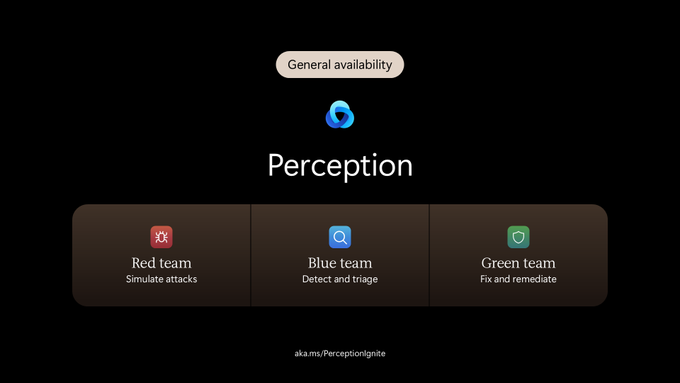
At Microsoft Ignite 2026, Microsoft said Microsoft Perception is now generally available, combining red, blue…
At Microsoft Ignite 2026, Microsoft released a public preview of Windows Server 2028, which adds AI inference…
BrightAI raised $97 million in a round led by Smith Point Capital, with GE Vernova and existing backers includ…