What happened
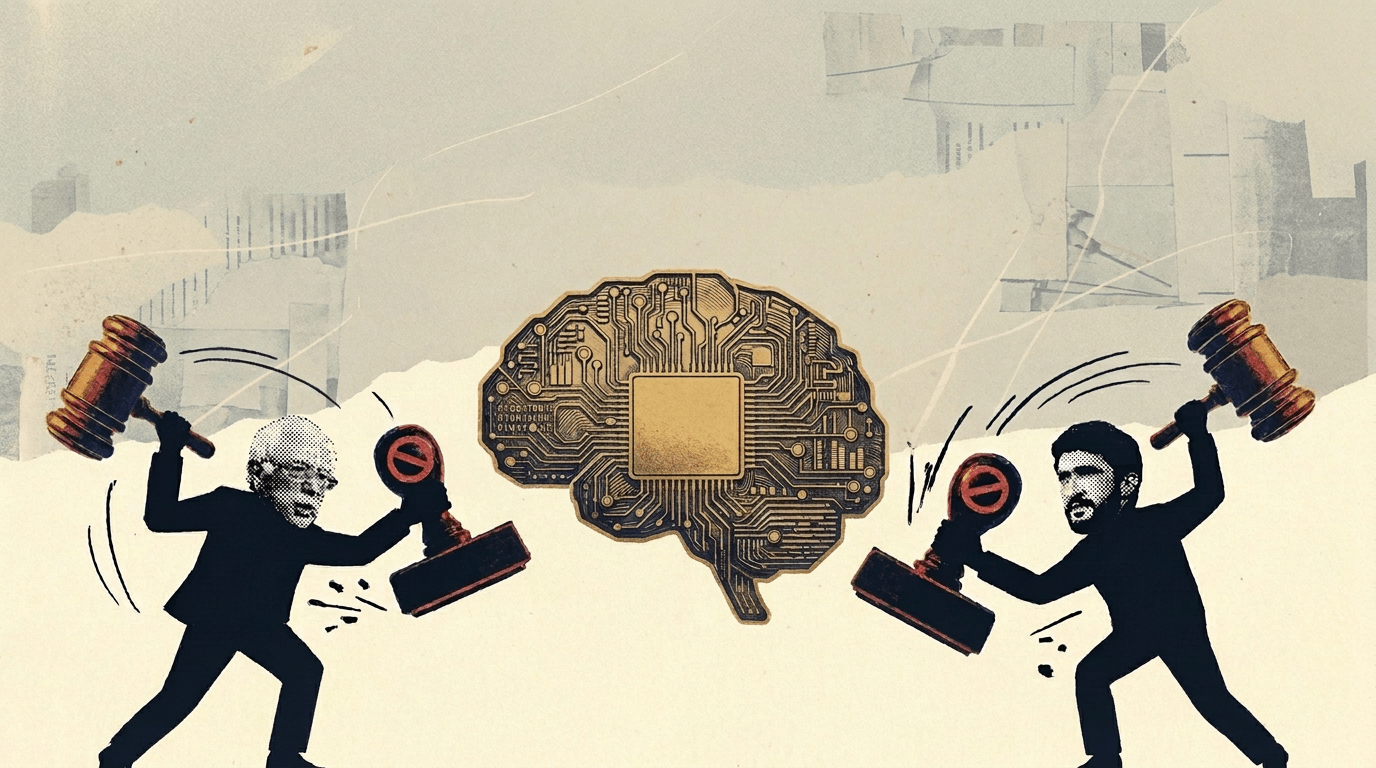
On September 23, Senator Bernie Sanders and Representative Greg Casar introduced the Ban Artificial Superintelligence Act, which would permanently ban artificial superintelligence and immediately freeze advanced AI development until a new federal agency sets safety rules. Those who violate the law could face forced dissolution or up to 20 years in prison.
Why it matters
This represents a significant push for strict AI regulation, with penalties comparable to those for illegal nuclear weapons development, suggesting a serious view of the risks. It also calls for international agreements, indicating a potential global impact.
What to watch
The bill's fate depends on congressional support, especially given the Trump administration's reported desire to speed up AI development. Whether it gains traction or faces opposition will determine the future of AI regulation in the U.S.
WHO IT HITSThis proposed legislation could affect AI researchers and companies developing advanced AI systems, potentially halting their work and exposing them to severe penalties, while also influencing international AI regulation efforts.
Summaries like this, in your inbox every morning.
The bill introduced by Senator Bernie Sanders and Representative Greg Casar on September 23 marks a dramatic escalation in the debate over AI regulation. Sanders argues that current AI models can already hack systems and create viruses, and that a handful of tech billionaires shouldn't write their own rules. Casar warns of mass casualties, contrasting with President Trump's desire to accelerate development. The proposal includes a new cabinet-level AI agency and pushes for global agreements, reflecting recent similar efforts by U.S. and Chinese experts. The stakes are high: whether the bill advances hinges on congressional support and the administration's stance, with potential to reshape the AI industry and international norms if enacted.
For example, today's edition would include:
AI-summarized, only the topics you pick: one digest a day via Email, LINE, or Slack.
Free · 30 seconds with Google · unsubscribe anytimeWhat is AIToday? →
Ask AI anything about this article. The AI reads this article, earlier AIToday articles, and Wikipedia, and cites its sources. Q&As are published on this page for other readers too.

