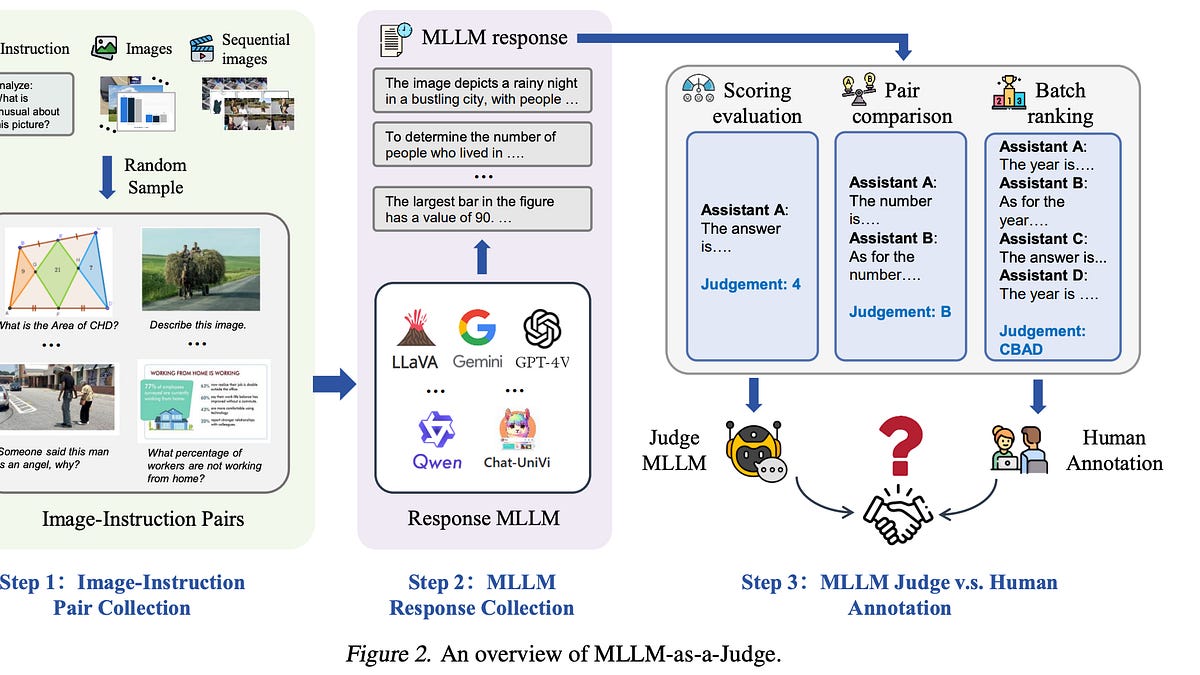
What happened
Studies on Multimodal LLM-as-a-Judge—AI systems designed to grade responses from other AI models—found that while these judges work reasonably well at picking the best answer from multiple options, they still show significant gaps in scoring and ranking tasks. The judges also exhibit biases (position bias, length bias, self-preference), hallucinations, and inconsistencies. A specialized video-judging model showed that smaller judges can match much larger general-purpose models when trained specifically for a task.
Why it matters
Companies deploying AI agents and multimodal systems (those that handle text, images, and video together) need reliable ways to automatically catch low-quality outputs before they reach users. Human evaluation doesn't scale; AI judges offer a potential solution. However, the research shows these judges are not ground truth—they require the same careful calibration and quality control that the systems they evaluate do, meaning teams must first verify that AI judges actually agree with human experts on their own definitions of quality.
What to watch
The VideoJudge research demonstrated that genuinely multimodal judges (those that can see video directly) outperform text-only judges that only read video descriptions, and that longer reasoning chains cannot substitute for actual visual understanding. This suggests companies choosing between building specialized judges versus repurposing general-purpose models will need to account for the modality mismatch in their deployment decisions.
Summaries like this, in your inbox every morning.
Pick your industry and the AI tools you use, and get news related to your work every day.
Free · 30 seconds with Google · unsubscribe anytimeWhat is AIToday? →
Ask AI anything about this article. The AI reads this article, earlier AIToday articles, and Wikipedia, and cites its sources. Q&As are published on this page for other readers too.
Cammarata reinterprets InceptionV1's cat-car neuron as a V-shape detector, not two unrelated concepts
Google Deepmind's Gemini 4 Argon scored 97.5 percent on ARC-AGI-3 at a cost of $4,800, second only to GPT-6 As…
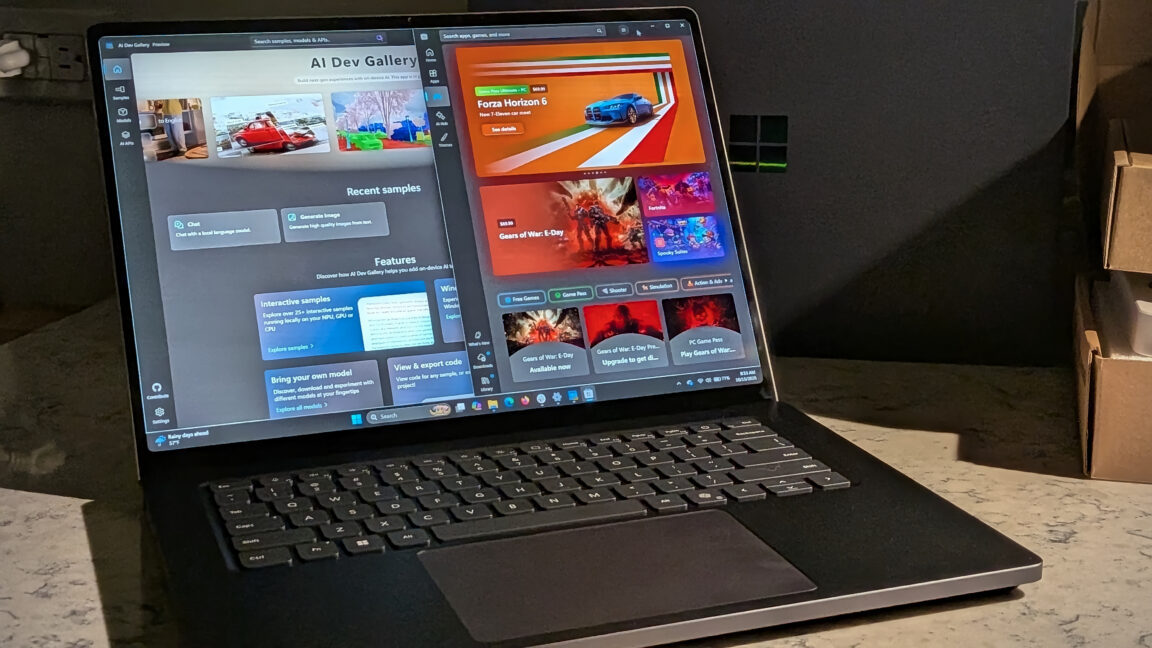
Microsoft's Surface Laptop Ultra, using Nvidia's RTX Spark platform, starts at $2,599 (up to $5,899)
Meta's new commercial terms, effective October 30th, appear to let it crawl and train AI on content from websi…
Vercel data published Thursday shows TypeSafe AI's Jev, a lightweight decision model for choosing among predet…
Reflection AI introduced Beam, an open-weight model for agentic coding and long-horizon tasks, with 501 billio…