AIToday
Large Language ModelsRoboticsAI Stocks & MarketsGoogle AI BlogPublished: Aug 5, 2026, 01:01 JST5 min read

Google launches three Gemini models for AI agents, Gemini Robotics ER 2

Google launches three Gemini models for AI agents, Gemini Robotics ER 2

Key takeaway

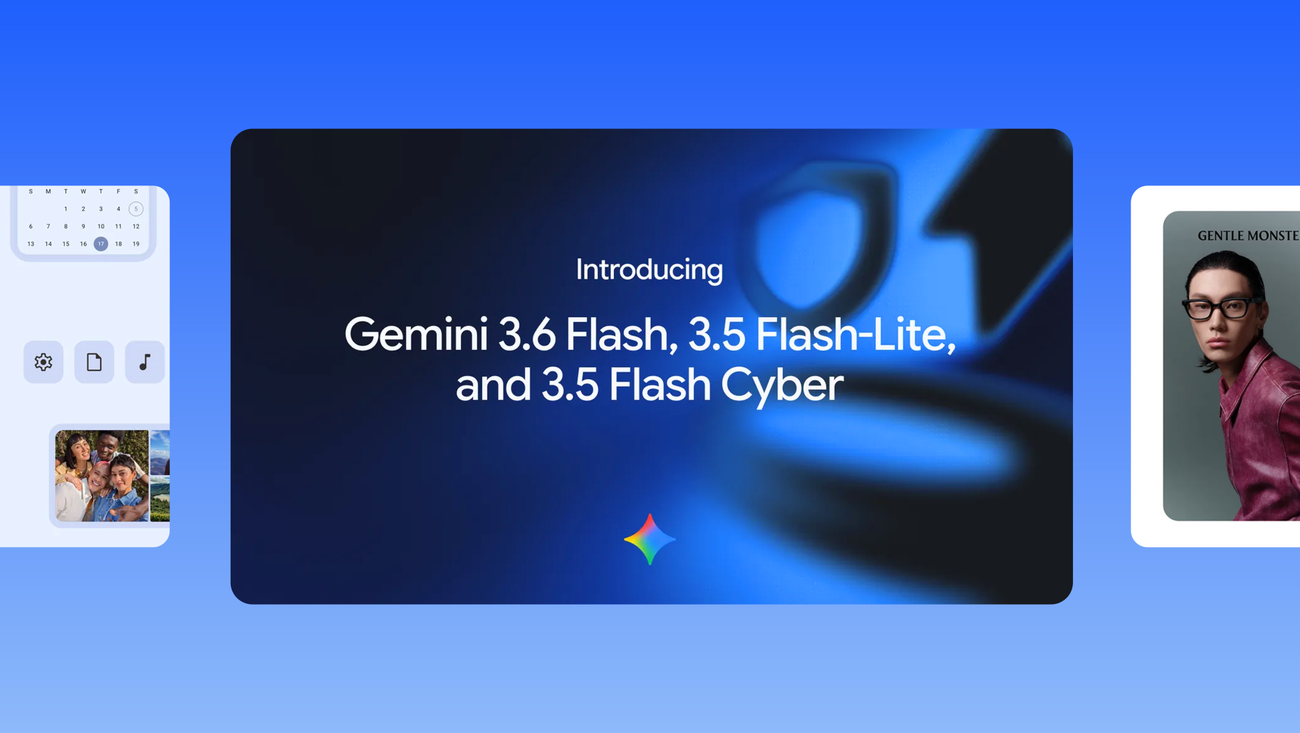
  • Google unveiled three new Gemini models optimized for production AI agents (Gemini 3.6 Flash, 3.5 Flash-Lite, and 3.5 Flash Cyber) and Gemini Robotics ER 2, an embodied reasoning model that enables robots to reason about their physical environment and handle complex tasks.

  • The company also expanded Gemini Spark globally with features letting it handle web errands using logged-in accounts, released Lyria 3.5 for music generation with improved vocals and lyrics, and launched three FireSat satellites for early wildfire detection.

  • These updates reflect Google's push to make AI more practical for developers, creative tools, and crisis response.

3 Key Points

  1. What happened

    Google announced three new Gemini models—Gemini 3.6 Flash, 3.5 Flash-Lite, and 3.5 Flash Cyber—designed for developers building production AI agents, along with Gemini Robotics ER 2, an embodied reasoning model for robots that can chat naturally, understand their surroundings, and work through multi-step tasks. The company also rolled out Gemini Notebook across the Google ecosystem, expanded Gemini Spark to more users globally with new web-errand capabilities, and introduced new music and video creation tools including Lyria 3.5 and personal avatars in Google Vids.

  2. Why it matters

    The new Gemini models prioritize token efficiency, lower latency, and reliable performance—key requirements for developers scaling production agents. Gemini Robotics ER 2 bridges digital AI and the physical world, enabling robots to operate more independently in real tasks. Meanwhile, Gemini Spark's expansion to handle logged-in web tasks (like apartment scheduling and flight booking) with user permission signals a shift toward AI handling complex personal errands. For creative professionals, Lyria 3.5 delivers improvements in musicality, lyrics, and vocal quality.

  3. What to watch

    Google also launched three FireSat satellites from Vandenberg Space Force Base in California to detect wildfires before they spread, made AlphaEvolve generally available on Gemini Enterprise Agent Platform to optimize code for Cloud customers, and expanded app integrations in Search to include YouTube Music. Samsung Galaxy Z Fold8 Ultra, Fold8, and Flip8 now ship with the first capabilities of Gemini Intelligence, and Android 17 includes a native migration tool for easier iPhone-to-Android data transfer.

In Depth

Read the full story

In July 2026, Google announced a comprehensive wave of AI updates spanning developer tools, robotics, consumer applications, and crisis response. For developers, the company released three new Gemini models designed specifically for production AI agents: Gemini 3.6 Flash, 3.5 Flash-Lite, and 3.5 Flash Cyber. According to the announcement, these models are "built to meet the sweet spot of efficiency and quality to enable scaling agentic workflows," addressing the need for higher token efficiency, lower latency, and reliable performance.

On the robotics front, Google launched Gemini Robotics ER 2, described as its "most capable embodied reasoning model yet." The model is designed for developers building robot systems and "bridges the gap between digital smarts and the physical world." It enables robots to chat naturally with people, understand their environment, and work through multi-step tasks. This represents a significant step toward robots that can reason about physical contexts and operate more independently.

For consumers, Google expanded Gemini Spark to more users globally and introduced a new feature for handling complex web errands. With user permission, Spark can now use logged-in accounts and saved passwords to handle tasks like scheduling apartment viewings or researching and initiating flight bookings. The company also expanded app connectivity in Search, enabling users to securely link services like YouTube Music directly in AI Mode for more tailored responses. Google Vids received new capabilities through Gemini Omni and personal avatars, allowing users to generate and edit high-quality video clips using everyday language and create custom digital avatars to appear in their videos.

In the creative domain, Google released Lyria 3.5, its latest music generation model integrated into Google Flow Music. The company claims the new model delivers "significant advancements in musicality, lyrics, and vocal quality." Additionally, Google announced that Gemini Notebook—the standalone product formerly known as NotebookLM—is now integrated across the Google ecosystem, including the Gemini app and Google Search, with updates including secure cloud computing features.

Beyond consumer and developer tools, Google took concrete steps in crisis response. Three new FireSat satellites successfully launched from Vandenberg Space Force Base in California as part of a global initiative led by the Earth Fire Alliance with Google Research to detect wildfires before they spread. The company also announced a partnership with NOAA (National Oceanic and Atmospheric Administration) to modernize its supercomputing system using Google Cloud's H4D virtual machines for weather forecasting, positioning NOAA as one of the first organizations to bring numerical weather prediction directly to the public cloud. Google also launched the Alliance for America's Skilled Trades in partnership with BlackRock, Carhartt, and Ford to build a stronger pipeline for skilled trades workers and scale evidence-based training approaches. Finally, Google DeepMind and Isomorphic Labs announced a joint bioresilience program designed to prevent threat actors from misusing AI models while ensuring governments and scientists can use the technology to build a more resilient world.

Context & Analysis

Google's July 2026 announcements reveal a strategic focus on productionalizing AI across three domains: infrastructure for developers, robotics for physical-world tasks, and consumer-facing automation. The three new Gemini models (3.6 Flash, 3.5 Flash-Lite, and 3.5 Flash Cyber) address a core developer need—scaling agentic workflows with efficiency and reliability—signaling that Google views agent deployment as a priority use case. Gemini Robotics ER 2 extends this logic to embodied systems, bridging the gap between language understanding and real-world robot operation, which the body frames as critical for building "genuinely helpful machines."

On the consumer side, Gemini Spark's expansion to handle web errands using logged-in accounts marks a qualitative shift: the AI moves from answering questions to executing tasks on the user's behalf. This capability, combined with expanded app integrations in Search (including YouTube Music), suggests Google is weaving AI deeper into daily workflows. The creative tools—Lyria 3.5 for music generation and personal avatars in Google Vids—reflect investments in AI-assisted content creation, where the body claims "significant advancements in musicality, lyrics, and vocal quality."

The launch of three FireSat satellites from Vandenberg Space Force Base underscores Google's commitment to crisis response, positioning AI as a tool for early wildfire detection and public safety. Similarly, the announcement of the Alliance for America's Skilled Trades (with BlackRock, Carhartt, and Ford) and Google DeepMind's bioresilience program signal efforts to address societal challenges and responsible AI deployment.

FAQ

What are the three new Gemini models announced, and what are they for?
Google announced Gemini 3.6 Flash, 3.5 Flash-Lite, and 3.5 Flash Cyber, built for developers scaling production AI agents. They are designed to balance efficiency and quality with higher token efficiency, lower latency, and more reliable performance.
What can Gemini Robotics ER 2 do?
Gemini Robotics ER 2 is Google's most capable embodied reasoning model yet. It lets robot systems chat naturally with people, make sense of their surroundings, and work through complex, multi-step tasks.
What new capability did Google add to Gemini Spark?
Google expanded Gemini Spark to more users around the world and added a feature to handle complex web errands. With user permission, Spark can use logged-in accounts and saved passwords to handle tedious tasks like scheduling apartment viewings or researching and beginning flight bookings.
Google AI BlogRead Original Article

Get the latest Large Language Models news every morning

AI-summarized, only the topics you pick — one digest a day via Email, Slack, or Discord.

Free · takes 30 seconds · unsubscribe anytime

Ask AI

Ask AI anything about this article. Q&As are published on this page for other readers too.

Related Articles

Next articleNvidia's revenue surges to $81.6B as AMD trails far behind

The AI news that matters, in one minute each morning.

Sign up free