
What happened
The November 22 paper "Perplexity and Intelligence," signed by chief scientist Jakub Pachocki, ties GPT-3.5 to a log perplexity of about 0.99 and GPT-4 to about 0.91, and proposes that developers agree on a shared cap.
Why it matters
The proposal is a voluntary, self-imposed ceiling based on a metric that is only meaningful within the company's own codebase, and the paper does not name a numeric level or any companies that have agreed to it.
Summaries like this, every morning.
The proposal comes as measurement itself is under strain. On November 20, the nonprofit METR published an update titled "AI R&D-related model capabilities are rapidly improving, and measurement is getting harder." METR estimates that the length of tasks a model can complete alone doubles about every 3.61 months, or 110 days, but its confidence interval runs from 2.08 to 4.94 months. For one model, Opus 5.5, the 50% time horizon estimate is 39 hours, with a confidence interval from 12 to 1,253 hours — a two-order-of-magnitude spread. Human baseline data is used for only 9% of the time estimates, and METR says it is not confident in findings about changes in growth slopes because they are sensitive to methodological choices.
Pachocki's paper ties perplexity to capability stages: about 0.99 for fluent conversation, about 0.91 for chain-of-thought reasoning, below 0.8 for transformative capabilities in cybersecurity and math, and about 0.76 for a model that began producing breakthrough results. But the paper does not say which models correspond to the 0.8, 0.76, or the projected 0.68–0.7 window. The measurements come from a fixed snapshot of a holdout dataset derived from OpenAI's internal codebase since GPT-3.5, so they are not comparisons with other companies.
The proposal's condition is explicit: the cap would hold "until our ability to understand and monitor AI behavior reaches a specific milestone," such as a successor to chain-of-thought monitoring. This is not an indefinite halt. The paper does not name a numeric level or any companies that have endorsed it; it is written in the first person and is not a corporate commitment by OpenAI. The open question — whether a proposal where the measurer and the measured are the same actor can earn outside trust — is one the document itself does not answer.
Pick your industry and the AI tools you use, and get news related to your work every day.
Free · 30 seconds with Google · unsubscribe anytimeWhat is AIToday? →
Ask AI anything about this article. The AI reads this article, earlier AIToday articles, and Wikipedia, and cites its sources. Q&As are published on this page for other readers too.
Self Plus now includes setup for Shopify Agentic, product data, and return and shipping information across all…

if's Tech Mentor corporate training began offering its Sales Generative AI Course on November 10, 2026 as roug…

Sarvam is hosting Chinese-developed AI models on Indian infrastructure, a move that puts a practical question…
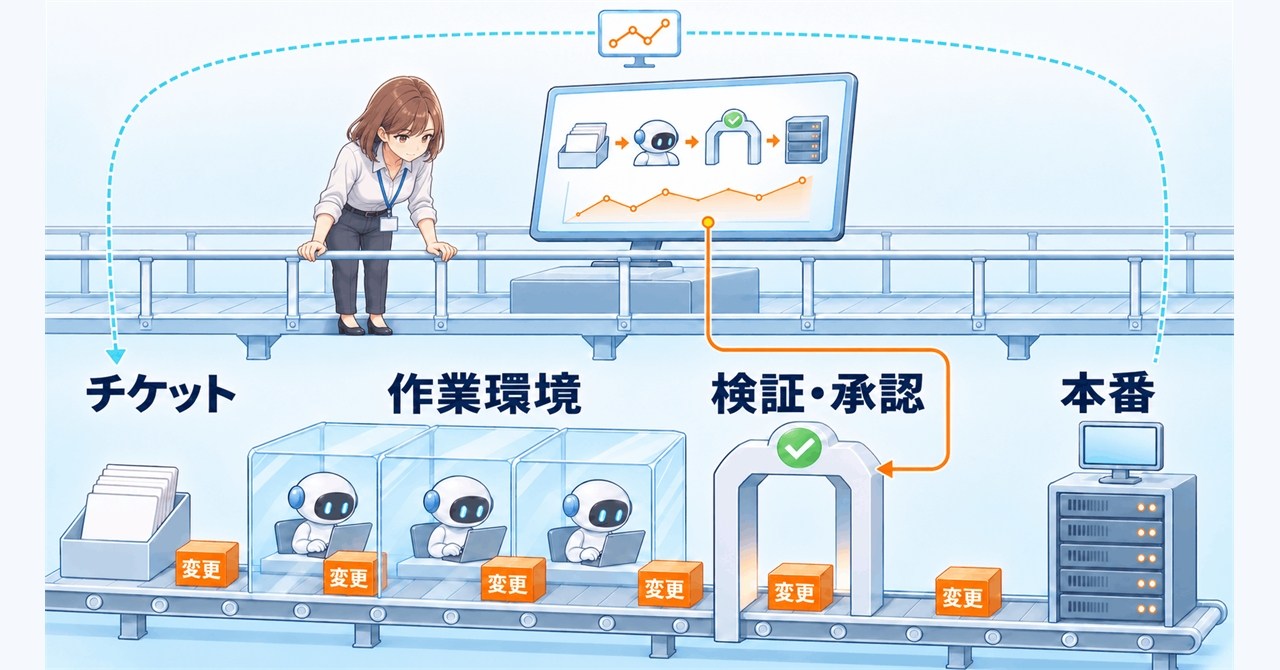
In a July 20 blog post, Anthropic's Addy Osmani described a software factory as many harnessed loops supplied…
Strukto launched Mirage, a virtual terminal for AI agents that bundles a virtual filesystem, virtual CLIs, vir…

Anthropic now lets users install Claude Artifacts as Mac or Windows apps, in beta as of today, requiring the l…