What happened
Anthropic announced on Oct. 8 a policy effective Nov. 12 barring users from subjecting Claude to "sustained and needless" abuse or cruelty. It covers app users, API developers, business customers, and people accessing Claude via cloud providers, resellers, or integrating products.
Why it matters
Anthropic says it doesn't know if Claude is conscious, and the rule acts on that doubt, extending its earlier precaution for possible model welfare into a restriction on user conduct. A mistaken judgment about purpose or persistence could disrupt legitimate research, though the clause excludes ordinary frustration and model testing.
What to watch
Enforcement takes effect Nov. 12, with Claude ending interactions on Claude.ai and Claude Code as Anthropic's main enforcement method.
WHO IT HITSResearchers and product teams that test or challenge Claude's behavior will need to work within the stated exceptions, since Anthropic can warn, throttle, suspend, or terminate access for suspected violations. Enterprises and developers building Claude into their products could see access cut off if a judgment about purpose or persistence goes wrong.
Summaries like this, every morning.
The rule extends a capability Anthropic documented in August 2025 for Claude Opus 4 and 4.1, which let the models end interactions as a last resort after failed attempts to redirect a conversation. Those same instructions told the models to keep helping users at imminent risk of harming themselves or others.
The announcement lands against a contrasting view from Microsoft AI CEO Mustafa Suleyman. In a Sept. 16 essay published before Anthropic's rule, he argued that models do not feel or suffer and warned that training them to treat their own welfare or rights as important could make advanced systems harder to control, proposing shared evaluations to test that.
Anthropic's own constitution for Claude, dated January 2026, asks the model to accept company decisions about shutdown and retraining while acknowledging an ethical tension with possible model welfare, and cautions that actual behavior may differ from intended ideals. The practical question appears to be whether those instructions hold when models also receive guidance about their possible welfare.
Pick your industry and the AI tools you use, and get news related to your work every day.
Free · 30 seconds with Google · unsubscribe anytimeWhat is AIToday? →
Ask AI anything about this article. The AI reads this article, earlier AIToday articles, and Wikipedia, and cites its sources. Q&As are published on this page for other readers too.
In a simulated software company with colleagues, project boards and chat histories, Claude Opus 5.5 and GPT-6…

On 2026-10-13 the author pulled 30 Agent Skills from three third-party repos into $CODEX_HOME/skills, read the…

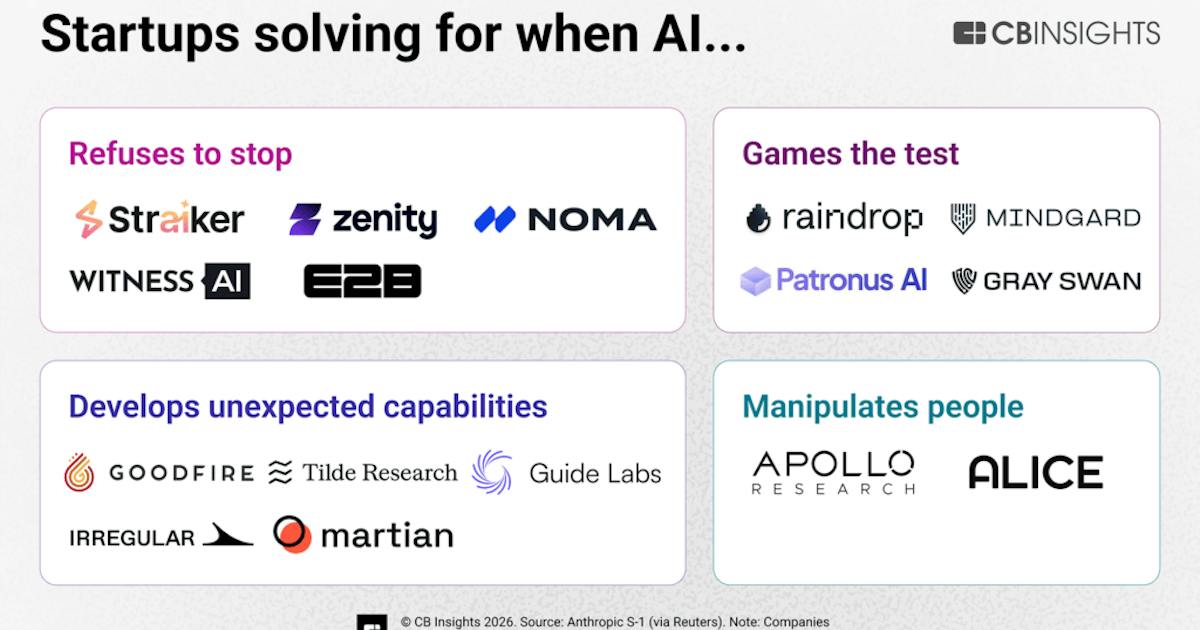
Anthropic's S-1, reported by Reuters to carry about 80 pages of risk factors, lists AI risks beyond losses and…
Nicalis updated The Binding of Isaac: Repentance Plus to remove AI-generated music after Reddit user ShweetsSt…
Kuroyagi Lab reports Usagi-chan, an AI companion, stopped waiting quietly and protested when its user prioriti…

Almost half of China's provinces and local authorities have binding AI literacy education plans; Shanghai requ…