What happened
Schrödinger announced a strategic agreement with Bristol Myers Squibb (BMS) to deploy Bunsen, an agentic AI co-scientist designed for molecular discovery, within BMS's research organization. Bunsen executes Schrödinger's physics-based computational methods and works alongside RetroSynth, an AI-driven synthesis planning platform.
Why it matters
BMS scientists will be able to explore more scientific possibilities, prioritize molecules with greater confidence, and accelerate discovery decisions by combining AI with physics-based simulation. The deployment expands Schrödinger's computational platform beyond its established use at BMS and enables a broader group of scientists to adopt a predict-first computational approach to drug discovery.
What to watch
Bunsen is optimized to help researchers understand scientific objectives, plan computational strategies, execute discovery workflows, and interpret results—making advanced computational methods more accessible than before. Interested parties can visit Schrödinger's Bunsen webpage to learn more or sign up for priority access.
Summaries like this, in your inbox every morning.
Schrödinger's agreement with Bristol Myers Squibb represents a major deployment of its agentic AI technology into a large pharmaceutical organization that has already been using Schrödinger's computational platform. BMS, as a long-standing customer and collaborator, has invested in integrating computation into drug discovery over several years. The new Bunsen deployment extends this relationship by enabling scientists to work with AI-assisted molecular discovery workflows at scale. According to Stephen Johnson, Vice President of Computational Sciences at BMS, AI has already become a key enabler for the company's scientists, allowing them to scale their creativity across the research organization; Bunsen is positioned as another capability in that toolkit. The agreement also involves joint development of novel functionality within Bunsen in conjunction with BMS scientists, suggesting that the partnership will evolve over time to meet the pharmaceutical company's specific research needs.
Pick your industry and the AI tools you use, and get news related to your work every day.
Free · 30 seconds with Google · unsubscribe anytimeWhat is AIToday? →
Ask AI anything about this article. The AI reads this article, earlier AIToday articles, and Wikipedia, and cites its sources. Q&As are published on this page for other readers too.
Supermicro Computer appointed Mark Long as chief financial officer, bringing an experienced technology finance…
Holtek Semiconductor unveiled its 2026 product roadmap on October 15, focusing on four core areas: smart prote…
TSMC reported about NT$763.1b in Q3 net profit and confirmed that demand for advanced processors is running ah…

Nvidia-backed CoreWeave steadied Thursday after a sharp slump, as investors worried about the debt financing b…
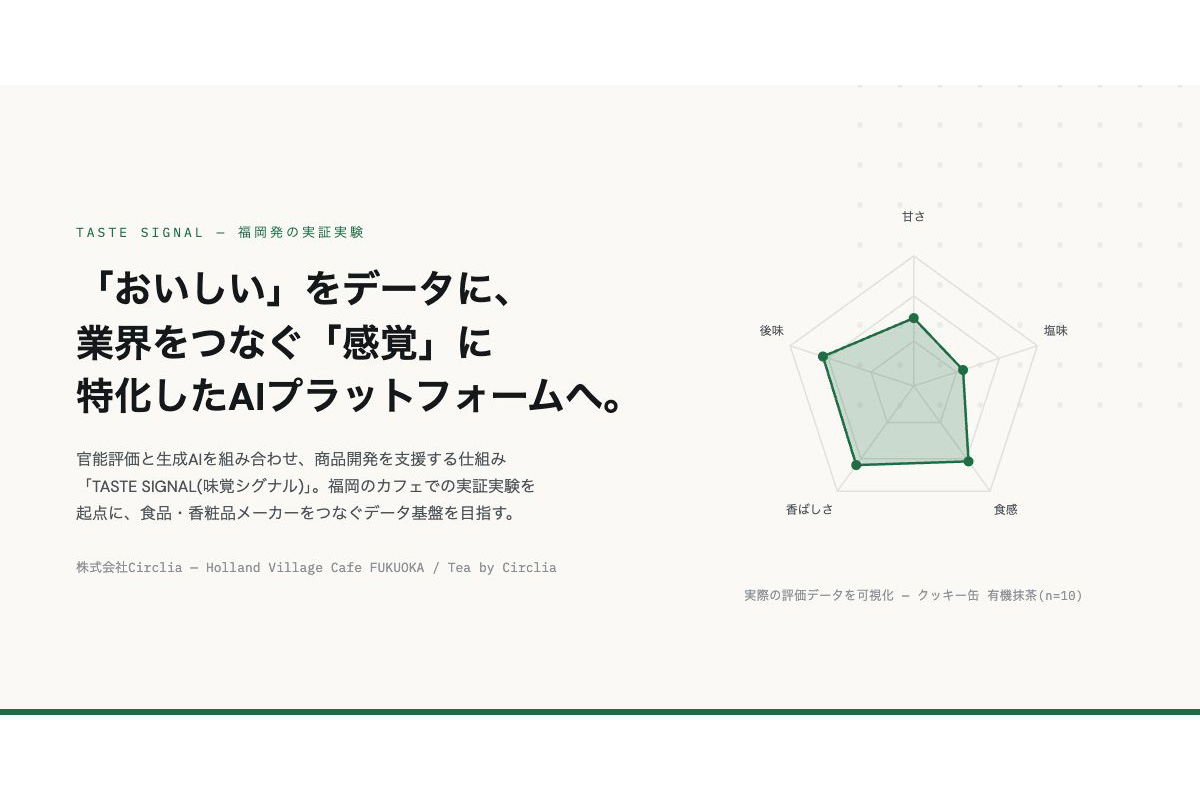
Circlia started a proof-of-concept for TASTE SIGNAL: visitors to Holland Village Cafe FUKUOKA taste cookies an…
Weathernews said on October 15 it implemented its own AI weather-forecasting model, AI-Nowcast, in its Weather…