What happened
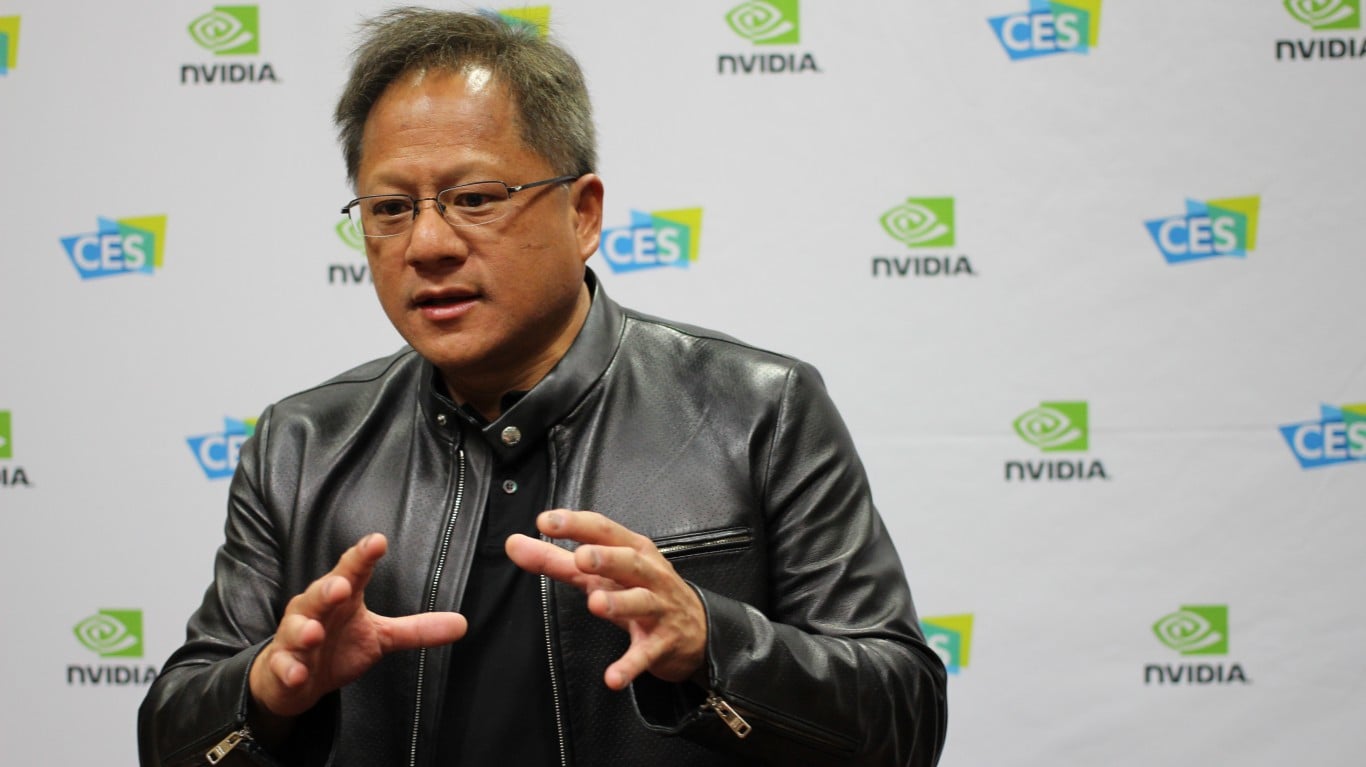
At GTC 2026 in Q1, NVIDIA CEO Jensen Huang declared that every industrial company will become a robotics company, backing the claim with new Isaac GR00T N1 and N1.5 humanoid robot foundation models, Cosmos world foundation models, and expanded partnerships with Siemens and Dassault Systemes for industrial AI platforms. NVIDIA also announced plans to deploy L4 robotaxis on Uber across 28 cities by 2028, with a target of 100,000 level 4-ready vehicles by 2027.
Why it matters
The statement signals a shift in NVIDIA's growth strategy beyond data center chips toward physical AI and robotics infrastructure. While automotive revenue remains tiny at $604 million in Q4 FY2026 (up 6% year over year)—a fraction of NVIDIA's $215.94 billion full-year FY2026 revenue—the robotics thesis frames a large new addressable market opportunity. The analyst consensus target price of $305.94 implies more than 35% upside, suggesting Wall Street sees material value in this pivot.
What to watch
Monitor automotive segment revenue growth over the next 12 months to see if it accelerates beyond single-digit rates. Track adoption metrics for Isaac GR00T and Cosmos among enterprise customers, and watch whether partnerships with Siemens and Dassault translate into measurable industrial customer wins. Q1 FY2027 guidance stands at approximately $78 billion in revenue, though that excludes Data Center compute revenue from China due to export restrictions.
Summaries like this, in your inbox every morning.
Huang's statement encapsulates a shift in how NVIDIA is positioning its long-term growth beyond the data center compute business that has driven its recent gains. The company is betting that the next wave of enterprise value creation will flow through physical systems—robots, autonomous vehicles, and industrial automation—and that NVIDIA's infrastructure (chips, software frameworks, and platforms) will be foundational to that transition. The partnerships with Siemens and Dassault Systemes, along with Omniverse integrations across Accenture, Ansys, SAP, and Schneider Electric, suggest NVIDIA is building horizontal software and platform plays rather than just selling chips.
Today, that thesis is aspirational. Automotive revenue grew only 6% year over year in Q4, and the Uber robotaxi agreement—while high-profile—is not yet reflected in material revenue. What IS scaling rapidly is the infrastructure layer: Data Center Networking revenue surged 263% year over year to $10.98 billion in Q4, driven by NVLink fabric adoption. This suggests customers are investing heavily in the networking and compute backbone that physical AI systems will ultimately run on. The Q1 FY2027 guidance of approximately $78 billion in revenue (excluding China compute due to export restrictions) indicates momentum is intact, but the physical AI revenue upside remains a bet for 2027 and beyond.
Pick your industry and the AI tools you use, and get news related to your work every day.
Free · 30 seconds with Google · unsubscribe anytimeWhat is AIToday? →
Ask AI anything about this article. The AI reads this article, earlier AIToday articles, and Wikipedia, and cites its sources. Q&As are published on this page for other readers too.
Vinci4D provides chip-design simulation software that trains on physics equations instead of customer data, an…

SEMI President and CEO Ajit Manocha told DIGITIMES that the semiconductor industry reached the US$1 trillion r…
Nvidia's AI Enterprise lists at $4,500 per GPU annually, and paid subscriptions add supported software, securi…

CoreWeave fell more than 25% this week, its debt yield briefly rose above 16% on Thursday, and SK Hynix droppe…

Anthropic told investors this week that it is making 85% gross margins, a figure the columnist calls a cash co…
Modal Labs, an AI infrastructure provider, raised $750 million in a Series D led by Accel at a $15.75 billion…