What happened
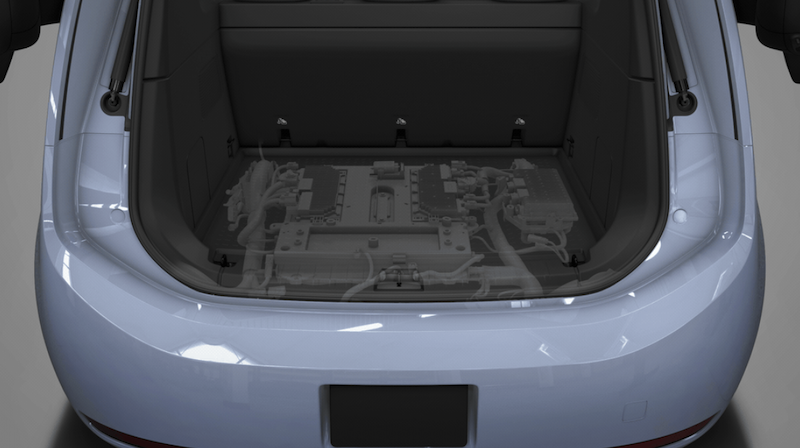
Waymo disclosed details of its onboard computing system for autonomous driving, including a purpose-built 5 nm ASIC delivering more than 1,000 TOPS of machine learning performance. The system combines Waymo's custom silicon with processors from Nvidia, AMD, Micron, Samsung, Sandisk, Socionext, and TSMC. Waymo has scaled the raw computing power available to the Waymo Driver by 20 times over the past eight years.
Why it matters
Unlike driver-assistance systems that rely on a human fallback, the Waymo Driver handles the complete driving task, placing substantially greater demands on latency, reliability, and redundancy. All driving decisions are processed onboard the vehicle in real time, translating sensor data into driving commands. The system is designed around experience accumulated over more than 200 million miles of fully autonomous driving.
What to watch
Waymo has engineered redundant compute architecture—two independent processing systems that normally operate in parallel but allow one to seamlessly take over if the other experiences a fault. The hardware is ruggedized for vibration, shock, and extreme temperatures, integrated with liquid cooling to maintain performance in environments ranging from Midwest winters to Phoenix heat. The company says computational requirements are likely to grow as its AI models evolve and the Waymo Driver moves into additional applications.
Summaries like this, in your inbox every morning.
Waymo's disclosure reflects the engineering intensity required to operate fully autonomous vehicles at commercial scale. The company explicitly distinguishes its architecture from driver-assistance systems—because the Waymo Driver owns the complete driving task with no human fallback, it must achieve millisecond-level latency, fault tolerance, and reliability that traditional automotive electronics have not demanded. The 20× increase in compute power over eight years indicates the steep trajectory of AI model sophistication and sensor resolution; simultaneous processing of 13 high-resolution cameras in real time, coupled with lidar and radar fusion, generates raw data volumes that purpose-built silicon addresses more efficiently than general-purpose processors alone.
Waymo's design choice to build custom silicon alongside partners rather than rely on external accelerators suggests that autonomous driving has moved beyond commodity hardware constraints. The 5 nm ASIC front-end accelerator decouples sensor processing from the main machine learning stack, allowing the company to tune bandwidth, quantization, and model diversity (from sparse convolutions to dense transformers) without cross-layer bottlenecks. That Waymo integrated liquid cooling directly into the vehicle's thermal management system underscores the power density of this architecture—it must operate in extreme heat without sacrificing battery life or trunk space, trade-offs that commoditized solutions do not easily solve.
Pick your industry and the AI tools you use, and get news related to your work every day.
Free · 30 seconds with Google · unsubscribe anytimeWhat is AIToday? →
Ask AI anything about this article. The AI reads this article, earlier AIToday articles, and Wikipedia, and cites its sources. Q&As are published on this page for other readers too.
Supermicro Computer appointed Mark Long as chief financial officer, bringing an experienced technology finance…

Holtek Semiconductor unveiled its 2026 product roadmap on October 15, focusing on four core areas: smart prote…

TSMC reported about NT$763.1b in Q3 net profit and confirmed that demand for advanced processors is running ah…
Nvidia-backed CoreWeave steadied Thursday after a sharp slump, as investors worried about the debt financing b…

Weathernews said on October 15 it implemented its own AI weather-forecasting model, AI-Nowcast, in its Weather…

TOPPAN Holdings and Keio University ran a quantum-computer and generative-AI proof-of-concept from February 1…