AIToday
AI Business & IndustryFortune AIPublished: Jul 31, 2026, 01:00 JST7 min read

AI workers donate $40M to factory farm animal welfare

AI workers donate $40M to factory farm animal welfare

Key takeaway

  • AI industry workers have donated roughly $40 million this year to improve conditions for factory-farmed animals, with momentum building after a podcast conversation between tech podcaster Dwarkesh Patel and farm animal welfare leader Lewis Bollard in August 2025.

  • Patel's fundraising campaign for FarmKind raised $2.3 million in its initial phase, reflecting a broader shift: roughly $300 billion in new wealth from the AI boom could eventually fuel about $30 billion in annual donations, with younger donors more willing to give earlier in life and more actively engaged in philanthropy than previous wealthy generations.

3 Key Points

  1. What happened

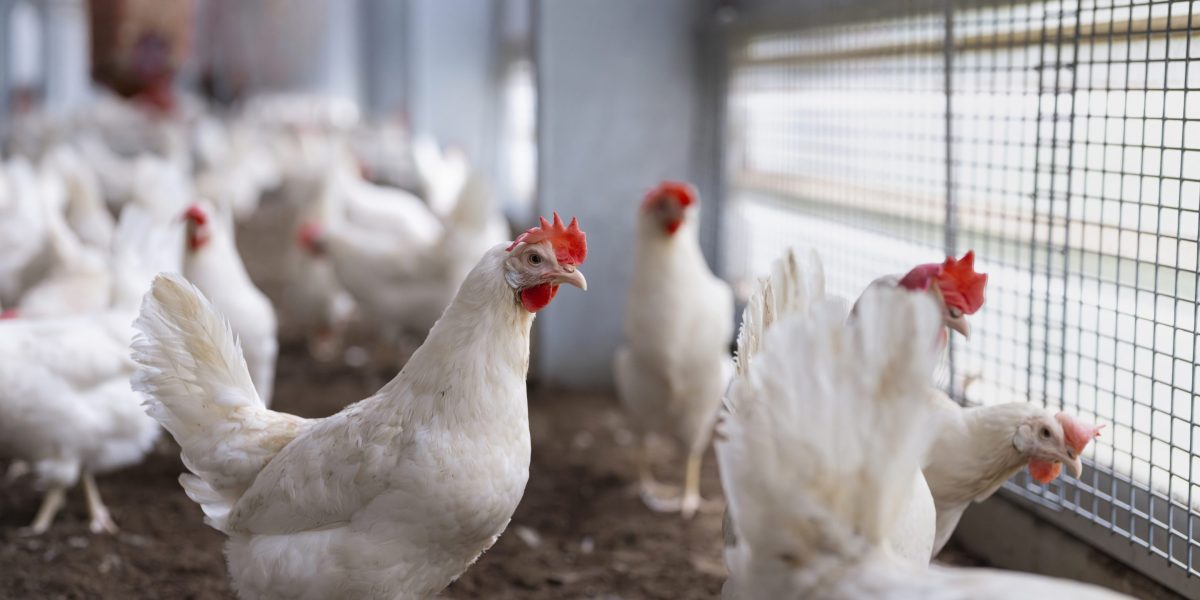
    AI industry workers and donors have contributed roughly $40 million this year to efforts aimed at improving conditions for chickens, pigs, and other animals raised in industrial agriculture. Much of this momentum traces to tech podcaster Dwarkesh Patel's August 2025 appearance on Lewis Bollard's farm animal welfare podcast, which prompted Patel to launch a fundraising campaign for FarmKind, a nonprofit donation platform dedicated to ending factory farming. Patel's initial $250,000 matching commitment was fully claimed in less than two days, and his FarmKind campaign alone raised $2.3 million, with repeat donors contributing another $200,000 and counting.

  2. Why it matters

    Roughly $300 billion in new wealth could flow into philanthropy over the next several years thanks to the AI boom, eventually fueling about $30 billion in annual donations. Unlike previous generations of wealthy donors, many younger AI founders, employees, and investors appear eager to give earlier in life. For animal welfare advocates, this influx of money and engagement from Gen Z and millennial tech workers represents a potential turning point—the farmed animal movement has historically had less money to spend in a year globally than two weeks of McDonald's profits, so philanthropy from AI lab employees could be radically transformative.

  3. What to watch

    Despite growing enthusiasm among younger wealthy donors, some of the world's richest people—including Elon Musk and Peter Thiel—have warned that effective philanthropy is far harder than simply writing a check. Musk has said that donating money effectively is one of the hardest problems facing wealthy individuals, and Thiel has expressed that most Giving Pledge signers he has spoken with have regret about their commitment, calling the Pledge an "Epstein-adjacent, fake Boomer club."

In Depth

Read the full story

As AI firms like OpenAI and Anthropic race toward IPO, they are expected to create a new wave of millionaires and billionaires and unleash billions of dollars in charitable giving. One major cause already attracting that wealth is farm animal welfare—a focus that may surprise some observers. This year alone, donors tied to the AI industry have contributed roughly $40 million to efforts aimed at improving the lives of chickens, pigs, and other animals raised in industrial agriculture, according to Lewis Bollard, who has spent the past decade leading farm animal welfare work at Coefficient Giving. Bollard described the willingness of young AI workers to write large checks: "With the young AI crowd, there's way more of a willingness to say, 'Yeah, I'll just sign a million-dollar check. Sure.'"

Much of this momentum traces back to an appearance Bollard made on tech podcaster Dwarkesh Patel's show in August 2025. During the hour-long conversation, the pair argued that billions of animals endure lives of extreme confinement in industrial agriculture, yet the issue receives only a fraction of the philanthropic dollars devoted to causes such as climate change and global health. Patel subsequently wrote on X: "The way we treat factory-farmed animals is one of the worst atrocities in history. And unfortunately, the problem is on track to get worse every year." The conversation quickly turned into action. Patel launched a fundraising campaign for FarmKind, a nonprofit donation platform dedicated to ending factory farming. Patel offered an initial $250,000 matching commitment, and it was fully claimed in less than two days—far faster than FarmKind expected, according to cofounder Thom Norman. Patel and Bollard also began organizing informal dinners at AI companies, including OpenAI, to discuss factory farming and animal welfare with employees. In total, Patel's FarmKind campaign alone raised $2.3 million, and repeat donors have since contributed another $200,000 and counting.

The broader context is one of unprecedented wealth generation in the AI industry. U.S. charitable giving reached a record $617.2 billion in 2025, according to the Giving USA Foundation. Yet the AI boom could dramatically reshape who is doing the giving. Roughly $300 billion in new wealth could flow into philanthropy over the next several years thanks to AI, eventually fueling about $30 billion in annual donations. Unlike previous generations of wealthy donors, many younger founders, employees, and investors appear eager to give earlier in life rather than waiting until retirement or traditional estate-planning years. A 2024 survey by Bank of America Private Bank of individuals with more than $3 million in investable assets found that donors under 43 are slightly more likely to volunteer, twice as likely to help raise charitable donations from friends or peers, and more than four times as likely to act as mentors. For animal welfare advocates, the influx of money and engagement, especially from Gen Z and millennial tech workers, is a potential turning point. Thom Norman told Fortune: "The farmed animal movement has, historically, had less money to spend in a year globally than two weeks of McDonald's profits. So philanthropy from AI lab employees could be radically transformative."

However, some of the world's richest people have cautioned that effective philanthropy is far harder than simply writing a check. Elon Musk has repeatedly argued that donating money effectively is one of the hardest problems facing wealthy individuals. "The biggest challenge I find with my foundation is trying to give money away in a way that is truly beneficial to people," Musk said on the WTF podcast last year. "It's very easy to give money away to get the appearance of goodness. It is very difficult to give money away for the reality of goodness. Very difficult." Musk also said that money may become less important over the next decade as technology advances. When economist Daron Acemoglu challenged him to donate his fortune by 2036, Musk responded: "I am actually going to do something along these lines!" Peter Thiel, whose net worth is estimated at $27 billion, has expressed similar doubts. He has said he encouraged around a dozen Giving Pledge signers—including Musk—to resend their commitment to give the majority of their wealth to charitable causes in their lifetime or upon death. "Most of the ones I've talked to have at least expressed regret about signing it," he told The New York Times earlier this year, calling the Pledge an "Epstein-adjacent, fake Boomer club." For nonprofit leaders, the difficulty is not necessarily finding worthy causes but ensuring that enormous sums of money actually create meaningful change. Liz Baker, CEO of global nonprofit Greater Good Charities, previously told Fortune: "I wish I had a billion dollars to give away. But as somebody who's responsible for giving away money, yeah, it's hard, because there's a really big responsibility that goes with that."

Context & Analysis

The convergence of AI wealth creation and farm animal welfare philanthropy reveals a generational shift in how newly rich tech workers approach charitable giving. Lewis Bollard's August 2025 podcast appearance with Dwarkesh Patel was not a planned campaign but rather struck a nerve with an audience of young, wealthy AI industry workers who saw factory farming as an underexplored cause relative to its scale. The speed and scale of response—Patel's $250,000 match depleted in under two days—suggests that AI workers are not only wealthier than previous generations but also more willing to commit large sums quickly and more influenced by peer engagement (Patel and Bollard subsequently organized informal dinners at AI companies including OpenAI). This contrasts sharply with the caution expressed by older billionaires like Elon Musk and Peter Thiel, who argue that effective philanthropy is harder than it appears and who have expressed skepticism about traditional giving commitments like the Giving Pledge. For nonprofit leaders, the influx of AI wealth presents both opportunity and challenge: while the scale of potential funding is unprecedented, ensuring that large sums create meaningful change rather than merely appearing to do so remains an open problem.

FAQ

What triggered the surge in AI worker donations to animal welfare?
Tech podcaster Dwarkesh Patel's August 2025 appearance on Lewis Bollard's farm animal welfare podcast, where they discussed how billions of animals endure extreme confinement in industrial agriculture while the issue receives only a fraction of philanthropic dollars compared to causes like climate change and global health. The conversation prompted Patel to launch a fundraising campaign for FarmKind.
How much has Dwarkesh Patel's FarmKind campaign raised?
Patel's FarmKind campaign raised $2.3 million, with his initial $250,000 matching commitment fully claimed in less than two days. Repeat donors have since contributed another $200,000 and counting.
How much new philanthropic wealth could the AI boom generate?
Roughly $300 billion in new wealth could flow into philanthropy over the next several years thanks to the AI boom, eventually fueling about $30 billion in annual donations.

Get the latest AI Business & Industry news every morning

AI-summarized, only the topics you pick — one digest a day via Email, Slack, or Discord.

Free · takes 30 seconds · unsubscribe anytime

Related Articles

Next articleAI safety researchers target low-dimensional structure to control AI behavior

The AI news that matters, in one minute each morning.

Sign up free