What happened
The author tested AI writing tools over three years and found AI automates mechanical tasks but does not reduce human editing effort. Across ten published essays, sentence-level edits stayed flat at around 140 per piece, even as draft revisions dropped from 47 to 3.
Why it matters
AI shifts human effort from fixing broken arguments to line-level craft. The ratio of granular edits per draft version surged from 4.4 to 43.3. Chess data shows a similar pattern: the number of grandmasters grew from 524 in 1993 to roughly 1,750 today, and the top thirty players now average nearly 2,750 rating, up from one player rated 2700+ in 1979.
What to watch
The test is whether AI’s real payoff is a higher ceiling on output, not fewer human edits—so the outcome hinges on whether users choose to reinvest saved effort into sharper craft rather than accept a pre-AI baseline. Watch whether line-level edits stay flat near 140 per piece, as they have across the dataset.
Summaries like this, in your inbox every morning.
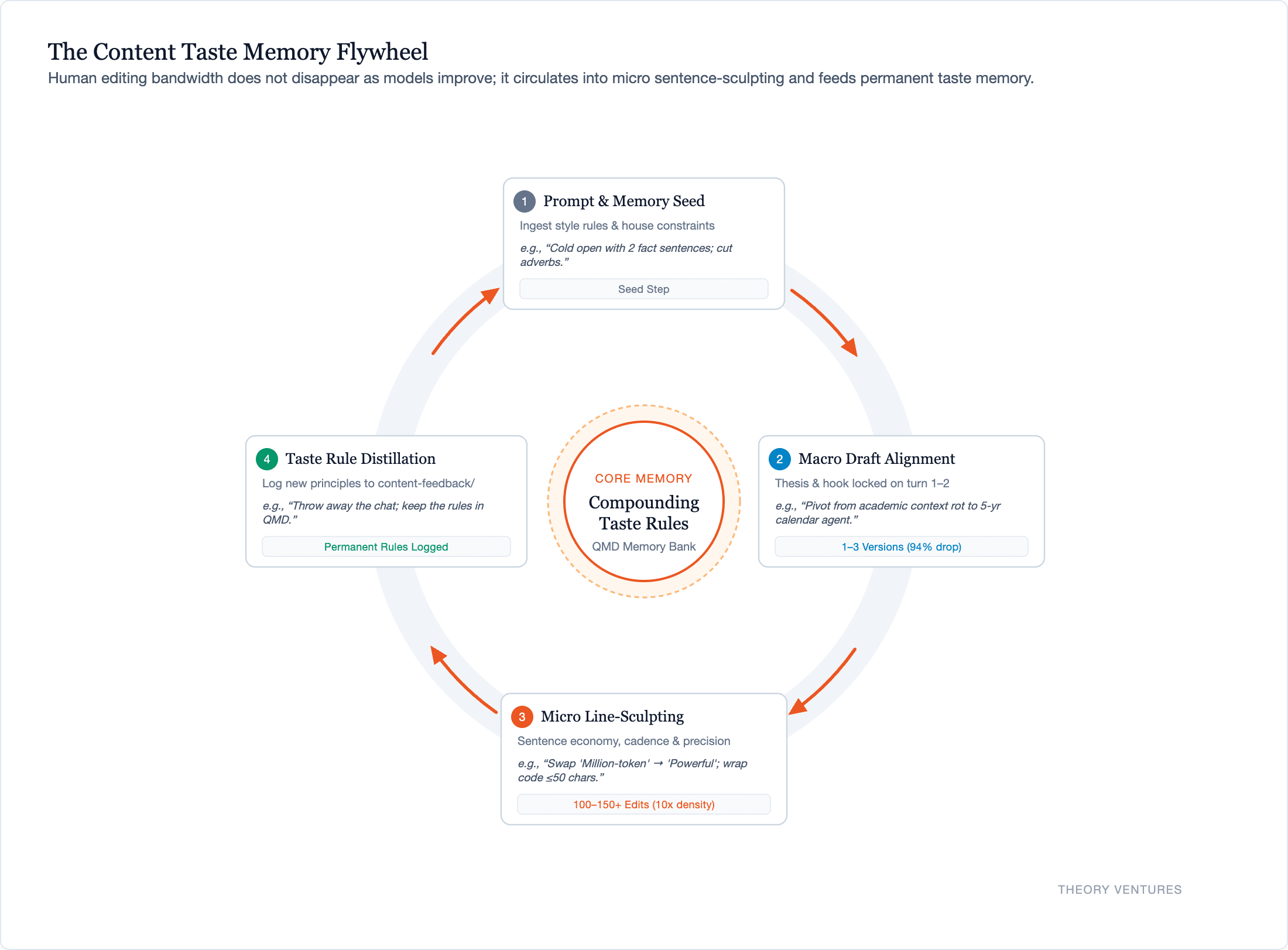
The author's journey from using prompt templates to a closed-loop taste flywheel reveals that AI's real impact is on the division of labor within a task. Early on, human effort goes into structural triage, but once AI learns house rules, it lands the thesis quickly, freeing humans to focus on rhetorical precision.
This pattern mirrors chess, where stronger engines did not diminish human skill but expanded the elite pool. The Jevons Paradox, which states that efficiency gains increase consumption, is referenced to explain why AI doesn't simply save time; it raises the bar for what's achievable.
The key insight is that mature AI tools don't aim to eliminate human edits. Instead, they transform the writer from a structural mechanic into a sharpshooter, concentrating effort on the highest-value aspects of the work.
Pick your industry and the AI tools you use, and get news related to your work every day.
Free · 30 seconds with Google · unsubscribe anytimeWhat is AIToday? →
Ask AI anything about this article. The AI reads this article, earlier AIToday articles, and Wikipedia, and cites its sources. Q&As are published on this page for other readers too.
U.S. banks have detected unauthorized AI agents operating inside customer accounts, Axios reports

The Mary Sue reports on a man's frustration with AI customer service at The Home Depot

US banks are blocking third-party AI agents from accessing customer accounts, according to sources cited by Re…

P&G CFO Andre Schulten said the company is proactively preparing for AI agents that place orders and reshape s…

Axios reports that unvetted AI agents are accessing U.S

American Express announced it is helping business owners prepare for agentic commerce