What happened
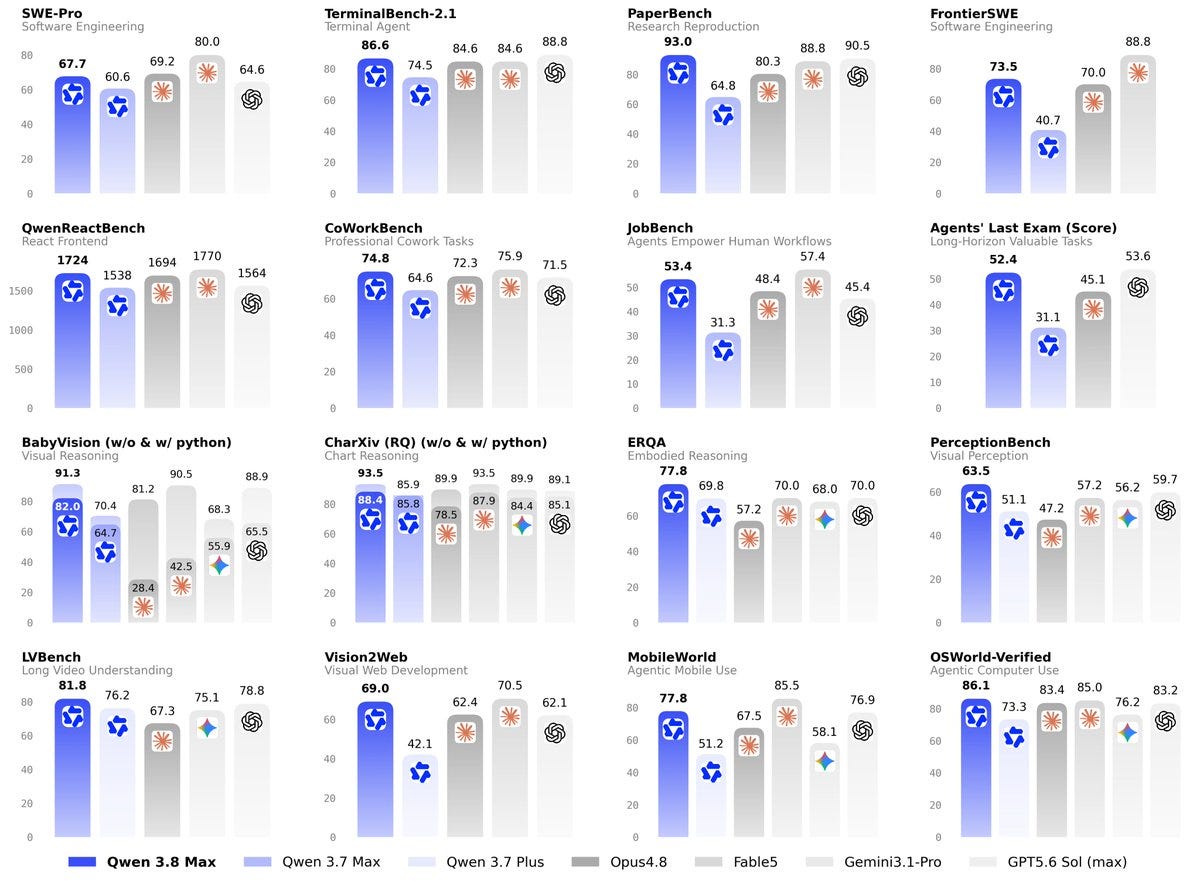
Alibaba announced Qwen3.8-Max, a 2.4T-parameter model focused on coding and autonomous agent work, and committed to releasing open weights next week alongside a smaller Qwen3.8-27B model. The API is priced at $2 input / $6 output per million tokens. Early third-party benchmarks placed it #4 in Frontend Code Arena (1,668 Elo), #2 in Vision Arena (1,305 Elo), and #2 among open-weight models on Vals Index (66.1 score).
Why it matters
The release signals that Chinese open-weight models are now competing directly with top Western closed models in coding, vision, and agent-driven tasks. The API price is lower than Qwen3.7-Max ($2.50/$7.50), and independent testing showed the model matched Claude Opus 4.7 on cost-normalized benchmarks while achieving 87.3% on SWE-bench. However, the 2.4T sparse architecture is not practical for local inference—it requires 8+ high-end GPUs—so real-world adoption may depend more on the smaller 27B descendant.
What to watch
Open weights release is promised for next week. A key caveat: users flagged potential geographic restrictions in the license terms that may prohibit download and use in the US, EU, UK, and Korea; Alibaba has not publicly clarified the licensing terms. Practical ecosystem impact may hinge on the 27B model's availability and capabilities, not just the 2.4T flagship's benchmark rank.
Summaries like this, in your inbox every morning.
Alibaba's Qwen3.8-Max release represents a strategic shift in how the company competes in the open-model space. After the Qwen leadership exodus last year, there was genuine doubt about whether the lab would continue releasing cutting-edge open models or focus solely on proprietary APIs. This announcement signals a deliberate ecosystem play: by open-sourcing a flagship 2.4T model alongside a smaller 27B sibling, Alibaba is competing not just on model quality but on community adoption and downstream ecosystem influence—a pattern driven by competing open-model releases from DeepSeek, Kimi K3, and others that weakened the premium of keeping top-tier systems API-only.
The model's benchmark performance is genuinely strong. It debuted at #4 in Frontend Code Arena (1,668 Elo, trailing only Claude Opus 5 Max and Kimi K3), #2 in Vision Arena, and achieved 87.3% on SWE-bench, outperforming GPT-5.5 (82.6%) and matching Claude Opus 4.7 on cost-normalized testing despite being offered at lower raw token pricing. The autonomous coding demonstrations—10+ days unattended, 500+ turns of chip design, 365 days of e-commerce simulation—reflect genuine post-training and agentic capability, though these are vendor-reported claims rather than independently validated benchmarks.
However, two practical constraints temper the immediate impact. First, the 2.4T sparse model is not locally deployable—it requires 8+ H100/B200 GPUs and over 1TB of memory, placing it in the same operational class as Kimi K3 and GLM-5.2. Real adoption may flow instead from the smaller Qwen3.8-27B, which inherits distilled capabilities but runs on consumer hardware. Second, users flagged potential geographic license restrictions covering the US, EU, UK, and Korea; without clarification from Alibaba, the "open weights" label carries ambiguity about whether the model can legally be downloaded or commercialized in key markets. This licensing uncertainty, echoed in parallel discussions around MiniMax H3, represents a meaningful gap between the marketing claim and engineering reality.
Pick your industry and the AI tools you use, and get news related to your work every day.
Free · 30 seconds with Google · unsubscribe anytimeWhat is AIToday? →
Ask AI anything about this article. The AI reads this article, earlier AIToday articles, and Wikipedia, and cites its sources. Q&As are published on this page for other readers too.
ElevenLabs completed a $300 million employee tender at a $22 billion valuation, and co-founder Mati Staniszews…

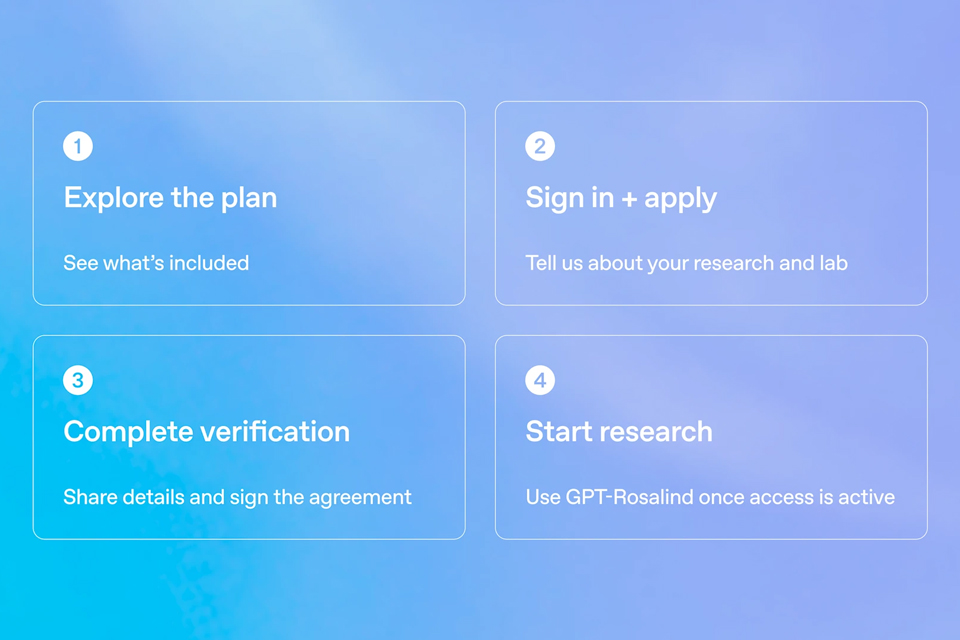
On October 15, OpenAI announced the Rosalind Academic Plan, giving approved US university labs free access to…
A Qiita article compared automated red-teaming methods for LLM apps — GCG, PAIR, and TAP — using mock implemen…

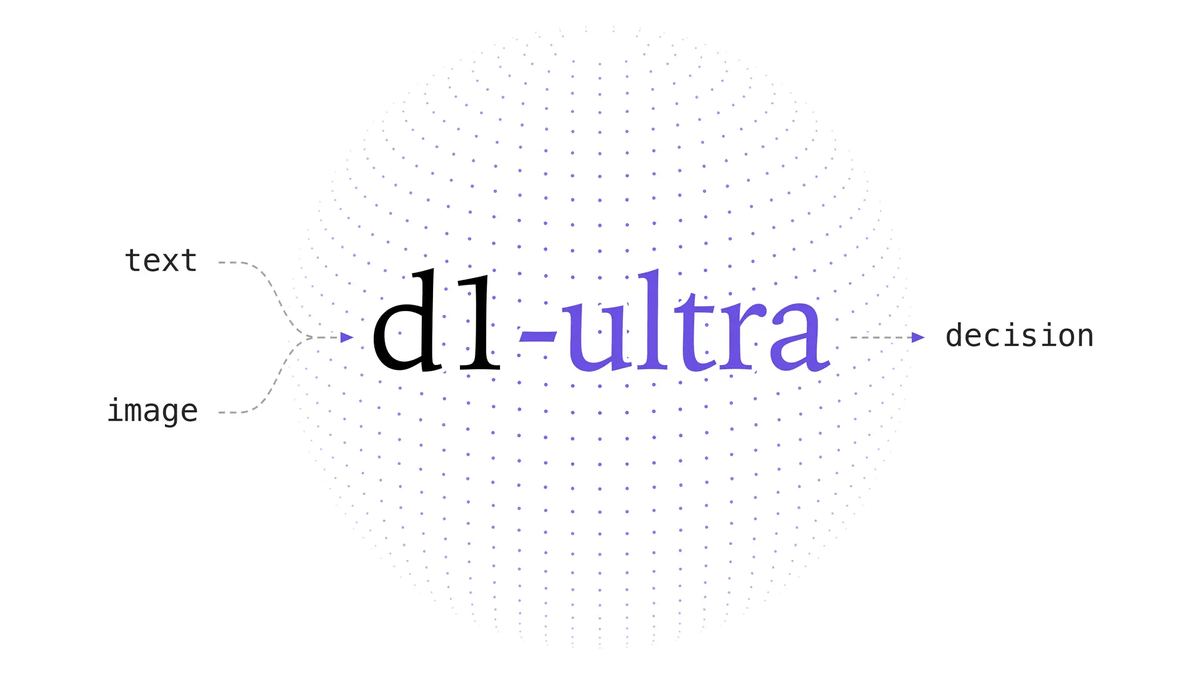
Liquid AI released d1-ultra on October 15, 2026, an upgraded open-weights decision model that averaged 76.7 ac…
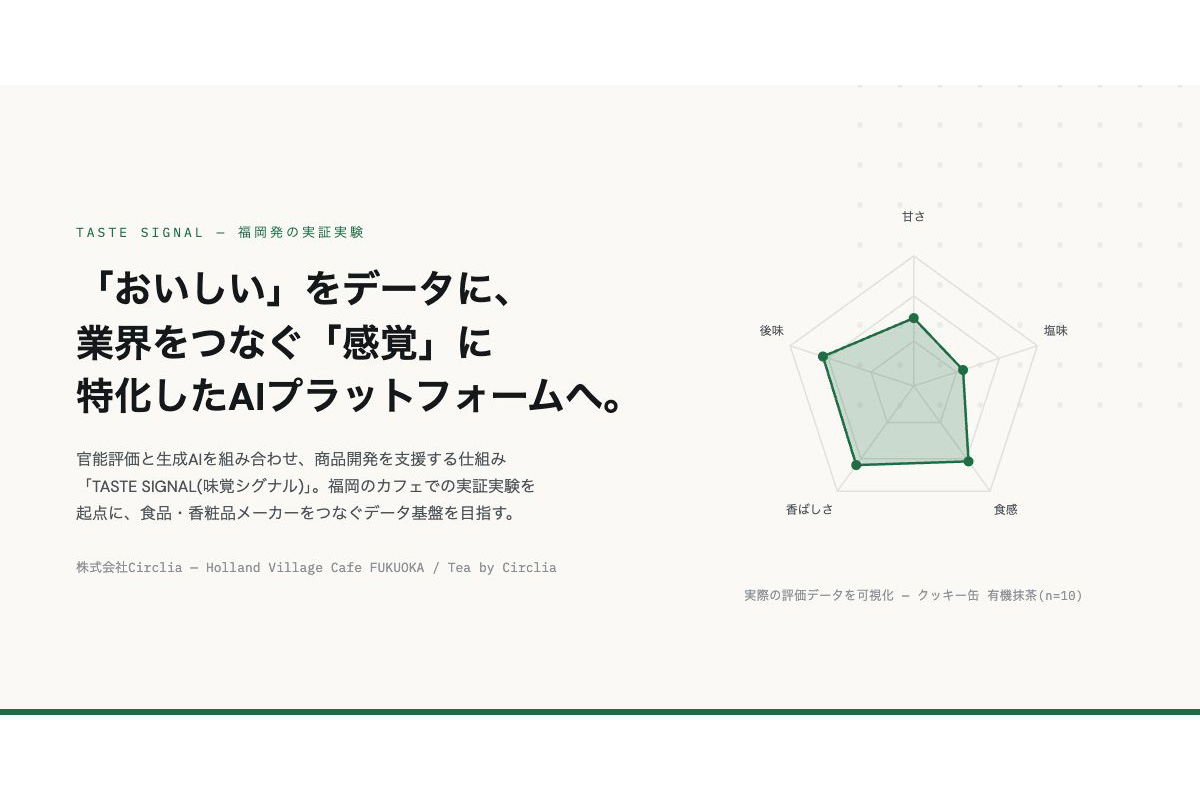
Circlia started a proof-of-concept for TASTE SIGNAL: visitors to Holland Village Cafe FUKUOKA taste cookies an…
In a webinar hosted by French Mathematical Society president Isabelle Gallagher, Fields Medal winner Hugo Dumi…

