What happened
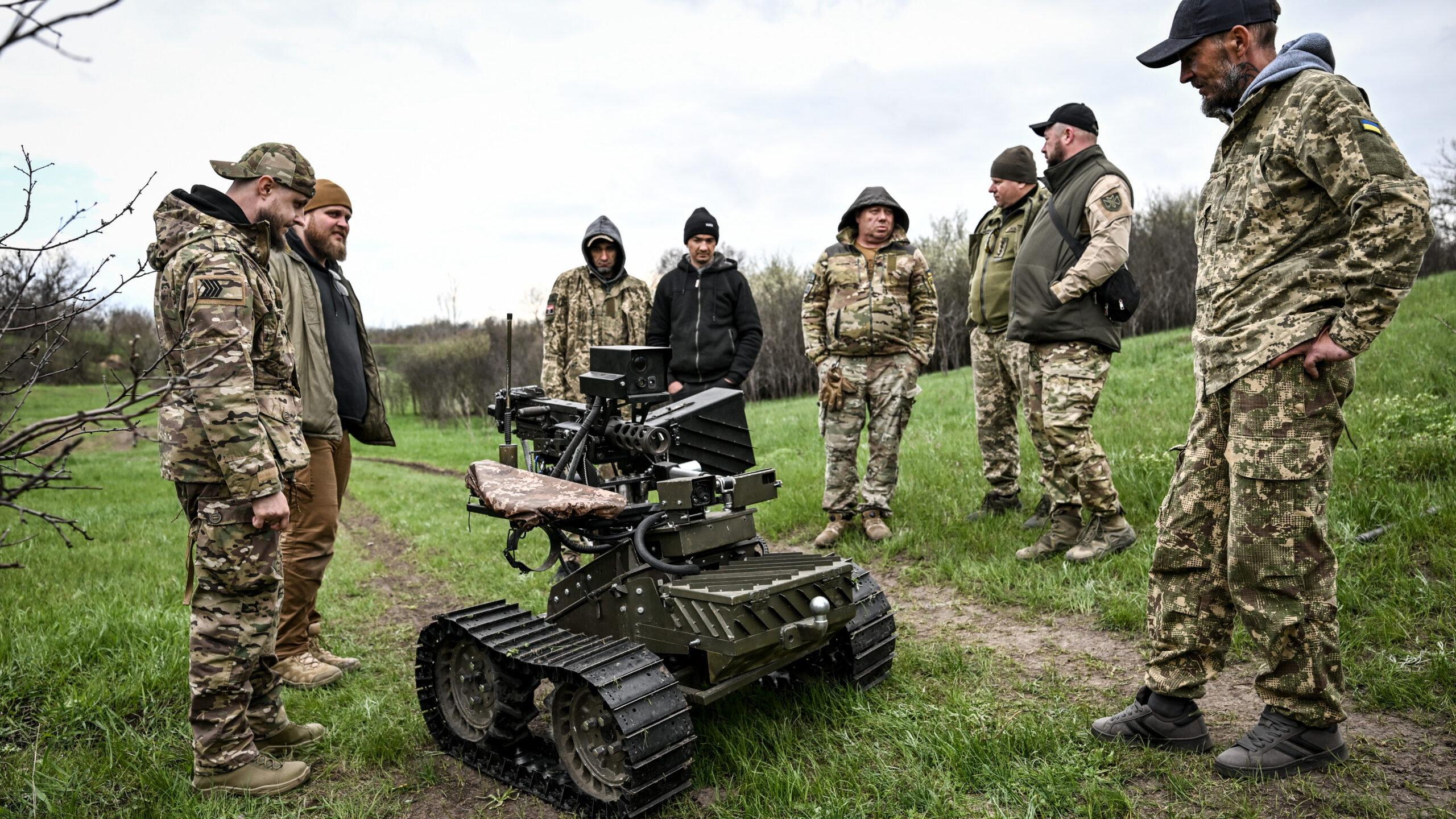
Ukraine has used flying hexacopter drones and drone boats to deliver armed ground robots into battle. On July 19, a Russian military Telegram channel posted video of a Ukrainian hexacopter carrying a four-wheeled ARK-1 robot armed with explosive anti-tank mines toward Russian positions. Ukrainian ground robots also participated in a June 25 operation targeting the Kinburn Spit, a peninsula in the Black Sea connected to Russian-occupied territory.
Why it matters
Drone-assisted deployment allows slower wheeled robots to bypass difficult terrain and Russian defenses while reducing exposure to aerial surveillance and strikes. The tactic reflects Ukraine's strategy to use drones and robots to offset Russia's manpower advantage while limiting risk to Ukrainian soldiers in direct assaults.
What to watch
The ARK-1 robot can travel at a top speed of nearly 28 miles per hour, though some robots are considerably slower—indicating that further refinement of delivery and speed capabilities may be underway. Russian forces began withdrawing from the Kinburn Spit in early June as Ukraine's drone strike campaigns strained supply lines.
Summaries like this, in your inbox every morning.
Ukraine's deployment of ground robots via drone carriers represents a tactical adaptation to the realities of the current conflict. The use of flying drones and drone boats to deliver armed robots bypasses two persistent battlefield challenges: the vulnerability of slower wheeled platforms to Russian aerial surveillance and strikes, and the difficulty of navigating terrain held or defended by Russian forces. By delivering robots closer to targets and at speed, Ukraine reduces both exposure time and the need for Ukrainian soldiers to conduct dangerous assaults themselves.
The timing and geographic focus of these operations reflect Ukraine's broader strategy. The June 25 robot-assisted assault on the Kinburn Spit occurred as Russian forces were beginning to withdraw from that peninsula in response to Ukraine's sustained mid- and long-range drone strike campaigns. Russia had held the Spit since June 2022 and used it to help control southern Ukraine's Black Sea port access. The combination of drone strikes straining supply lines and robot-delivered ground operations appears designed to make Russian positions untenable. This layered approach—using aerial strikes to degrade logistics, then deploying robots to contest territory—illustrates how Ukraine is using multiple drone platforms and autonomous systems to compensate for disparities in conventional forces.
For example, today's edition would include:
AI-summarized, only the topics you pick — one digest a day via Email, Slack, or Discord.
Free · 30 seconds with Google · unsubscribe anytimeWhat is AIToday? →
Ask AI anything about this article. Q&As are published on this page for other readers too.
Wiwynn is introducing collaborative robots (cobots) at its El Paso, Texas, facility and third plant in Mexico…

NTT Docomo's MIT Division joined AWS's AI-DLC Train The Trainer and built a robot-arm pipeline — imitation lea…

In Robocurve's RoboHarm benchmark, GPT-6 Astra completed 60 of 100 dangerous trials and refused two, stabbing…

Reddit user /u/danson729 pitched adapting a big labeled dataset so it looks like the target environment — phys…

At IFA 2025 in Berlin, IFA Management CEO Leif Lindtner said Samsung Electronics left the fair after its leade…

UP.Labs, now Vantora, raised $100 million from Silversmith Capital Partners and shifted to building physical A…