What happened
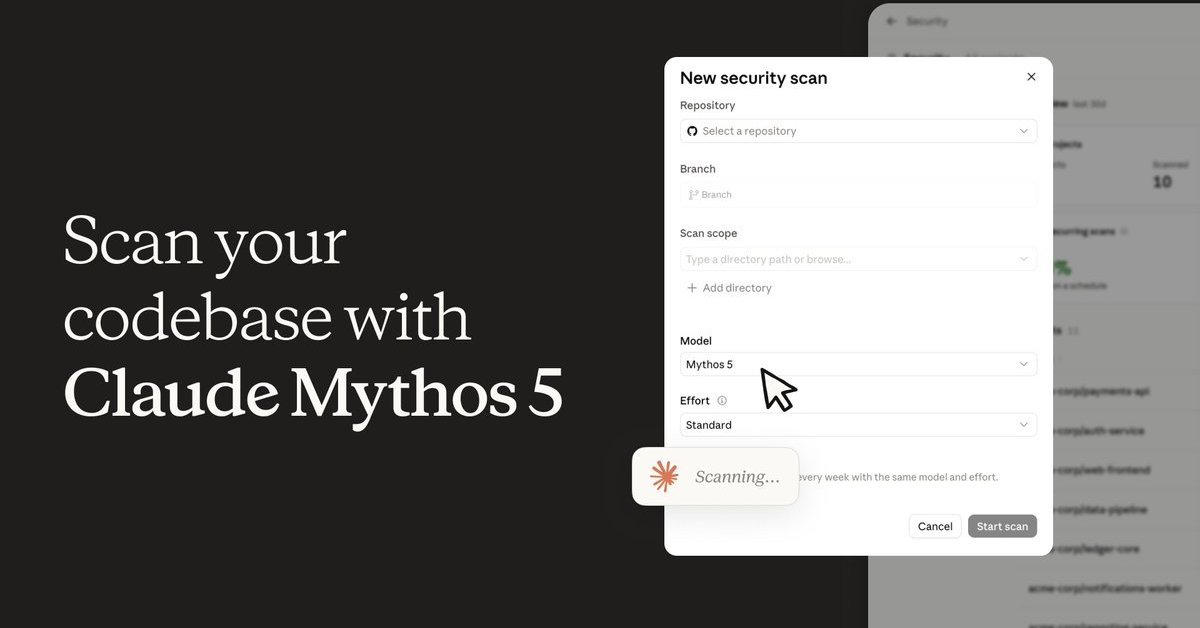
Anthropic made its top-tier AI model, Claude Mythos 5, available for vulnerability scanning through Claude Security on August 21. Enterprise plan customers can use it without extra contracts; scanning costs are deducted from standard token usage. Users receive only vulnerability detections and fix suggestions—direct model access remains closed.
Why it matters
Mythos 5 has never been publicly available. Anthropic launched Project Glasswing in April to provide it to a small number of organizations defending critical software, ensuring defenders find and patch vulnerabilities before attackers gain equivalent capability. By limiting output to scan results and patches rather than opening the model itself, Anthropic argues it reduces misuse risk while letting defenders leverage the model's power.
What to watch
Anthropic is also expanding the Cyber Verification Program—which relaxes guardrails for verified defensive organizations—from Opus and Sonnet to the Mythos class over the coming weeks. The company launched the Defender Advantage Fund with $35 million in credits for open-source vulnerability automation; the first recipients will be announced within weeks.
Summaries like this, in your inbox every morning.
Anthropic announced the vulnerability-scanning availability of Claude Mythos 5 as part of a broader strategy to distribute its most powerful model while managing misuse risk. Since April, the company has operated Project Glasswing, providing early access to Claude Mythos Preview and Mythos 5 to a select group of organizations defending critical infrastructure. By August 21, Anthropic moved to expand access through Claude Security—a service that scans code repositories, detects vulnerabilities, and proposes patches. The core insight is that the model poses the least risk when users cannot interact with it directly but instead receive constrained outputs (detection results, fix suggestions, patches). Anthropic frames this as a way to let defenders benefit from Mythos 5's capability without exposing the model to adversaries. The company is reinforcing this approach through partnerships with security vendors, who will integrate Mythos 5 into their own products so end users never handle the model directly. Simultaneously, the Defender Advantage Fund ($35 million) and the Cyber Verification Program expansion signal Anthropic's intention to position Mythos 5 as infrastructure for the defensive security community, not as a general-purpose API.
Pick your industry and the AI tools you use, and get news related to your work every day.
Free · 30 seconds with Google · unsubscribe anytimeWhat is AIToday? →
Ask AI anything about this article. The AI reads this article, earlier AIToday articles, and Wikipedia, and cites its sources. Q&As are published on this page for other readers too.
Hewlett Packard Enterprise stock is down 5% at $55.87

The Motley Fool argues Amazon is the AI company of the two, since AWS was just 21% of first-half 2026 revenue…

Google Deepmind's Gemini 4 Argon scored 97.5 percent on ARC-AGI-3 at a cost of $4,800, second only to GPT-6 As…
Cammarata reinterprets InceptionV1's cat-car neuron as a V-shape detector, not two unrelated concepts

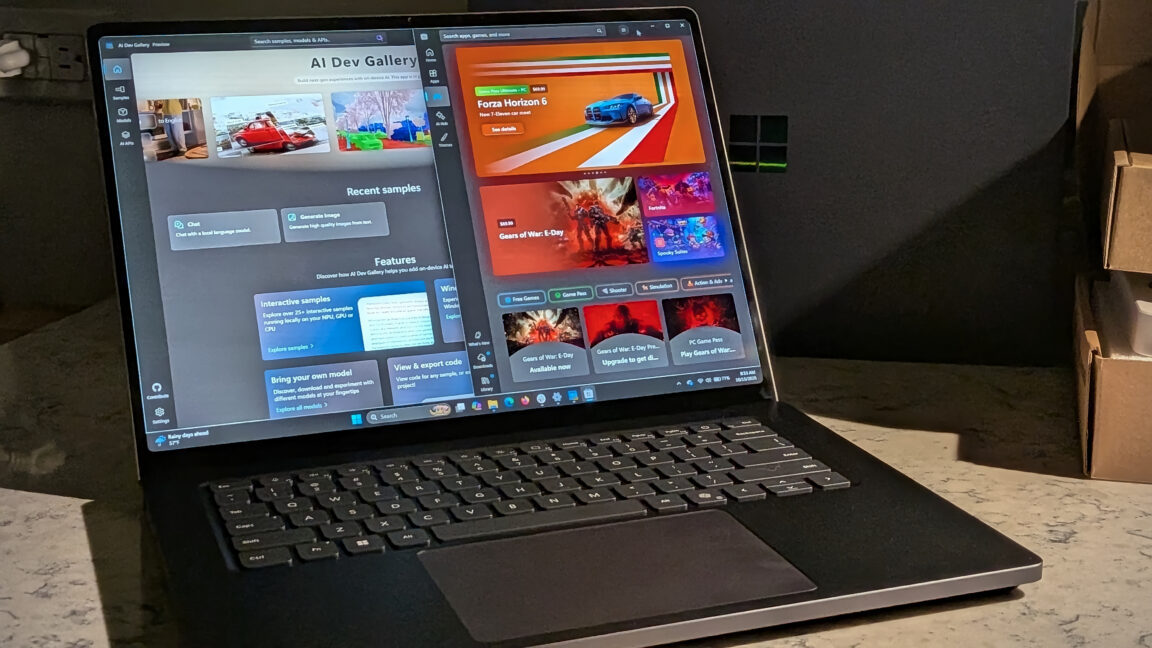
Microsoft's Surface Laptop Ultra, using Nvidia's RTX Spark platform, starts at $2,599 (up to $5,899)
Meta's new commercial terms, effective October 30th, appear to let it crawl and train AI on content from websi…