AIToday

OpenAI acquires Jony Ive's hardware startup; Apple sues over trade secrets

Fortune AI2h ago
OpenAI acquires Jony Ive's hardware startup; Apple sues over trade secrets

Key takeaway

OpenAI acquired Jony Ive's hardware startup io Products for $6.5 billion(約1兆円) roughly one year ago and is building a home-speaker-like AI device expected to ship next year, alongside a broader family of products. The partnership is meant to give OpenAI control over the consumer experience and lock users into its AI models as competition intensifies. However, Apple has sued OpenAI, claiming more than 400 former Apple employees at OpenAI took confidential data about supply chains and unreleased products. Legal experts expect the lawsuit to slow and reshape the hardware project rather than stop it entirely.

Summaries like this, in your inbox every morning.

Sign up free →

3 Key Points

  • What happened

    OpenAI acquired io Products, Jony Ive's hardware startup, roughly one year ago for $6.5 billion(約1兆円). The deal brought Ive—the legendary designer of Apple's iPhone—together with OpenAI CEO Sam Altman to build a new class of AI device. A home-speaker-like device with moving mechanical parts designed to mimic human behavior is expected to ship as early as next year, while a broader family of AI devices is in development.

  • Why it matters

    With OpenAI no longer the undisputed leader in large language models, hardware is a strategic move to lock consumers into its AI models and give them control over the user experience. However, Apple has filed a lawsuit alleging that more than 400 former Apple employees now at OpenAI unlawfully took confidential data about Apple's supply chain, unreleased products, and technical specifications. The lawsuit threatens to delay or reshape the hardware project, though legal experts say it is more likely to slow and compartmentalize the effort rather than kill it outright.

  • What to watch

    The device's success depends on whether Ive can deliver a product compelling enough to overcome consumer privacy concerns about always-on recording and skepticism about Altman's trustworthiness. OpenAI's voice technology, including the newly released GPT-Live, will be critical. The company could also be developing AI glasses, an AI pin, or a smartphone with AI agents, according to industry reports.

In Depth

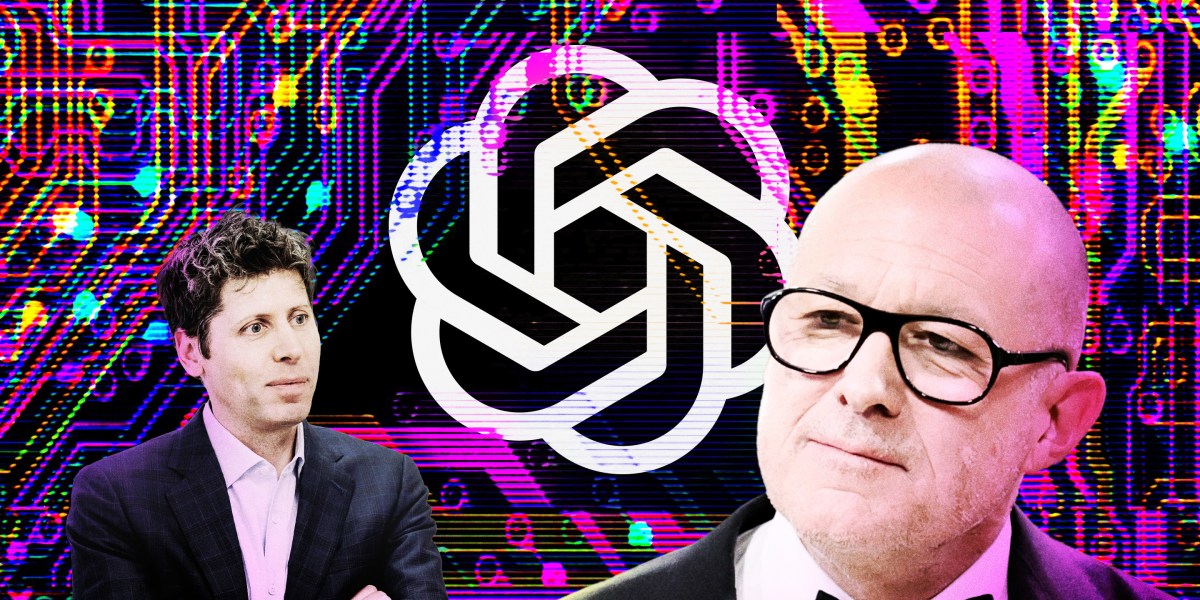
In May 2025, Jony Ive and Sam Altman were featured in a viral video sipping espressos at a cafe in North Beach to announce OpenAI's acquisition of io Products, Ive's hardware startup. The deal, struck roughly one year before the article's writing, valued the company at $6.5 billion(約1兆円). Ive, the legendary designer of Apple's iPhone and one of the world's most famous product designers, was being brought in to help OpenAI reinvent hardware for the AI age—a bet that the maker of ChatGPT could unseat Apple itself.

The device under development is described by Bloomberg sources as a home-speaker-like device that functions as an active AI companion, complete with moving mechanical parts designed to mimic human behavior. OpenAI expects it to ship as early as next year. According to a source familiar with OpenAI's plans, the design of the initial hardware device has been finalized, while work on a broader family of AI devices is underway. Altman told an interviewer in November 2025 that early prototypes are "simple" and less distracting than a smartphone, with "incredible contextual awareness of your whole life."

The organizational structure reflects the scale of the ambition. The io team, now integrated into OpenAI as the hardware group, has grown to more than 400 employees and works out of the original io building in Jackson Square, across town from OpenAI's main San Francisco headquarters in Mission Bay. Ive, while not a technical employee, spearheads the project and continues to lead his design firm LoveFrom, which provides design services and sets the aesthetic for the device family. LoveFrom's staff of 50 to 60 employees in San Francisco includes designers, color specialists, and sculptors who physically build products from scratch. The structure brings together top talent in mechanical engineering and industrial design but also risks clashing visions and inefficiencies across organizations.

However, before any product has reached consumers, Apple filed a scorched-earth lawsuit that threatens to derail the effort. The complaint alleges that more than 400 former Apple employees now working at OpenAI unlawfully took confidential data, including information about Apple's supply chain vendors and contractors, details about unreleased hardware products, and technical specifications. The lawsuit names Tang Tan, OpenAI's chief hardware officer and a former Apple vice president, and Chang Liu, another former Apple employee now at OpenAI, as well as io and OpenAI itself. Ive is not named in the suit. OpenAI responded in a statement that it is not aware of evidence supporting Apple's allegations and has no interest in other companies' trade secrets, adding that it "believes in fair competition and allowing people the freedom to work wherever they choose."

Legal experts expect the lawsuit to substantially complicate but not necessarily kill the project. Saurabh Vishnubhakat, an intellectual property law professor at Cardozo School of Law, told Fortune that the suit is more likely to "slow, compartmentalize, and reshape OpenAI's hardware project" than destroy it outright. "The risk is that OpenAI ends up having to quarantine files or employees, redo engineering work, abandon a manufacturing process, or replace a supplier," he said. Success will also depend on OpenAI overcoming broader consumer skepticism. Hardware devices that record in the home pose significant privacy risks, and Elena Wagenmans, co-founder and CEO of TAYA, an AI-powered necklace maker, noted that "people wonder if an AI device is recording them or not, and it's really uncomfortable to have to ask that question." Additionally, Altman's controversial reputation—he was briefly fired in 2023 for not being "consistently candid" with OpenAI's board, and a New Yorker article this year raised questions about his trustworthiness—may weigh on consumer confidence. As one analyst noted, "A beautiful object does not solve a trust deficit."

Context & Analysis

OpenAI's $6.5 billion(約1兆円) acquisition of io Products marks a strategic shift for the AI company as it faces intensifying competition in large language models. With the market no longer dominated by ChatGPT, hardware represents a way to embed OpenAI's AI directly into consumers' homes and everyday lives—creating what the company hopes will be an irreplaceable interface to its models. Jony Ive, who spent nearly 15 years designing iconic Apple products like the iPhone alongside Steve Jobs, brings unparalleled prestige and design discipline to the effort. However, the hardware venture faces multiple headwinds. Apple's lawsuit against OpenAI—alleging that more than 400 former Apple employees at OpenAI unlawfully took confidential supply-chain and product data—threatens to introduce delays, compartmentalization, and rework. Legal experts suggest the litigation is more likely to slow and reshape the project than kill it, but the cost in time and engineering focus could be substantial.

The broader context for AI hardware is one of high-profile failures and unproven markets. Devices like the Rabbit r1 and Humane AI Pin, despite raising hundreds of millions in venture funding, flopped spectacularly upon release. Consumers remain skeptical about privacy—especially devices that record in the home—and Altman's own reputation for trustworthiness, dented by his brief 2023 firing and questions raised in a recent New Yorker article, may further undermine consumer confidence. Success will ultimately hinge on whether Ive's design discipline and Altman's access to OpenAI's AI capabilities can create a product compelling and trustworthy enough to justify putting an always-listening device in the home.

FAQ

When will OpenAI's AI device ship?
OpenAI's device is expected to ship as early as next year. The design of the initial hardware device has been finalized, while work on a broader family of AI devices is ongoing.
What is the device supposed to do?
According to a Bloomberg report, it is a home-speaker-like device that will serve as an active AI companion and feature moving mechanical parts designed to mimic human behavior. OpenAI CEO Sam Altman has described early prototypes as 'simple' and less distracting than a smartphone, with 'incredible contextual awareness of your whole life.'
How much did OpenAI pay for Jony Ive's hardware startup?
OpenAI acquired io Products for $6.5 billion(約1兆円) roughly one year ago.

Get the latest Large Language Models news every morning

AI-summarized, only the topics you pick — one digest a day via Email, Slack, or Discord.

Free · takes 30 seconds · unsubscribe anytime

Discussion

No comments yet. Be the first to share your thoughts!

Log in to join the discussion

Related Articles

Stay ahead with AI news

Get curated AI news from 200+ sources delivered daily to your inbox. Free to use.

Get Started Free

Free · takes 30 seconds · unsubscribe anytime

1 minute a day. The AI essentials.

200+ sources · Email / LINE / Slack

Get it free →