What happened
CADMAGEDDON scores 0.991 on BenchCAD's 64³ voxel IoU over a 1000-part subset, above vendor-reported 0.963, 0.962 and 0.959 for Claude Sonnet 5.5, Claude Opus 5.5 and GPT-6 Astra.
Why it matters
The margin suggests an open-weight model paired with geometric fitting tools can outperform frontier vendor entries on CAD reconstruction, though the paper notes inputs and subsets differ.
WHO IT HITSCAD engineers and mechanical design teams who convert scans or meshes into editable CAD models may find an open-source, single-GPU option competitive with frontier-model services, though the method so far handles only clean single-part meshes.
Summaries like this, every morning.
CADMAGEDDON arrives from a collaboration of Lomonosov Moscow State University, Innopolis University and FusionBrain Lab, and its design choice is the story: rather than asking a single large model to output geometry end to end, it splits each feature into a structural decision made by a vision-language model and numerical values supplied by geometric fitting. Algorithmic instruments detect planes, cross-sections, hole stacks, lines and arcs, name them, and let the agent compose features by reference. The authors conclude that "the instruments, not model scale, carry much of the accuracy" — a claim supported by their finding that the same Qwen3.8-27B wrapped in a general-purpose Qwen Code harness scores only 0.790 on Task 3 of BenchCAD-2 and returns no prediction on 2 of the 23 parts, versus 0.933 with CadQuery output for CADMAGEDDON.
The benchmark picture places that design against frontier vendors. On BenchCAD's 64³ voxel IoU, CADMAGEDDON's 0.991 on a 1000-part subset sits above vendor-reported 0.963, 0.962 and 0.959 for Claude Sonnet 5.5, Claude Opus 5.5 and GPT-6 Astra, though the authors note inputs and subsets differ. On MCB, IoU rises from CADFather's 0.862 to 0.933 and GMS from 0.705 to 0.818 under the same evaluation; on CADENA-Bench, GMS jumps from 0.800 to 0.909. The limits are stated plainly: clean single-part meshes only, CAD-derived benchmarks, and up to 30 or 60 model calls with long contexts per reconstruction — slower than single-pass learned models. Code is on GitHub, and the paper lands the same day as separate Qwen3.8-27B agent work.
Pick your industry and the AI tools you use, and get news related to your work every day.
Free · 30 seconds with Google · unsubscribe anytimeWhat is AIToday? →
Ask AI anything about this article. The AI reads this article, earlier AIToday articles, and Wikipedia, and cites its sources. Q&As are published on this page for other readers too.
Reson8 released Rumble-2-Flash, a 500 million-parameter transcription model supporting over 40 languages, as a…

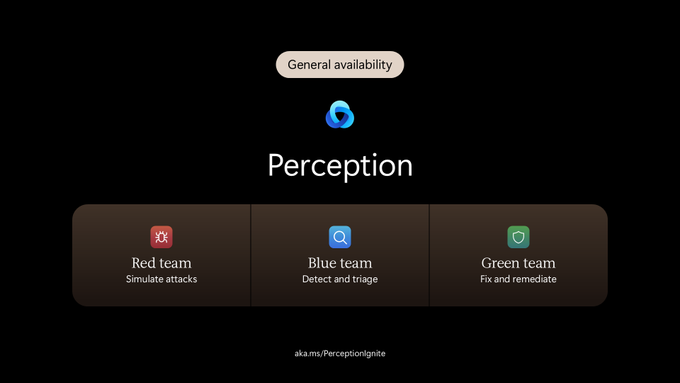
At Microsoft Ignite 2026, Microsoft said Microsoft Perception is now generally available, combining red, blue…
At Microsoft Ignite 2026, Microsoft released a public preview of Windows Server 2028, which adds AI inference…
AUMOVIO chose Databricks Unity Gateway as its single route to LLMs after a cross-functional taskforce picked o…

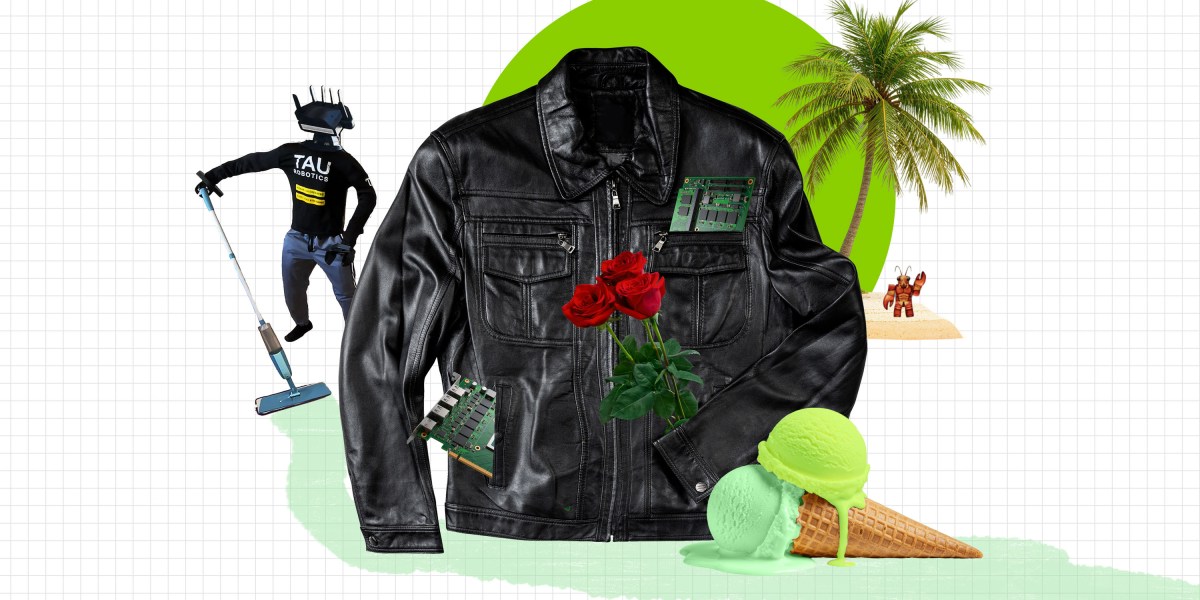
MIT Technology Review's AI Hype Index describes AI spreading everywhere, citing Google's AI Overviews costing…
In an interview after winning the $1 million Berggruen Prize, philosopher Thomas Nagel said it is 'ridiculous'…