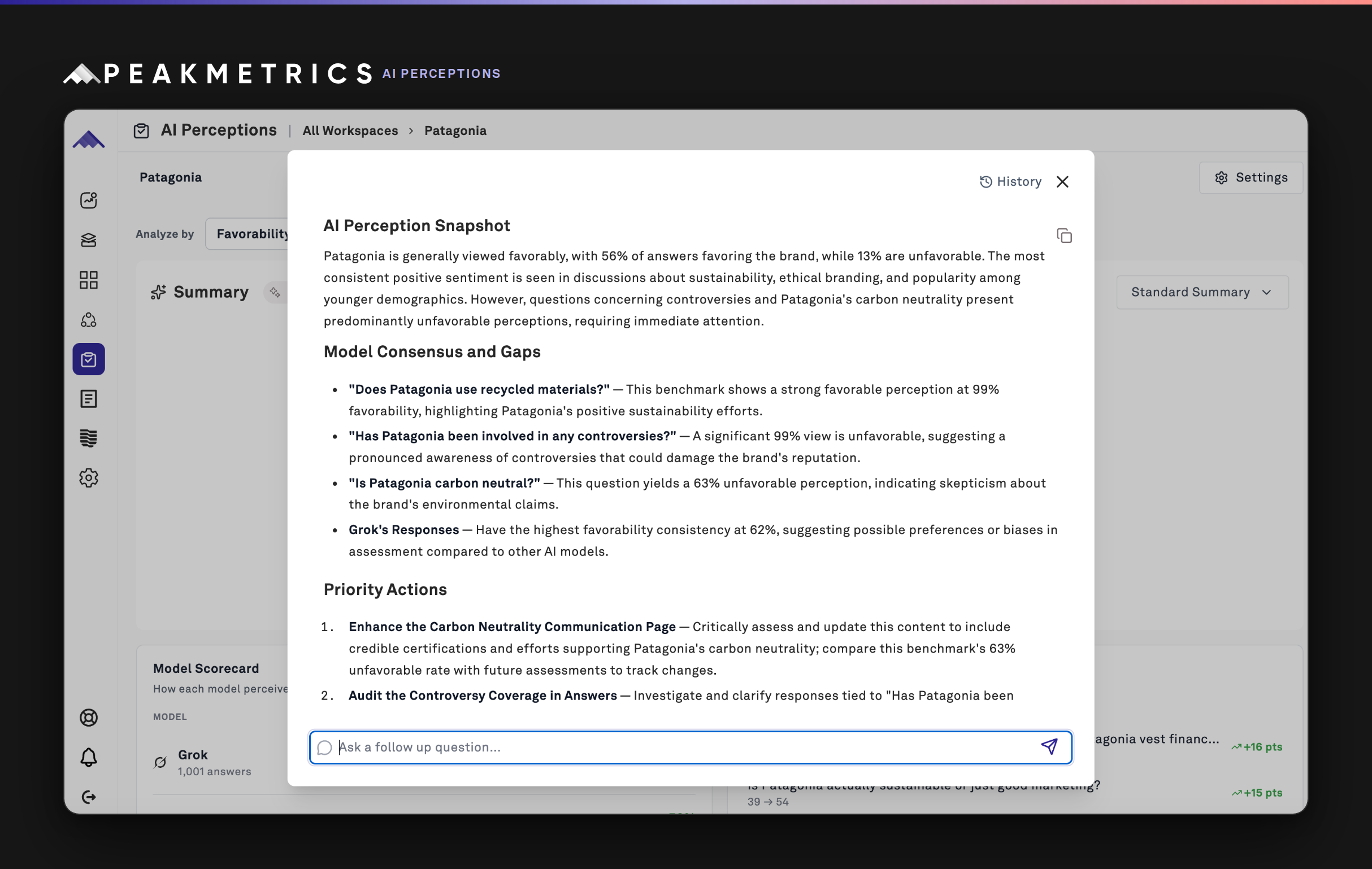
What happened
PeakMetrics launched AI Perceptions, which regularly submits customer-chosen prompts to ChatGPT, Gemini, Claude, Grok and Perplexity, records the answers, and scores them on criteria like favorability and purchase intent. It costs from $99 per month.
Why it matters
The launch points to the rise of generative engine optimization, where brands care less about search rankings and more about whether AI answers recommend them, so corporate communications teams may treat AI answers as a reputation channel.
What to watch
Citation tracking works only when an AI system chooses to run a web search, so the source-level picture may be incomplete. PeakMetrics says bot activity is typically 20% to 30% of social content in a customer workspace, which can still shape AI answers.
WHO IT HITSCorporate communications and public relations teams are the main audience, since the service is built for monitoring brand reputation in AI answers rather than raw visibility. Marketing teams running generative engine optimization campaigns may also use it to check whether their own pages or third-party coverage are feeding unfavorable AI responses.
Summaries like this, in your inbox every morning.
PeakMetrics is adding AI Perceptions to its existing narrative intelligence platform, which already analyzes news, social media, podcasts and other online sources. The stated goal of the integration is to show how a narrative starts, spreads across channels and eventually shows up in AI responses. That framing helps explain why the company describes the product as reputation management rather than a simple visibility monitor: communications teams can compare perception before and after a campaign and see whether their own websites or third-party coverage are contributing to unfavorable answers.
The company also builds in defenses against manipulated content. It assigns bot-detection scores to social media accounts based on posting frequency, account age and follower patterns, and a partnership with Reality Defender adds analysis of potentially synthetic text, images and video. Jessica Pratt, vice president of marketing and communications, said bot activity typically accounts for 20% to 30% of the social media content in a customer workspace and can rise during a crisis, and warned that actors can use agentic workflows to reword messages while pushing the same underlying narrative.
One caveat is that citation analysis depends on whether an AI system chooses to search the web, so the source-level view may be partial, according to Steven Childress, the company's director of product. The broader test for the service is likely whether communications teams treat AI answers as something they can manage: how much of a brand's AI portrayal can actually be traced back to pages the company controls or to coverage it can influence, rather than to the model itself.
For example, today's edition would include:
AI-summarized, only the topics you pick — one digest a day via Email, Slack, or Discord.
Free · 30 seconds with Google · unsubscribe anytimeWhat is AIToday? →
Ask AI anything about this article. Q&As are published on this page for other readers too.
DIGITIMES published a report saying end-to-end autonomous driving has become the mainstream technology path, a…

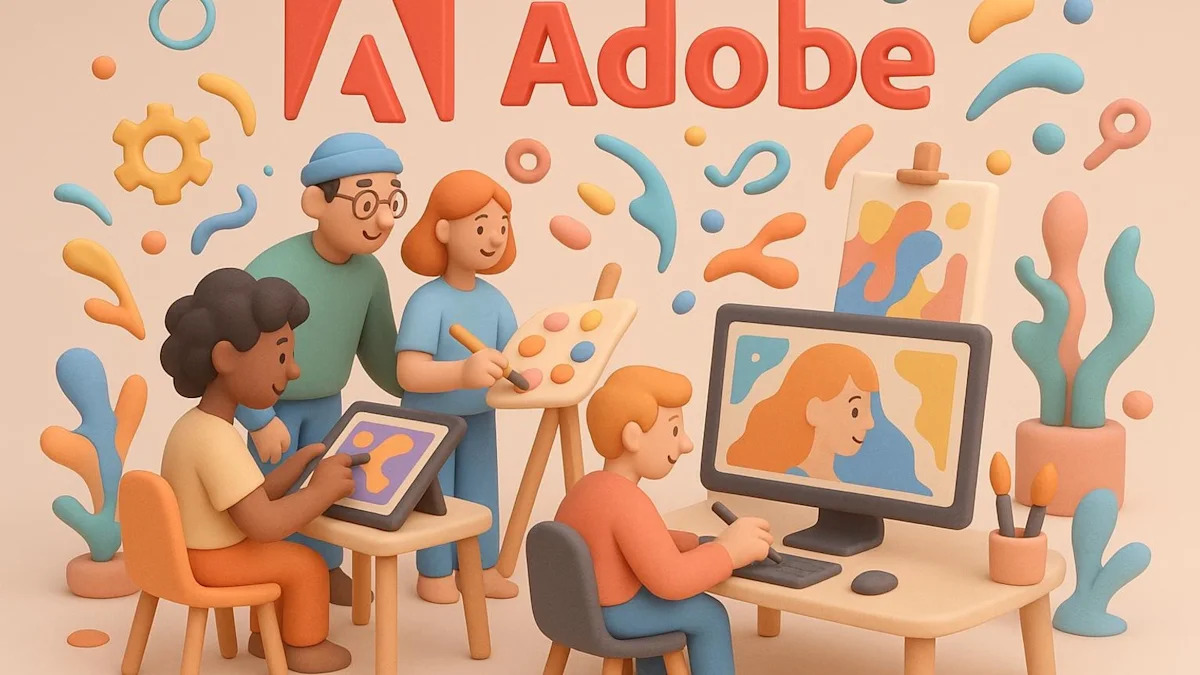
Adobe globally launched Student Spaces in Acrobat for free, an AI-driven study platform that gained more than…
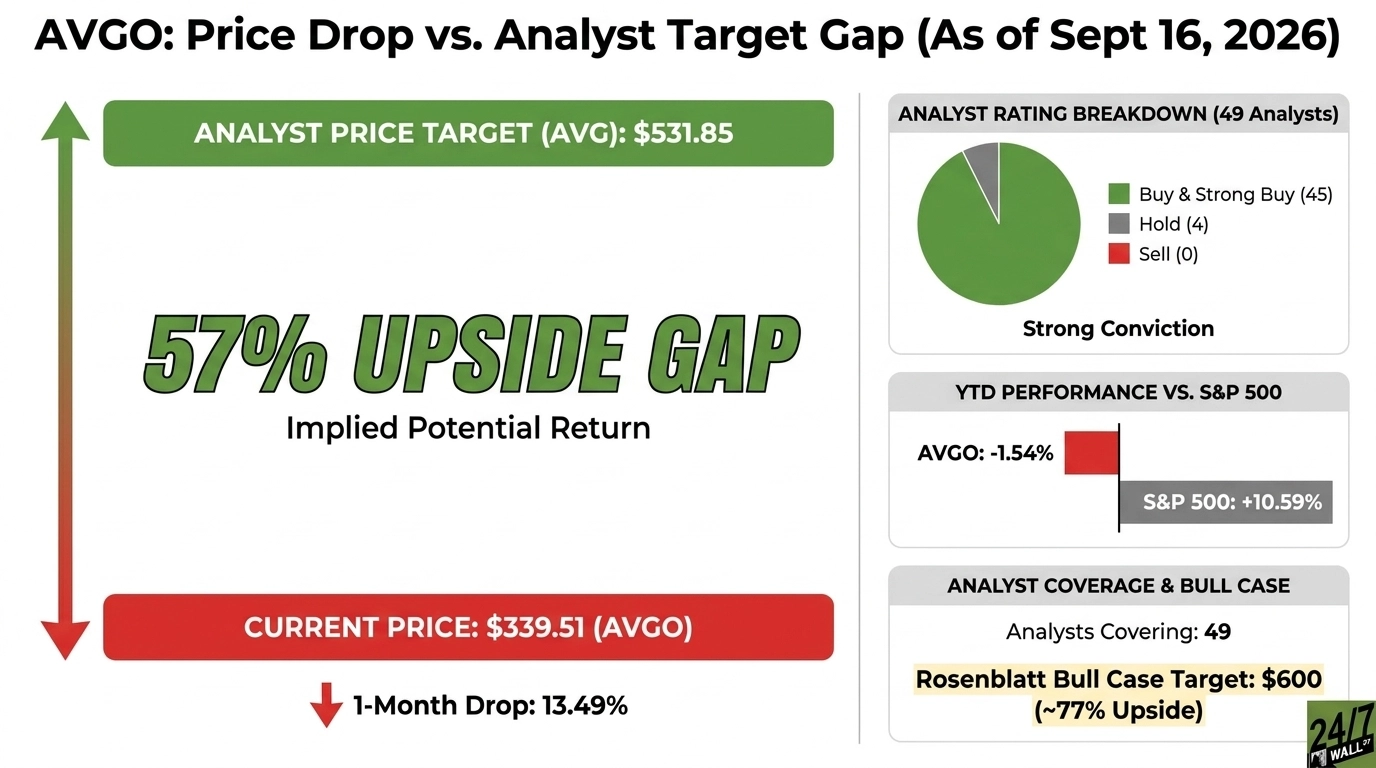
Rosenblatt Securities analyst Sajal Dogra raised his Broadcom price target to $600 from $500 with a Buy rating…
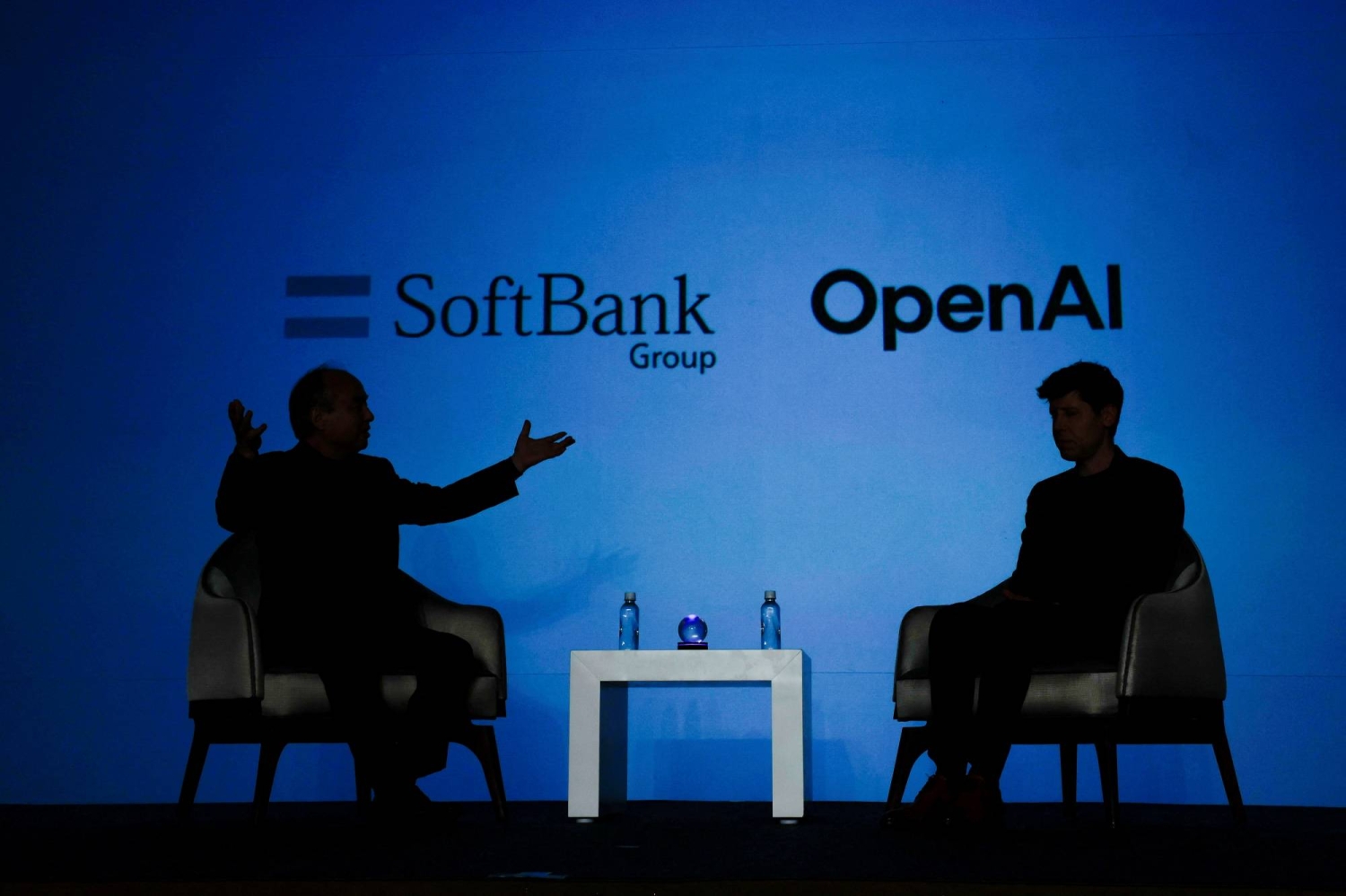
Apollo Global Management is in talks to boost a NAV loan to SoftBank's Vision Fund 2 to $9 billion, from $5.4…
Bluecore Energy raised an oversubscribed $50 million seed round led by Silverton Partners, with investors incl…
OpenRouter's weekly token consumption surged more than 25,000 percent since January 2025, from 0.5 trillion to…